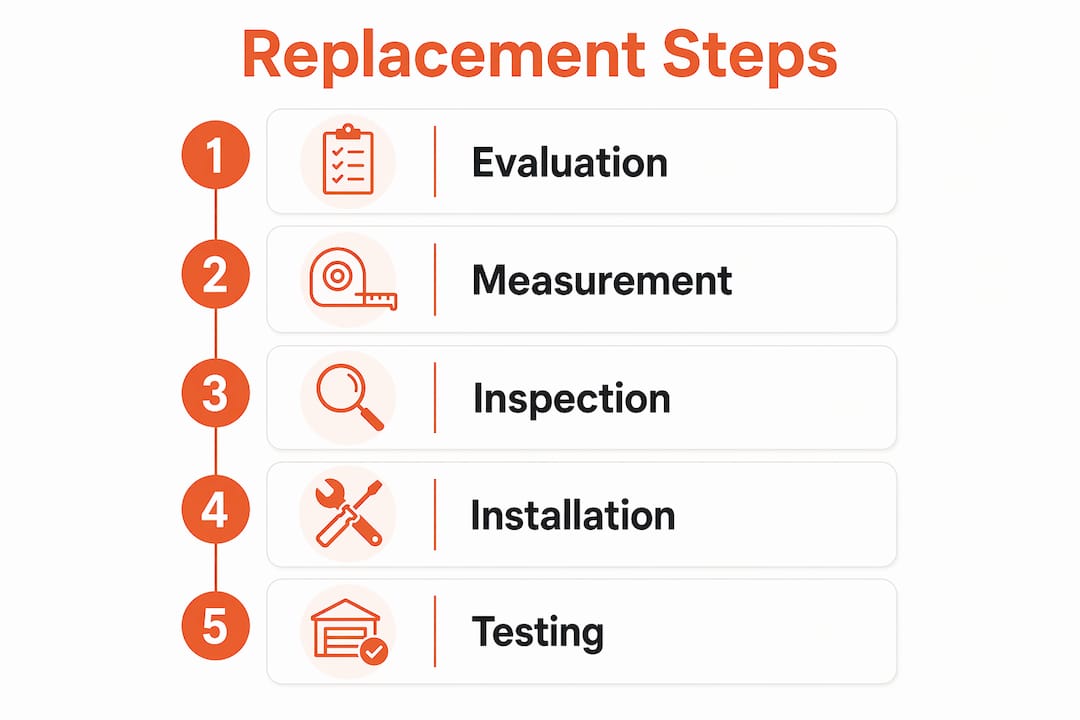
Garage door replacement is a defined sequence of steps that begins with an on-site evaluation and ends with a fully tested, operating new system. Most homeowners in Austin, Cedar Park, and the surrounding Central Texas area complete the process in a single day. A standard residential replacement takes 2 to 4 hours for a single door and 3 to 4 hours for a double door. Knowing what to expect during garage door replacement, from measurements to final walkthrough, puts you in control of the project instead of just watching it happen.
What to expect during the on-site evaluation
The garage door installation process starts before a single panel comes off the wall. A qualified installer measures the opening width, height, headroom above the door, and side clearances on both sides. These numbers are not interchangeable. A difference of even a few inches in headroom changes which spring system and track configuration will work. The pre-install inspection also verifies structural integrity, because framing or alignment issues left unaddressed cause premature system failures.
Beyond measurements, the installer inspects your existing tracks, springs, and opener. If the opener is more than 10 years old, this is the moment to discuss whether it stays or goes. Replacing door and opener together in one visit adds roughly 1 to 1.5 hours to the project but eliminates a second service call and guarantees full compatibility. The evaluation also covers your preferences: door style, panel design, material, insulation level, and color. Getting these decisions locked in before installation day prevents delays and change orders.
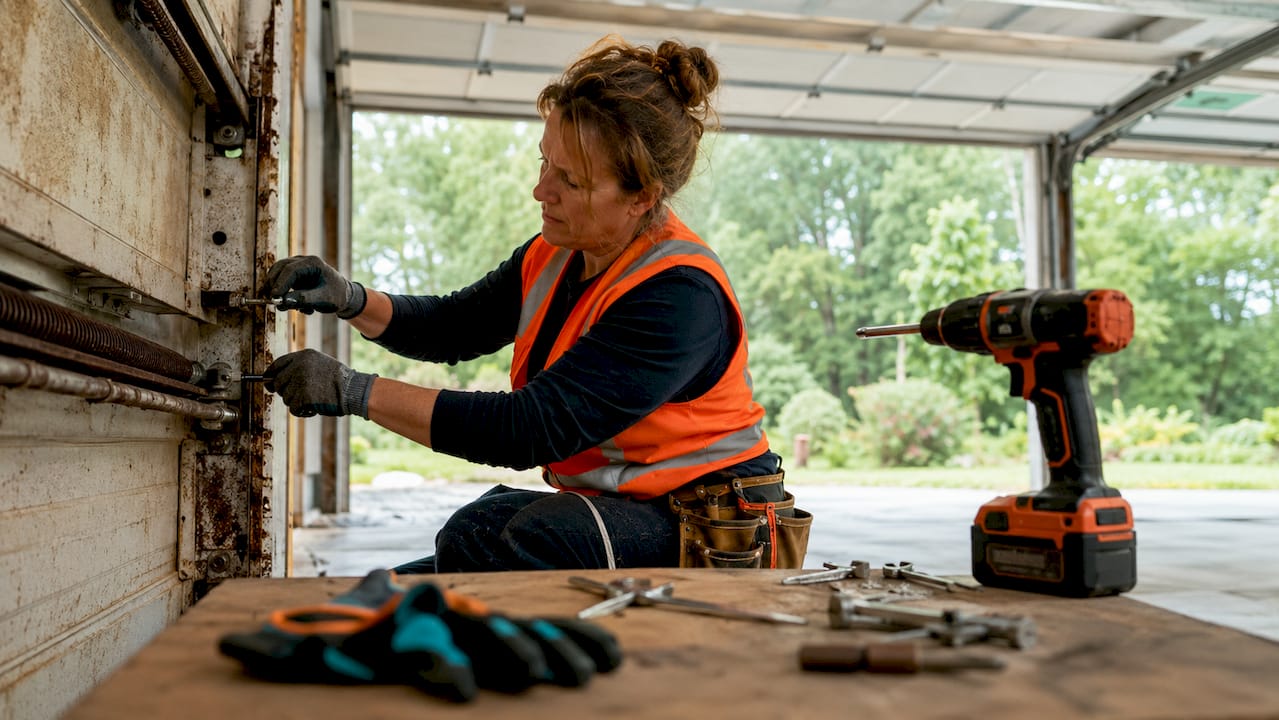
Pro Tip: Clear the garage of vehicles, bikes, and stored items before the installer arrives. A cluttered workspace slows the job and can lead to accidental damage to your belongings.
The evaluation phase is where you should ask every question you have. What warranty covers the springs? How does the new door handle Central Texas heat? What maintenance does it need in year one? A good installer answers all of this without rushing you. If they seem annoyed by questions, that is useful information about the company you are hiring.
Steps to replace a garage door: what happens on installation day
The garage door removal and installation process follows a specific sequence, and the order matters for safety as much as efficiency.
- Spring tension release. The installer carefully unwinds the torsion springs before touching anything else. Spring handling is the most technically risky step in the entire project. Torsion springs store significant mechanical energy, and improper release causes serious injury. This is the single strongest argument for professional installation over DIY.
- Removal of old components. Panels, tracks, springs, cables, and hardware all come down. The installer inspects the opening once it is clear, checking for rot, water damage, or framing issues that were hidden behind the old door.
- Opening preparation. Any structural repairs happen at this stage. New weather stripping, threshold seals, or framing corrections are addressed before the new system goes in.
- New track and spring installation. Tracks are mounted and aligned precisely. Springs are installed and tensioned to match the exact weight of the new door. Incorrect spring tension is the leading cause of premature wear and balance problems.
- Panel installation. Sections go in from the bottom up, with each panel checked for level before the next one is added. Hardware, hinges, and rollers are attached as the door takes shape.
- Opener connection and programming. If a new opener is part of the project, it is mounted, wired, and programmed at this stage. LiftMaster belt-drive and smart WiFi openers are common upgrades that add quiet operation and phone-based control.
- Safety and performance testing. The installer tests photo-eye sensors and auto-reverse independently. Photo-eyes detect obstructions at roughly 6 inches off the ground. Auto-reverse reacts when closing force exceeds 15 pounds. Both systems have been federally required on U.S. openers since 1993.
- Homeowner walkthrough. A professional installer demonstrates the manual release and explains normal operation sounds, maintenance intervals, and how to test the safety sensors yourself going forward.
“The final walkthrough is not a formality. It is your opportunity to confirm the door operates correctly, understand the warranty terms, and learn exactly what to watch for during the first 30 days of use.”
Pro Tip: During the walkthrough, physically test the auto-reverse yourself. Place a 2×4 flat on the ground in the door’s path and close it. The door should reverse immediately on contact. If it does not, the force sensitivity needs adjustment before the installer leaves.
How long and how much: factors that affect timeline and cost
Understanding the variables behind garage door installation costs helps you budget accurately and avoid sticker shock. The table below covers the most common factors Central Texas homeowners encounter.
| Factor | Impact on timeline | Impact on cost |
|---|---|---|
| Single vs. double door | Single: 2 to 3 hours. Double: 3 to 4 hours. | Single doors: $700 to $2,500. Double doors: $1,000 to $3,500. |
| Custom or oversized door | May extend project to 6 or more hours | Significant upcharge above standard pricing |
| Structural repairs needed | Adds 30 to 90 minutes depending on scope | Materials and labor billed separately |
| Opener replacement included | Adds 1 to 1.5 hours | Adds $300 to $600 depending on model |
| Material selection | Minimal time difference | Steel and aluminum differ from wood composite in cost |
Typical residential replacement costs range from $1,200 to $4,500 in total, covering door, hardware, and installation. That range is wide because a builder-grade steel door on a standard opening costs far less than a custom carriage-house wood composite door on an oversized two-car opening. For Central Texas homeowners, the Austin pricing guide from Edge garage doors breaks down local cost factors in detail.
One useful benchmark is the 50% rule. If repair costs exceed half the price of a new installation, replacement is the financially sound choice. Doors older than 15 to 20 years with recurring issues almost always cross that threshold. Scheduling also matters in Central Texas. Summer heat affects adhesives and lubrication during installation, so spring and fall appointments often run more smoothly and efficiently.
Key features to consider when choosing your new door
Selecting the right door is not just about looks. The features you choose determine comfort, energy costs, safety, and how long the system lasts.
- Insulation R-value. Central Texas summers push garage temperatures well above 100°F without insulation. Garage door R-values range from near R-0 on single-layer steel doors to R-18 or higher on premium polyurethane sandwich construction. If your garage is attached to your home or used as a workspace, an R-12 or higher door pays for itself in reduced cooling costs. Note that real-world performance can differ from manufacturer ratings because thermal bridging through frames and hardware reduces effective insulation.
- Safety systems. Photo-eye sensors and auto-reverse are non-negotiable on any modern opener. For additional security, consider a garage camera system that integrates with your smart home setup. Photo-eyes and auto-reverse work together, but they are not redundant. An object that passes the sensor beam after the check but before the door fully closes can still be struck, which is why both systems serve distinct functions.
- Spring type and lifespan. Standard torsion springs are rated for 10,000 cycles. High-cycle springs, rated at 25,000 or 50,000 cycles, cost more upfront but last significantly longer for households that use the garage as a primary entry point. Ask your installer which spring rating is included in the quote.
- Opener type. Belt-drive openers run quieter than chain-drive models, which matters if a bedroom sits above or beside the garage. Smart WiFi openers, including LiftMaster models with myQ technology, allow remote monitoring and control from your phone. Garage door openers last 10 to 15 years on average, so if yours is approaching that range, replacing it alongside the door makes practical sense. Regular evaluation around the 10-year mark is recommended even without obvious failures.
- Aesthetics and curb appeal. Door style, panel design, color, and decorative hardware all affect how your home looks from the street. Modern flush panels, carriage-house designs, and windows are all available in steel and aluminum. Review the garage door materials guide from Edge garage doors to compare options before your evaluation appointment.
Key takeaways
A successful garage door replacement depends on accurate measurements, professional spring handling, and choosing features matched to your home’s specific needs and climate.
| Point | Details |
|---|---|
| Timeline is predictable | Single doors take 2 to 3 hours; double doors take 3 to 4 hours for a standard replacement. |
| Evaluation prevents surprises | Measuring headroom, clearances, and framing before ordering prevents fit and compatibility issues. |
| Cost range is wide | Expect $1,200 to $4,500 depending on door size, material, and whether the opener is replaced. |
| Safety testing is mandatory | Auto-reverse and photo-eye sensors must be tested independently before the installer leaves. |
| Insulation matters in Texas | Choose R-12 or higher for attached garages in Central Texas to offset extreme summer heat. |
What I’ve learned from watching homeowners go through this process
The homeowners who have the smoothest replacement experiences share one habit: they treat the evaluation appointment as seriously as the installation itself. They show up with questions written down, they know roughly what style they want, and they have already cleared the garage. The ones who struggle are the ones who treat the evaluation as a formality and then make major decisions under time pressure on installation day.
The second thing I have noticed is that people consistently underestimate how much the opener matters relative to the door. A beautiful new door paired with a 14-year-old chain-drive opener is a compromise that will frustrate you within six months. The opener is what you interact with every single day. Spend the extra money on a belt-drive or smart opener when you are already paying for installation labor.
For Central Texas homeowners specifically, insulation is not optional. I have seen people choose the cheapest uninsulated door to save $300, then spend that amount every summer in extra cooling costs for a garage that bleeds heat into the house. An R-16 polyurethane door is not a luxury upgrade in Austin. It is a practical decision.
Finally, pay attention to what happens during the first 30 days. New springs and cables settle slightly under use. A small amount of adjustment is normal. If the door feels heavy, unbalanced, or makes grinding sounds after the first week, call the installer. That is what the warranty is for, and a reputable company will come back without argument.
— Oded
Ready to replace your garage door in Central Texas?
Edge garage doors serves Austin, Cedar Park, Georgetown, Leander, Round Rock, and the surrounding Central Texas area with professional garage door installation backed by transparent pricing and warranty coverage on parts and labor. Every project starts with a thorough on-site evaluation so you know exactly what you are getting before work begins.
If you are still weighing whether repair or replacement makes more financial sense, the repair vs. replace guide from Edge garage doors walks through the decision clearly. When you are ready to move forward, the garage door installation page covers services, scheduling, and what to expect from the Edge garage doors team from first call to final walkthrough.
FAQ
How long does a garage door replacement take?
A standard single-door replacement takes 2 to 3 hours; a double door takes 3 to 4 hours. Adding a new opener extends the project by roughly 1 to 1.5 hours.
What does garage door replacement cost in Central Texas?
Most residential replacements fall between $1,200 and $4,500, depending on door size, material, and whether the opener is replaced at the same time.
Do I need to replace my opener when I replace the door?
Not always, but if your opener is 10 years old or older, replacing it alongside the door is worth considering for compatibility, safety features, and avoiding a second service call.
What R-value garage door do I need in Austin?
For an attached garage in Central Texas, R-12 or higher is the practical minimum. Polyurethane sandwich doors reaching R-16 to R-18 offer the best performance in extreme summer heat.
How do I know if replacement is better than repair?
Use the 50% rule: if the cost to repair your current door exceeds half the price of a new installation, replacement is the smarter long-term investment. Doors older than 15 to 20 years with recurring issues almost always meet that threshold.