
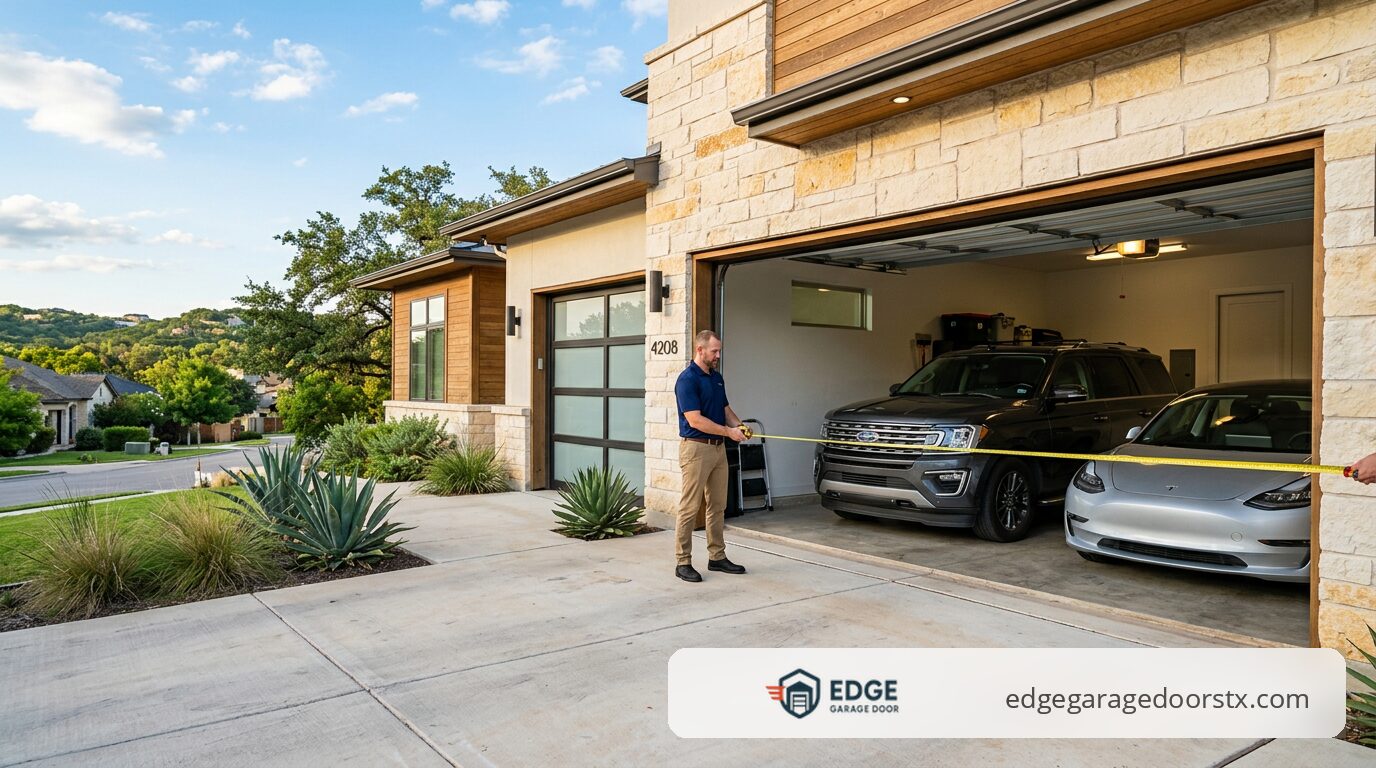
Residential Garage Door Sizes in Austin TX: Complete 2026 Guide to Standard Dimensions
Quick Answer
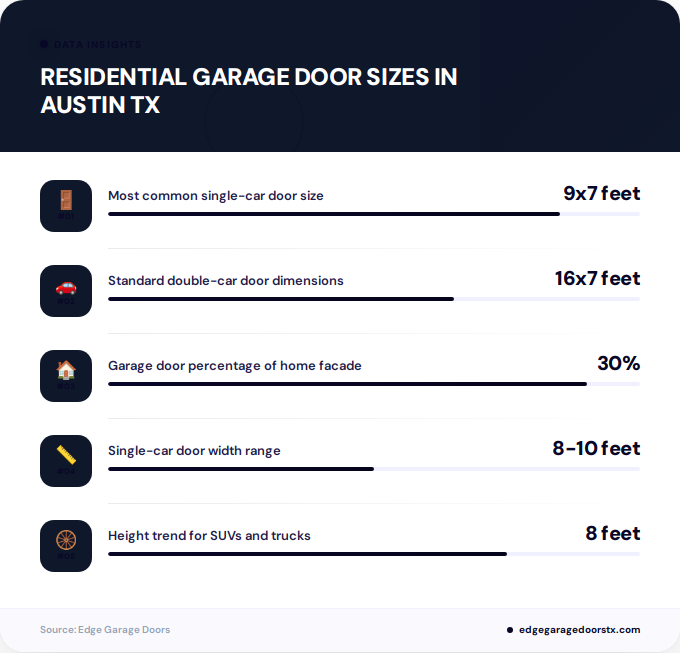
Standard residential garage door sizes in Austin TX follow national norms: single-car doors are typically 8-10 feet wide by 7-8 feet tall (most common: 9×7 feet), while double-car doors measure 16-20 feet wide by 7-8 feet tall (most common: 16×7 feet). Local building codes and HOA regulations may influence your specific size requirements, and modern trends show increasing demand for 8-foot heights to accommodate SUVs and trucks.
Did you know that your garage door comprises approximately 30% of your home’s front facade, making it one of the most visually prominent features of your property? Choosing the right residential garage door sizes in Austin TX involves more than just aesthetics: it requires understanding standard dimensions, vehicle compatibility, and local building requirements that can impact both functionality and resale value.
Whether you’re building a new home in neighborhoods like Circle C Ranch or Steiner Ranch, or replacing an existing door in Central Austin, understanding garage door sizing is essential. The wrong dimensions can lead to tight fits, damaged vehicles, and costly modifications down the road.
This comprehensive guide breaks down everything Austin homeowners need to know about residential garage door dimensions, from standard measurements to custom options and local considerations.
What Are Standard Residential Garage Door Sizes?
Standard residential garage door sizes in Austin TX align with national industry norms, but understanding these dimensions ensures you make the right choice for your home and vehicles. The most common configurations fall into two primary categories: single-car and double-car doors.
Single-car garage doors typically range from 8 to 10 feet wide and 7 to 8 feet tall. The most popular single-car configuration is 9 feet wide by 7 feet tall, which accommodates most sedans and compact SUVs comfortably. This dimension provides adequate clearance for side mirrors and allows for easier parking without worrying about scraping door frames.
Double-car garage doors measure between 16 to 20 feet wide and 7 to 8 feet tall. The industry standard is 16 feet wide by 7 feet tall, which works well for two average-sized vehicles parked side by side. However, increasingly, homeowners are opting for 18-foot-wide doors to accommodate larger trucks and SUVs that dominate modern driveways.
| Door Type | Width Range | Height Range | Best For |
|---|---|---|---|
| Single-Car | 8-10 feet | 7-8 feet | Sedans, Compact SUVs |
| Double-Car | 16-20 feet | 7-8 feet | Two Vehicles, Trucks |
| Oversized/RV | 10-14 feet | 12-16 feet | Large Trucks, RVs, Boats |
According to industry standards from leading manufacturers, these dimensions have remained consistent over decades, though height preferences are shifting upward to accommodate modern vehicles.
How Do I Choose the Right Size for My Vehicle?
Selecting the appropriate garage door dimensions requires understanding your vehicle’s specifications and planning for future needs. Different vehicle types demand different clearances to ensure safe, comfortable access without risking damage to your car or garage structure.
For sedans and compact cars, an 8-foot by 7-foot single door typically provides sufficient space. However, many homeowners opt for a 9-foot width to allow more comfortable entry and exit, especially when carrying packages or groceries.
SUVs, crossovers, and pickup trucks require more generous dimensions. A 9-foot or 10-foot wide by 8-foot tall door accommodates most standard SUVs and trucks, including popular models like the Ford F-150 and Chevrolet Tahoe. The extra height is particularly important for vehicles with roof racks, antennas, or aftermarket modifications.
| Vehicle Type | Single Door Size | Double Door Size |
|---|---|---|
| Sedan | 8-9 ft x 7 ft | 16 ft x 7 ft |
| SUV/Crossover | 9-10 ft x 8 ft | 18 ft x 8 ft |
| Pickup Truck | 10 ft x 8 ft | 16-18 ft x 8 ft |
| RV/Motorhome | 12 ft x 12 ft | 20 ft x 12 ft |
Experts recommend adding a 1-2 foot buffer to your vehicle’s actual dimensions to account for door swings, mirrors, and comfortable maneuvering space. This buffer becomes even more critical in Austin’s residential areas where garages often serve double duty as storage and workshop space.
What Should Austin Homeowners Know About Local Requirements?
While residential garage door sizes in Austin TX generally follow national standards, several local factors can influence your final dimensions. Understanding these considerations helps avoid costly surprises during installation or home sales.
Homeowners Association (HOA) regulations play a significant role in many Austin neighborhoods, particularly in planned communities like Mueller, Circle C, and Lakeway. These associations often have strict architectural guidelines that dictate not just door sizes but also styles, colors, and materials. Before ordering a custom size or non-standard configuration, review your HOA’s architectural review committee requirements.
The City of Austin Building and Development Services requires permits for garage door replacement in certain circumstances. While standard replacements typically don’t require permits, changing the opening size or structural modifications do. Local building codes mandate minimum clearances for electrical components, springs, and track systems, which can affect the total space needed for installation.
Austin’s climate considerations also impact garage door selection. With summer temperatures regularly exceeding 100°F and occasional winter freezes, insulated doors with proper weather sealing become important for temperature control and energy efficiency, particularly if your garage connects to living spaces.
For those seeking professional installation, Edge Garage Doors specializes in helping Austin homeowners navigate these local requirements while ensuring optimal sizing for their specific needs.
How Do I Measure My Garage Door Opening?
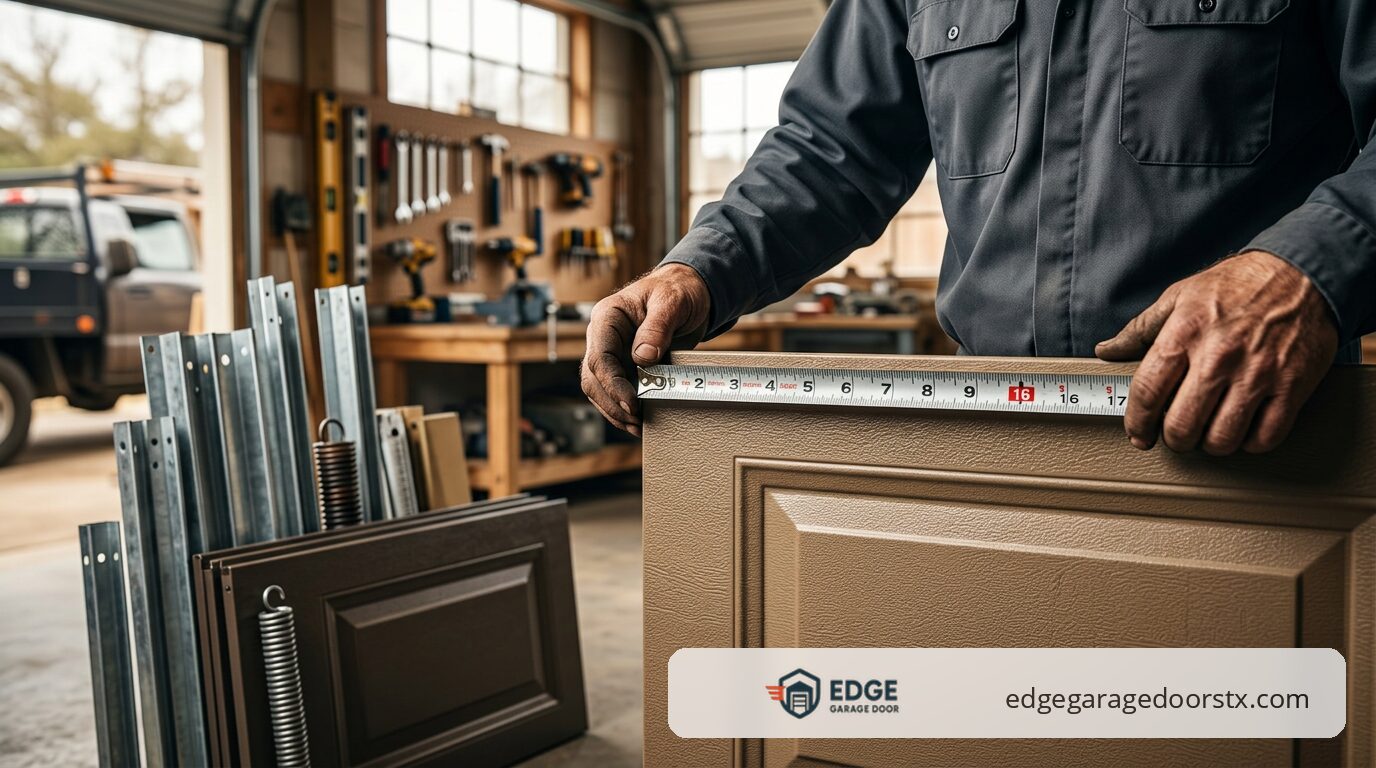
Accurate measurements are critical when ordering a new garage door or planning a replacement. Improper measurements can lead to ill-fitting doors, operational problems, and expensive modifications.
Start by measuring the width of the rough opening at its widest point. Measure from the inside of the left frame to the inside of the right frame. Take measurements at the top, middle, and bottom of the opening, as older structures may have settled or shifted slightly over time. Use the smallest measurement to ensure proper fit.
Next, measure the height from the floor to the bottom of the header (the horizontal beam above the opening). Again, take multiple measurements on the left, center, and right sides, using the smallest dimension.
Critical additional measurements include:
- Headroom: The distance from the top of the opening to the ceiling, which should be at least 12 inches for standard track systems
- Sideroom: The space between the opening and the side walls, typically requiring 3.75 to 4 inches on each side
- Backroom: The depth of the garage from the door opening, which should accommodate the door’s full vertical travel plus additional clearance
According to garage door installation professionals, these measurements determine whether standard sizes will work or if custom fabrication is necessary. In Austin’s older neighborhoods like Hyde Park or Travis Heights, historic homes often have non-standard openings that require custom solutions.
When in doubt, professional measurement services ensure accuracy and can identify potential installation challenges before ordering materials.
When Should I Consider Custom Garage Door Sizes?
While standard dimensions work for most residential applications, certain situations warrant custom garage door sizes. Understanding when to invest in custom options versus adapting to standard sizes can save both money and headaches.
Irregular openings represent the most common reason for custom sizing. Older Austin homes, particularly those built before 1970, may have openings that don’t align with modern standards. Rather than extensive structural modifications to fit a standard door, a custom-sized door often proves more cost-effective.
RVs, boats, and oversized vehicles require custom dimensions that exceed standard residential sizes. RV doors typically measure 12 to 14 feet wide by 12 to 16 feet tall, accommodating vehicles that can reach heights of 10-11 feet. These installations require reinforced tracks, more powerful openers, and additional structural support.
Multi-use garage spaces that serve as workshops, home gyms, or studios may benefit from custom sizing. Larger openings allow easier movement of equipment, materials, and furniture. Some Austin homeowners in areas like Barton Hills opt for 10-foot-wide single doors or 18-foot double doors to maximize flexibility.
Architectural aesthetics sometimes drive custom sizing decisions. Maintaining visual proportions on homes with unique designs or historic character may require doors that differ from standard dimensions. Custom sizes ensure the garage door complements rather than detracts from the home’s overall appearance.
Similar to specialty home improvement projects like epoxy flooring installations in Austin, custom garage doors require skilled fabrication and installation expertise to ensure proper function and longevity.
What Do Different Garage Door Sizes Cost?
Garage door pricing varies significantly based on size, materials, insulation, design, and installation complexity. Understanding these cost factors helps Austin homeowners budget appropriately for their projects.
Standard single-car doors typically range from $400 to $1,800, depending on material quality and design features. Basic steel doors at standard 9×7 dimensions fall on the lower end, while insulated doors with decorative windows and hardware command higher prices. Premium wood or custom-designed doors can exceed these ranges substantially.
Double-car doors in standard 16×7 configurations range from $500 to $2,500 for the door itself. The larger surface area means higher material costs, and installation typically costs more due to the additional weight and complexity. Like other home improvement investments, quality materials and professional installation provide better long-term value.
Custom and oversized doors represent significant investments, with prices ranging from $2,000 to $10,000 or more. RV-height doors, extra-wide configurations, or architecturally unique designs require specialized fabrication, reinforced components, and expert installation. These projects demand careful planning and budgeting.
Pricing varies based on your specific project requirements, including:
- Door material (steel, aluminum, wood, composite)
- Insulation R-value and energy efficiency features
- Window options and decorative hardware
- Opener system power and smart home integration
- Removal and disposal of existing doors
- Structural modifications to the opening
For accurate pricing tailored to your Austin home’s specific needs, consulting with professional installers provides detailed quotes based on actual measurements and material selections. Quality craftsmanship and proper installation ensure your investment performs reliably for decades, making upfront cost considerations part of a larger value equation.
What Are Current Industry Trends and Expert Recommendations?
The residential garage door industry continues evolving to meet changing vehicle sizes, homeowner preferences, and technological advances. Understanding current trends helps Austin homeowners make forward-thinking decisions.
Increasing door heights represent the most significant trend in residential garage doors. As SUVs, trucks, and crossovers dominate the automotive market, demand for 8-foot-tall doors has risen substantially from the traditional 7-foot standard. Industry experts note that taller doors accommodate not just larger vehicles but also roof racks, bike carriers, and aftermarket modifications increasingly common among Austin’s outdoor-enthusiast population.
Wider double-car doors are gaining popularity, with 18-foot widths becoming the new standard in many new construction projects. This extra width provides more comfortable parking for two modern vehicles and reduces the risk of mirror and door damage when entering and exiting.
According to garage door professionals serving the Austin area, while 7-foot heights remain most common in suburban developments, new builds increasingly specify 8-foot configurations as standard.
Smart technology integration has become expected rather than optional. Modern garage door openers feature smartphone control, automatic closing, delivery access systems, and integration with home security platforms. These features work with any door size but often influence opener selection and installation requirements.
Energy efficiency drives material and insulation choices. Austin’s extreme temperature swings make insulated doors with proper sealing increasingly valuable, particularly for attached garages. Higher R-value insulation reduces energy costs and makes garage spaces more comfortable year-round.
Expert recommendations emphasize matching door size to both current and anticipated needs. Since garage doors typically last 15-30 years with proper maintenance, selecting dimensions that accommodate potential future vehicles prevents premature replacement costs.
Key Takeaways
- Standard single-car garage doors measure 8-10 feet wide by 7-8 feet tall, with 9×7 feet being most common for sedans and compact SUVs
- Double-car doors typically measure 16-20 feet wide by 7-8 feet tall, with 16×7 feet as the industry standard and 18×8 feet growing in popularity
- Vehicle compatibility requires adding 1-2 feet buffer beyond actual vehicle dimensions to account for mirrors, door swings, and comfortable maneuvering
- Austin-specific considerations include HOA regulations, city building codes, and climate factors that influence material and insulation choices
- Custom sizing becomes necessary for irregular openings, RVs and oversized vehicles, multi-use spaces, and unique architectural requirements
- Industry trends show increasing preference for 8-foot heights and wider double doors to accommodate modern vehicle sizes
- Professional measurement and installation ensure proper fit, function, and compliance with local requirements while maximizing long-term value
People Also Ask
What is the most common residential garage door size?
The most common residential garage door size is 9 feet wide by 7 feet tall for single-car garages and 16 feet wide by 7 feet tall for double-car garages. These dimensions accommodate most standard passenger vehicles while fitting typical residential construction specifications.
Should I choose a 7-foot or 8-foot tall garage door?
Choose a 7-foot door for sedans and compact cars, but opt for 8 feet if you own SUVs, trucks, or vehicles with roof racks. The extra foot of height provides necessary clearance for taller modern vehicles and allows easier access without worrying about antenna or rack damage.
Can I fit two cars in a 16-foot garage door opening?
Yes, a 16-foot-wide garage door can fit two compact to mid-size vehicles, but parking will be tight. For modern SUVs and trucks, an 18-foot or 20-foot width provides more comfortable side-by-side parking with adequate clearance for opening doors and exiting safely.
Do Austin building codes require specific garage door sizes?
Austin building codes don’t mandate specific garage door sizes but do require permits for structural modifications and specify clearances for safety equipment. HOA regulations in many Austin neighborhoods may impose restrictions on door sizes, styles, and appearances that go beyond city code requirements.
What size garage door do I need for a full-size pickup truck?
Full-size pickup trucks typically require a 10-foot-wide by 8-foot-tall single door or a 16-18 foot wide double door with 8-foot height. Extended cab and crew cab trucks benefit from the extra width to accommodate their longer wheelbases and wider turning radius when entering the garage.
Is it better to have one double door or two single doors for a two-car garage?
One double door costs less initially and provides a cleaner aesthetic, while two single doors offer independent access for each vehicle and continue functioning if one door fails. Two doors also provide better insulation and can accommodate different vehicle sizes more flexibly than a single wide opening.
Frequently Asked Questions
How much clearance do I need above my garage door?+
You need a minimum of 12 inches of headroom above the door opening for standard track systems. High-lift or custom track configurations may require 18-24 inches or more, depending on the door’s travel pattern and opener mounting requirements.
Can I increase my garage door size without major construction?+
Minor size increases of a few inches may be possible by adjusting framing, but significant changes require structural modifications including removing and replacing headers, reinforcing walls, and potentially pouring new foundation sections. These projects require permits and professional structural assessment in Austin.
What is the standard height for RV garage doors?+
RV garage doors typically measure 12 to 16 feet tall to accommodate motorhomes and travel trailers, which commonly reach heights of 10-13 feet. Width requirements vary from 12 to 20 feet depending on the RV’s size and whether additional clearance is needed for slideouts.
Do insulated garage doors come in all standard sizes?+
Yes, insulated garage doors are available in all standard residential sizes, with insulation options ranging from R-value 6 to R-value 18 or higher. Higher R-values add thickness to the door, which may require adjustment to track systems and clearances but don’t affect the overall opening dimensions.
How long does it take to install a standard garage door?+
Professional installation of a standard residential garage door typically takes 4-6 hours for a straightforward replacement. New installations, custom sizes, or projects requiring structural modifications can take one to several days depending on complexity and weather conditions.
What garage door size works best for a Tesla or electric vehicle?+
Most electric vehicles fit standard garage door sizes, with sedans like the Tesla Model 3 comfortable in 9×7 openings and SUVs like the Model X requiring 9×8 or 10×8 dimensions. The key consideration is ensuring adequate space for charging equipment installation and cable management rather than the door size itself.
Should I match my garage door size to my neighbors’ doors?+
While matching neighborhood aesthetics can benefit resale value, your garage door size should primarily accommodate your vehicles and functional needs. Many Austin HOAs have guidelines about door styles and colors but allow size variations within their architectural standards, so check your specific community requirements before making decisions based solely on conformity.