
What You Need to Know About Garage Door Safety Sensors in Austin TX
Quick Answer
Garage door safety sensors in Austin TX are photo-eye devices mounted near the bottom of door tracks that emit an invisible infrared beam to detect obstructions, automatically reversing the closing door when interrupted to prevent injury or property damage. These sensors are federally mandated in all modern garage door systems and require regular maintenance to function properly, especially in Austin’s intense summer sun which can cause alignment issues.
Does your garage door reverse unexpectedly every time you try to close it? You might be dealing with a garage door safety sensor issue, a surprisingly common problem for Austin homeowners. These small but critical devices stand between safe operation and potential tragedy, yet they’re often overlooked until something goes wrong.
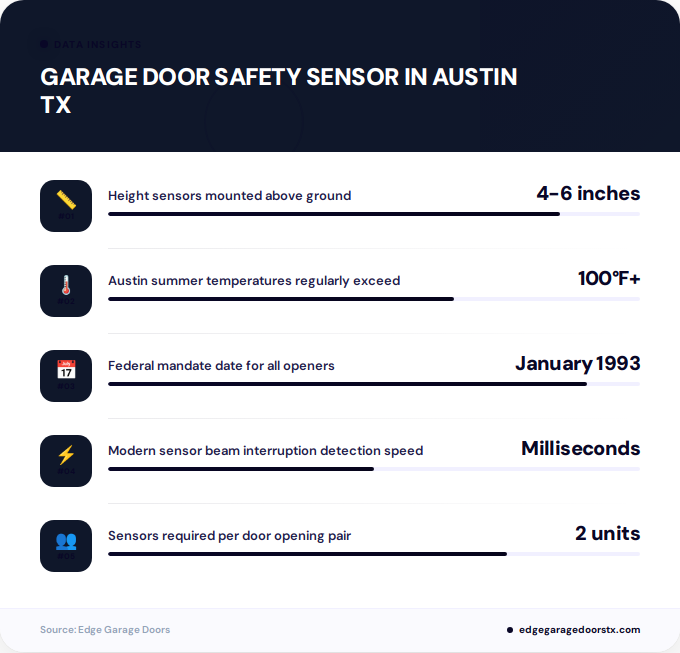
In Austin TX, where temperatures regularly exceed 100°F during summer months and intense sunlight beats directly into south-facing garages, safety sensors face unique environmental challenges. Understanding how these essential safety devices work and maintaining them properly can prevent accidents, protect your family, and save you from costly emergency repairs.
This comprehensive guide examines everything Austin residents need to know about garage door safety sensors in 2026, from federal requirements to local climate challenges, modern smart features to practical troubleshooting steps.
What Are Garage Door Safety Sensors and How Do They Work?
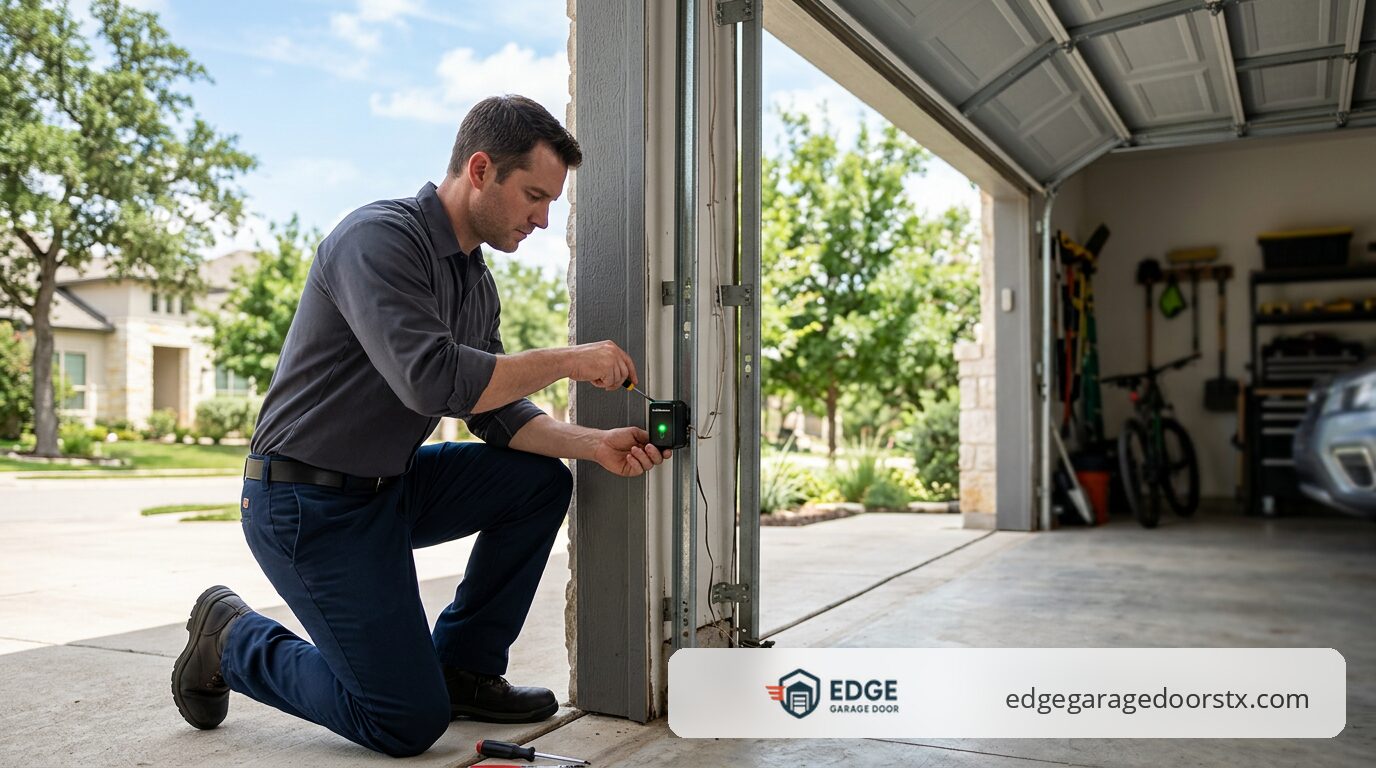
Garage door safety sensors are photo-eye devices positioned on either side of your garage door opening, typically mounted 4-6 inches above the ground on the door tracks. These sensors work together as a pair: one unit transmits an invisible infrared beam across the door opening, while the other receives it.
When the beam remains uninterrupted, your garage door operates normally. The moment anything blocks this beam while the door is closing, whether a person, pet, vehicle, or object, the system instantly detects the interruption and triggers the door to stop and reverse direction.
This simple yet sophisticated technology functions like an invisible tripwire protecting everyone who uses your garage. The transmitting sensor contains an LED that sends a constant infrared signal, while the receiving sensor monitors for that signal continuously. Modern sensors can detect beam interruptions in milliseconds, providing nearly instantaneous protection.
Why Are Garage Door Safety Sensors Required in Austin TX?
Safety sensors became federally mandated for all garage door openers manufactured after January 1993 following consumer safety regulations. This requirement applies across the United States, including all installations in Austin TX, regardless of whether you’re building new construction or replacing an existing opener.
The mandate emerged from tragic accidents involving children and pets trapped under closing garage doors. Before safety sensors became standard, garage doors operated with mechanical force only, crushing anything in their path. Industry data from the pre-sensor era showed numerous preventable injuries and fatalities each year.
In Texas, compliance extends beyond federal standards. The Texas Real Estate Commission (TREC) includes garage door safety sensor functionality in home inspection protocols. When selling a home in Austin, properly functioning safety sensors are essential for passing inspection and closing the sale.
At Edge Garage Doors, we ensure every installation meets or exceeds these safety standards, protecting your family and maintaining your property’s compliance with local regulations.
What Makes Austin’s Climate Challenging for Safety Sensors?
Austin’s distinctive climate creates specific challenges for garage door safety sensors that homeowners in cooler regions rarely encounter. The combination of intense solar radiation, temperature extremes, and seasonal weather patterns can significantly impact sensor performance.
Direct sunlight exposure represents the most common Austin-specific problem. When afternoon sun shines directly into a sensor’s photo-eye, particularly in south-facing or west-facing garages, the intense light can overload the receiving sensor. This phenomenon prevents the sensor from detecting the infrared beam from the transmitter, causing the door to refuse to close.
During peak summer months when temperatures regularly exceed 100°F, the problem intensifies. Sensors mounted on metal door tracks can experience thermal expansion, gradually shifting alignment over time. Additionally, extreme heat can accelerate the degradation of sensor housings and wiring insulation.
“In Austin, we see sun interference as the number one culprit for sensor malfunctions during summer afternoons. A temporary cardboard shield can help in the short term, but proper sensor repositioning or upgraded units with better light filtering provide the lasting solution homeowners need,” notes local garage door safety experts.
Seasonal pollen, particularly during Austin’s notorious cedar fever season, creates another maintenance challenge. Fine pollen dust accumulates on sensor lenses, gradually reducing beam transmission and potentially causing false obstruction signals.
What Are the Most Common Safety Sensor Problems?
Understanding frequent sensor issues helps Austin homeowners identify problems quickly and determine whether DIY fixes or professional service is required. Most sensor problems fall into several predictable categories that manifest through specific symptoms.
Misalignment issues represent the most prevalent problem. When sensors lose their precise alignment, the infrared beam doesn’t reach the receiving unit properly. You’ll typically notice blinking LED lights on one or both sensors, usually a steady light on the transmitter and a blinking light on the receiver indicating detection failure.
Physical damage from accidents, weather events, or deterioration creates another common category. Cracked sensor housings, broken mounting brackets, or damaged wiring expose internal components to moisture and debris. Unlike alignment issues, physical damage typically requires component replacement rather than adjustment.
| Problem Type | Common Symptoms | Typical Solution |
|---|---|---|
| Misalignment | Blinking lights, door reverses immediately | Realign sensors, tighten mounting brackets |
| Dirty lenses | Intermittent operation, occasional reversals | Clean with soft cloth, remove cobwebs |
| Sun interference | Won’t close during afternoon hours | Shield sensors, adjust positioning |
Wiring problems, while less visible, cause significant operational issues. Rodents occasionally chew through low-voltage sensor wires, and vibration from garage door operation can gradually loosen connections at terminals. These electrical issues typically prevent sensors from receiving power, indicated by completely dark LED lights on both units.
How Do You Troubleshoot Garage Door Safety Sensor Issues?
When your garage door won’t close properly, systematic troubleshooting helps identify whether you’re dealing with a simple fix or need professional assistance. Start with the easiest checks before moving to more complex diagnostics.
Visual inspection should always be your first step. Look for obvious obstructions blocking the beam path between sensors. Remove any items stored near the door opening, sweep away debris, and check for spider webs across the sensor path, a surprisingly common issue in Austin garages.
Next, examine the LED indicator lights on both sensor units. A properly functioning system shows steady lights on both sensors, typically green or red depending on the manufacturer. If you see blinking lights, the sensors aren’t communicating properly, usually indicating misalignment or obstruction.
To test alignment, carefully adjust each sensor by loosening its mounting bracket slightly and repositioning it. The goal is getting both sensors aimed directly at each other. Many sensors include small adjustment screws or wing nuts that allow precise positioning. When properly aligned, both indicator lights should become steady.
Cleaning the sensor lenses often resolves intermittent problems. Use a soft, clean cloth to gently wipe each lens, removing dust, pollen, or smudges. In Austin’s dusty conditions, this simple maintenance can restore full functionality without any adjustment needed.
For persistent issues, check the wiring connections at both the sensors and the opener unit. Ensure wire nuts are tight, connections are secure, and no visible damage exists along the wire runs. If you discover damaged wiring or the problem persists after basic troubleshooting, professional service becomes necessary.
What Modern Technology Features Do Today’s Sensors Include?
Contemporary garage door systems integrate safety sensors with advanced smart home technology, offering capabilities far beyond basic obstruction detection. These innovations enhance both safety and convenience for Austin homeowners in 2026.
LiftMaster openers, one of the industry’s leading brands, now feature opening speeds up to 9.0 inches per second while maintaining integrated safety sensors with motion detection capabilities. Their soft start and soft stop technology reduces mechanical stress and minimizes the risk of sensor misalignment from vibration over time.
Smart connectivity represents a major advancement in sensor technology. Systems like Secure24 and Aladdin Connect enable smartphone monitoring of sensor status and door position from anywhere. Through dedicated apps, homeowners receive instant notifications if sensors detect problems or if the door remains open unexpectedly.
Features: MyQ app, battery backup
Rating: Industry leading
Features: Alexa compatible
Track Record: 30+ years proven
Features: Motion detection
Control: Remote monitoring
HomeLink integration allows direct control from compatible vehicles, while Alexa and Google Assistant compatibility enables voice commands for status checks and operation. Battery backup systems ensure sensors and openers continue functioning during Austin’s occasional power outages, maintaining safety protection even when electricity fails.
The MyQ technology platform has become particularly popular, offering delivery notifications, automated scheduling, and integration with home security systems. These features provide peace of mind for frequent travelers and busy families who want confirmation their garage is secure.
How Should You Maintain Your Garage Door Safety Sensors?
Monthly testing represents the most important maintenance habit for garage door safety sensors. The U.S. Consumer Product Safety Commission recommends testing sensors at least once monthly to ensure proper function. The test is simple: press the door close button, then place an object like a broomstick in the sensor beam path. The door should immediately stop and reverse direction.
Regular cleaning prevents Austin’s environmental factors from degrading sensor performance. Every 30 days, wipe sensor lenses with a soft, lint-free cloth to remove dust, pollen, and cobwebs. During peak cedar season (typically December through February), increase cleaning frequency to every two weeks.
Inspect sensor alignment quarterly by checking the LED indicator lights. Both sensors should display steady lights. If you notice flickering or intermittent operation, address alignment issues promptly before they worsen. Small adjustments now prevent complete failures later.
Check mounting hardware every six months, tightening any loose screws or brackets. The constant vibration from normal garage door operation can gradually loosen mounting points, leading to misalignment. This preventive maintenance takes only minutes but prevents sensor drift over time.
For homes with standard residential garage door sizes, sensor positioning typically follows manufacturer specifications. However, custom or oversized doors may require professional adjustment to ensure optimal beam height and alignment across the wider opening.
Consider professional inspection annually, especially for systems over five years old. Technicians can identify wear patterns, wiring degradation, and potential failures before they cause operational problems. This proactive approach costs far less than emergency repairs.
When Should You Replace Your Safety Sensors and What Does It Cost?
Knowing when to repair versus replace safety sensors helps homeowners make cost-effective decisions. Generally, if your garage door opener is over 10 to 15 years old and lacks modern safety features, complete replacement makes more financial sense than ongoing repairs.
Physical damage to sensor housings almost always necessitates replacement. Cracked lenses, broken mounting brackets, or water-damaged internal components cannot be reliably repaired. Attempting to patch damaged sensors creates safety risks and violates the purpose of having these protective devices.
When sensors repeatedly fail alignment tests despite professional adjustment, internal component degradation has likely occurred. The photo-eyes or LED emitters may be weakening with age, requiring replacement to restore reliable operation.
Replacement costs for garage door safety sensors in Austin TX vary significantly based on system type, brand quality, and installation complexity. Simple sensor pair replacements range from $75 to $300+, while complete opener upgrades with integrated smart sensors span $300 to $1,500+ depending on features, horsepower requirements, and smart home integration capabilities.
Premium systems with advanced features like battery backup, MyQ connectivity, and ultra-quiet operation command higher investment but deliver substantially enhanced safety, convenience, and home value. These systems often include enhanced sensor technology with better sun interference resistance, critical for Austin installations.
Pricing varies based on your specific project requirements, garage configuration, and existing infrastructure. At Edge Garage Doors, we emphasize value and reliability over economy-grade solutions. We provide detailed assessments and custom quotes that reflect the quality craftsmanship Austin homeowners deserve.
Installation complexity affects final costs. Standard installations in single-car garages with straightforward wiring typically fall at the lower end of pricing ranges, while multi-bay garages, extensive wire runs, or integration with existing smart home systems increase investment requirements.
People Also Ask
How do garage door safety sensors work?
One sensor transmits an invisible infrared beam while the opposite sensor receives it, creating an electronic barrier across the door opening. When anything interrupts this beam while the door is closing, the system detects the break in communication and immediately commands the door to stop and reverse, functioning like an invisible safety tripwire.
Are garage door safety sensors required by law?
Yes, federal regulations mandate safety sensors on all garage door openers manufactured after January 1993. This requirement applies nationwide, including all installations in Texas and Austin specifically, with compliance verified during home inspections and real estate transactions.
Why won’t my garage door close even with nothing in the way?
Most commonly, sensor misalignment, dirty lenses, direct sunlight interference, or loose wiring causes this problem. Check for blinking indicator lights on the sensors, clean the lenses thoroughly, and verify both sensors are precisely aimed at each other before considering professional service.
What should I do if my garage door safety sensors are cracked or broken?
Replace damaged sensors immediately rather than attempting repairs. Cracked housings expose internal components to moisture and debris, compromising reliability and creating safety risks that defeat the entire purpose of having protective sensors installed.
Can I monitor my garage door sensors remotely from my phone?
Modern smart garage door systems with platforms like MyQ, Secure24, or Aladdin Connect enable complete remote monitoring and control through smartphone apps. These systems send instant notifications about sensor status, door position, and operational problems, allowing you to verify your garage security from anywhere.
How does Austin’s sun affect garage door safety sensors?
Intense afternoon sunlight shining directly into sensor photo-eyes can overload the receiving unit, preventing proper beam detection and causing the door to refuse closing. This problem occurs most frequently in south-facing and west-facing Austin garages during summer months when sun angles are most direct.
Frequently Asked Questions
How often should I test my garage door safety sensors?+
Test your sensors monthly by placing an object in the beam path while closing the door to confirm immediate reversal. This simple check takes less than a minute but ensures your safety system functions properly when needed most.
Can I bypass garage door safety sensors temporarily?+
While technically possible by holding the wall button continuously, bypassing safety sensors is extremely dangerous and should never be done. This override defeats the protective purpose of sensors and creates serious injury risks for people and pets. Always repair or replace malfunctioning sensors promptly instead.
What causes garage door sensors to go out of alignment?+
Normal door vibration, accidental bumps from vehicles or equipment, thermal expansion from temperature changes, and loose mounting hardware all contribute to gradual misalignment. Regular inspection and tightening of sensor brackets prevents alignment drift over time.
Do battery backup systems affect safety sensor operation?+
Quality battery backup systems maintain full safety sensor functionality during power outages, ensuring continuous protection even when electricity fails. This feature proves particularly valuable in Austin during severe weather events when power interruptions occur most frequently.
Are universal replacement sensors compatible with all garage door openers?+
Most modern sensors follow industry-standard wiring configurations and work with various opener brands, but compatibility isn’t guaranteed. Professional verification ensures proper matching between replacement sensors and your specific opener model, preventing installation problems and ensuring reliable operation.
Will upgrading to smart sensors improve safety beyond basic models?+
Smart sensors provide the same fundamental obstruction detection as standard models but add remote monitoring, instant problem notifications, and integration with home security systems. These features enhance safety by keeping you informed of sensor status and door position even when you’re away from home.
How long do garage door safety sensors typically last?+
Quality sensors properly maintained can function reliably for 10 to 15 years or more, though environmental factors like Austin’s intense sun exposure may reduce lifespan. Regular cleaning, alignment checks, and protection from physical damage maximize sensor longevity and ensure consistent performance throughout their service life.
Key Takeaways
- Safety sensors are mandatory on all modern garage door systems, using infrared beam technology to detect obstructions and prevent accidents involving people, pets, or property
- Austin’s climate creates unique challenges including sun interference in south and west-facing garages, thermal expansion from extreme heat, and pollen accumulation requiring more frequent maintenance
- Monthly testing is essential for ensuring sensors function properly, simply place an object in the beam path while closing the door to verify immediate reversal
- Modern smart sensors integrate with platforms like MyQ, Alexa, and HomeLink, offering remote monitoring, instant notifications, and enhanced convenience beyond basic safety protection
- Misalignment causes most problems but simple adjustments often restore function, while cracked housings or persistent failures require professional replacement
- Replacement timing matters, with systems over 10 to 15 years old better served by complete upgrades featuring current safety technology rather than ongoing repairs
- Professional assessment provides value by identifying problems early, ensuring proper installation, and matching sensor capabilities to your specific garage configuration and usage patterns
Garage door safety sensors represent a critical component of modern home safety systems, particularly in Austin TX where environmental factors create unique operational challenges. From federal compliance requirements to smart home integration, understanding these devices helps homeowners maintain safe, reliable garage door operation.
Regular testing, cleaning, and alignment checks prevent most common problems before they escalate into safety concerns or expensive repairs. When issues arise that exceed basic troubleshooting, professional service ensures proper diagnosis and quality repairs that restore full functionality.
Whether you’re dealing with sensor malfunctions, considering smart technology upgrades, or simply want peace of mind about your family’s safety, Edge Garage Doors provides expert service tailored to Austin’s specific needs. Our team understands how local climate affects sensor performance and delivers solutions that last.
Ready to ensure your garage door safety sensors provide reliable protection? Contact Edge Garage Doors today for a comprehensive safety inspection, professional sensor service, or consultation about upgrading to modern smart technology. Your family’s safety deserves nothing less than expert care from Austin’s trusted garage door professionals.