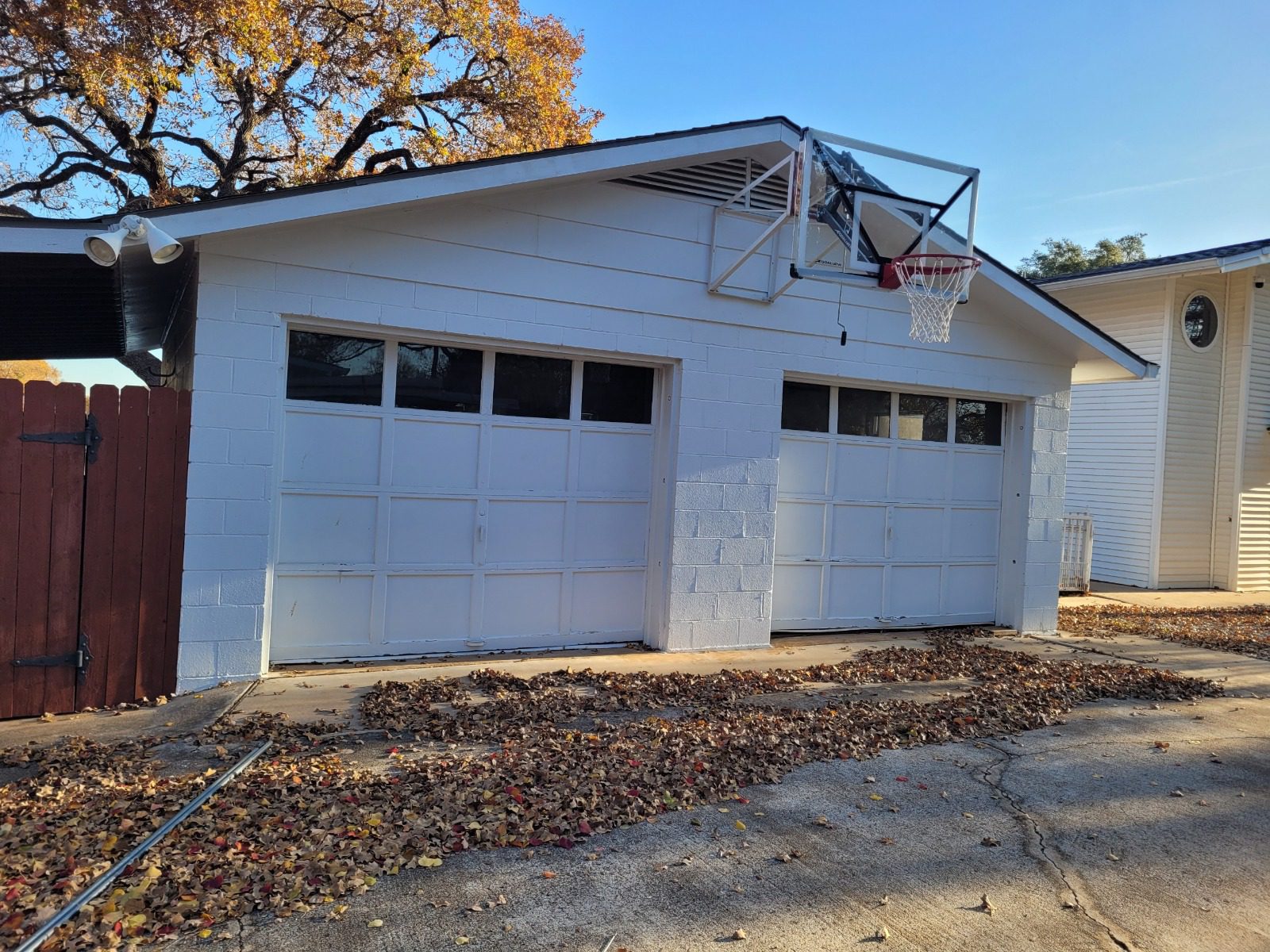
A builder-grade garage door is the minimum-spec door installed by home builders to pass inspection and control construction costs, not to serve you well for the next 20 years. If your door rattles like a tin can, lets in cold air, and looks like every other house on the block, you are living with the consequences of that decision. Upgrading a builder-grade garage door means selecting better materials, higher insulation values, and modern openers to improve your home’s appearance, energy performance, and daily function. According to Remodeling Magazine’s Cost vs. Value Report, garage door replacement recoups an average of 193.9% of costs at resale, making it one of the highest-return improvements you can make.
What is a builder-grade garage door and why upgrade it?
Builder-grade, or “contractor-grade,” refers to the lowest-tier door specification a builder installs to meet code at the lowest possible cost. These doors share a predictable set of weaknesses that compound over time.
The typical builder-grade system includes thin single-layer or double-layer steel panels with minimal insulation (R-0 to R-6 at best), a chain-drive opener that sounds like a bag of wrenches, and 10,000-cycle torsion springs that fail within 3 to 5 years under normal family use. That spring lifespan matters because most households open and close the garage door 4 to 6 times per day, burning through those cycles faster than the builder’s warranty covers.
The practical problems stack up quickly:
- Noise. Chain-drive openers and steel rollers create vibration that travels through the wall framing into your home.
- Energy loss. A non-insulated door is essentially a giant hole in your thermal envelope, driving up heating and cooling bills.
- Dents and corrosion. Thin steel panels dent from minor impacts and rust in humid climates like Central Texas.
- Frequent repairs. Springs, cables, and rollers on builder-grade systems are sized for minimum duty, not longevity.
The cost-versus-value math is clear. Repeatedly repairing a failing builder-grade system costs more over five years than a targeted upgrade or full replacement. Knowing when to replace vs. repair your door is the first decision you need to make.
How to choose materials and insulation when upgrading
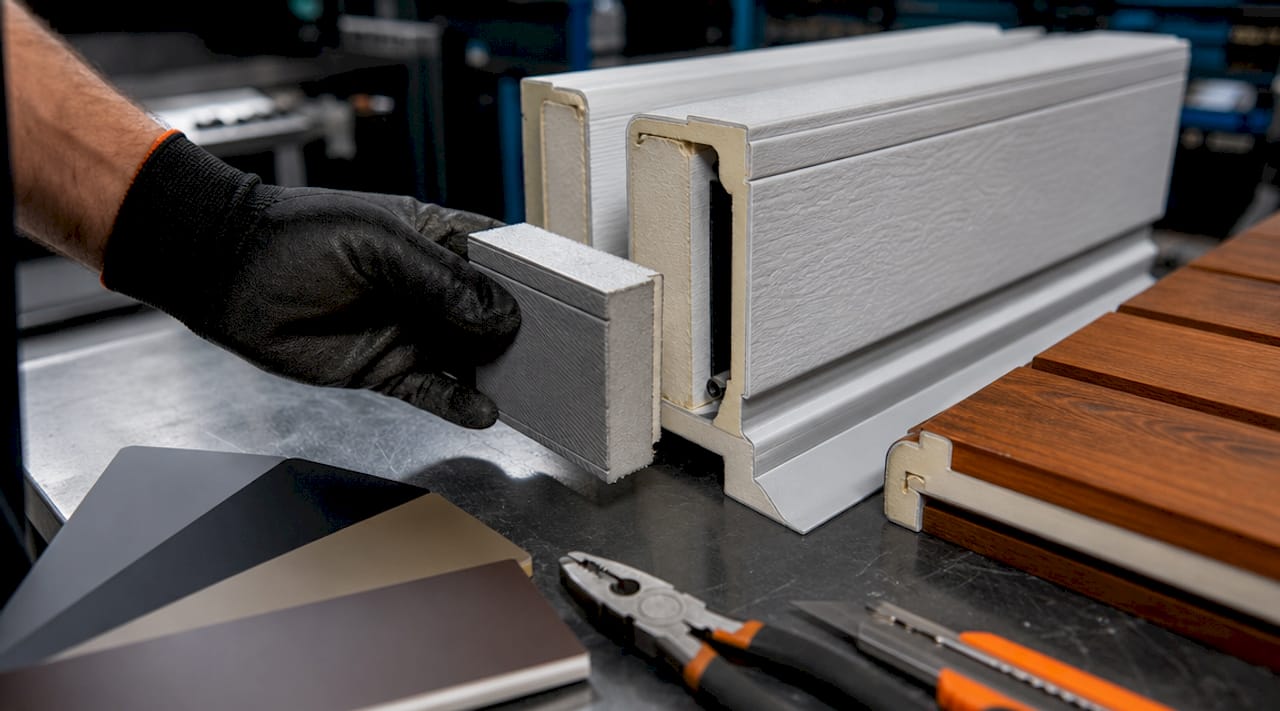
Material selection determines how your door looks, how long it lasts, and how well it performs thermally. Each option involves real trade-offs.
| Material | Durability | Insulation potential | Best for |
|---|---|---|---|
| Steel (double or triple layer) | High | R-6 to R-18+ | Most climates, budget-conscious upgrades |
| Wood composite | Medium-high | R-6 to R-13 | Traditional aesthetics, low maintenance |
| Fiberglass | Medium | R-6 to R-13 | Coastal or high-humidity areas |
| Aluminum with glass | Medium | R-4 to R-10 | Modern/contemporary home styles |
| Vinyl | High | R-6 to R-10 | High-humidity, low-maintenance needs |
Steel remains the most popular choice for good reason. Triple-layer steel doors with a polyurethane foam core deliver the best combination of durability, insulation, and cost. Fiberglass resists dents and rust but can crack in extreme cold. Aluminum and glass panels look sharp on modern homes but offer lower insulation values.
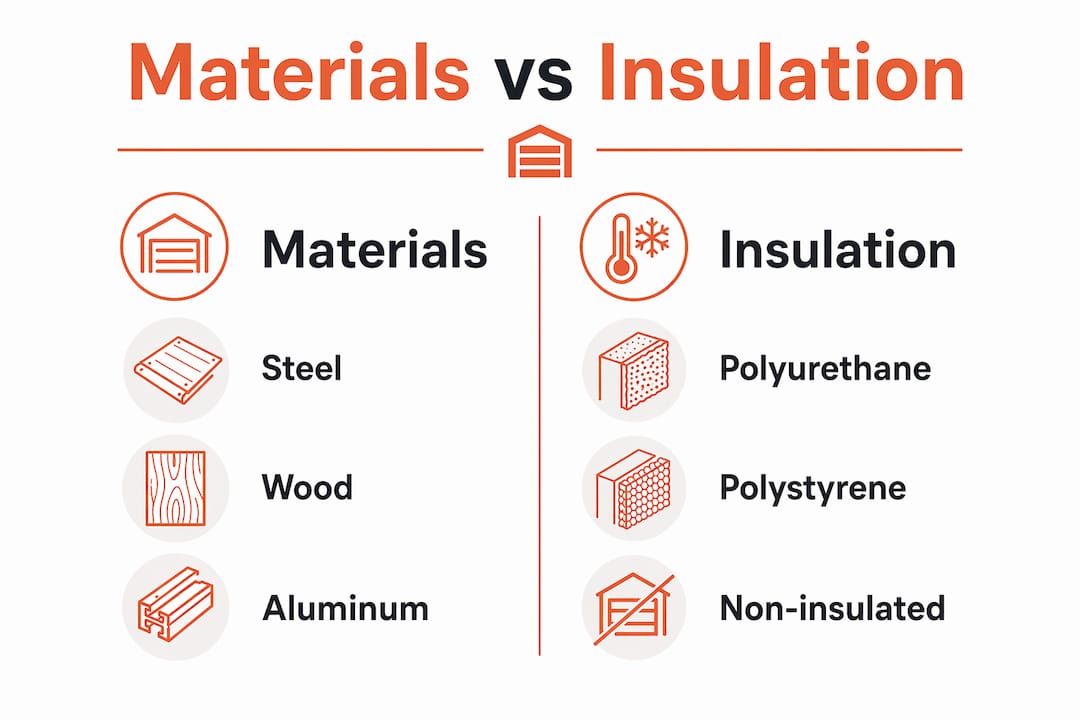
Insulation is where most homeowners leave real money on the table. The three core options are non-insulated (R-0 to R-1), polystyrene board (R-6 to R-13), and polyurethane foamed-in-place (R-13 to R-18+). The difference between polystyrene and polyurethane is not just the R-value number. Polyurethane foamed-in-place bonds to the steel panels, adding structural rigidity and superior sound dampening. Polystyrene boards can shift or separate over time, reducing both thermal and acoustic performance.
For conditioned garages, the 2024 IECC (International Energy Conservation Code) guidance requires higher R-values because the door is part of your home’s thermal envelope. Polyurethane insulated doors can improve interior garage temperatures by 10 to 20 degrees Fahrenheit, which directly reduces the load on your HVAC system.
Pro Tip: When comparing R-values, ask for the “effective R-value” of the whole door assembly, not just the core. Thermal bridging through the steel frame can reduce real-world performance below the advertised number. A door rated R-18 at the core may perform closer to R-12 as a full assembly.
You can explore the full breakdown of garage door materials to match your home’s style and climate needs before committing to a purchase.
What opener and hardware upgrades make the biggest difference?
The opener and hardware are where you feel the upgrade every single day. Most builder-grade systems use a chain-drive opener, which is loud, slow, and lacks any smart features. Replacing it transforms the experience.
Your three main opener categories are:
- Chain-drive. Cheapest, loudest, most common in builder-grade installs. Fine for detached garages where noise is not an issue.
- Belt-drive. Uses a rubber belt instead of a metal chain, reducing noise by a significant margin. Ideal for attached garages with living space above or beside.
- Jackshaft (side-mount). Mounts beside the door on the wall rather than on a ceiling track. Frees up ceiling space, operates quietly, and works well with high-lift conversions.
Modern smart openers include built-in Wi-Fi, smartphone control, real-time open/close alerts, scheduling, battery backup, and integrated cameras. LiftMaster’s myQ platform, for example, lets you monitor and control your door from anywhere. That is not a luxury feature anymore. It is the standard for any quality upgrade in 2026.
Hardware upgrades beyond the opener also deliver outsized returns:
- Nylon rollers replace noisy steel rollers and last longer under daily use.
- Bottom seals and weather stripping block drafts, dust, and pests. Builder-grade seals are typically thin rubber that compresses and cracks within two to three years.
- Torsion spring upgrades to 25,000-cycle or 100,000-cycle springs extend service life dramatically compared to the standard 10,000-cycle units.
Pro Tip: If you are upgrading the opener, replace the rollers and weather seals at the same time. The labor cost is already paid. Skipping those components now means paying a separate service call within a year.
For a full breakdown of costs and features, the smart opener installation guide from Edge Garage Doors covers what to expect.
Step-by-step process to upgrade your garage door system
A structured approach prevents costly mistakes and helps you decide whether a component upgrade or full replacement makes more sense for your situation.
- Assess the existing door. Check panels for dents, warping, and rust. Inspect tracks for bends or misalignment. Test the door balance by disconnecting the opener and lifting manually. A balanced door holds position at mid-height. If it drops or flies up, the springs need attention.
- Decide: component upgrade or full replacement. Upgrading springs, rollers, seals, and the opener is cost-effective when panels and tracks are structurally sound. If panels are dented, insulation is absent, or the door is more than 15 years old, full replacement delivers better long-term value.
- Choose your new door specifications. Measure the rough opening width and height. Select material, insulation level, and style. Order from a supplier or through your installer. Lead times for custom or specialty doors can run two to four weeks.
- Plan the installation. Full door replacement costs typically range from $750 to $1,700 for standard residential doors, with premium insulated or custom options reaching $8,000 or more. Budget for labor ($200 to $500) and opener replacement if needed.
- Schedule professional installation for springs. Torsion springs are under extreme tension and cause serious injury when handled incorrectly. This is not a DIY task. Everything else, including rollers, seals, and opener programming, is manageable for a confident homeowner.
- Test and verify after installation. Check auto-reverse safety function, confirm Wi-Fi connectivity on smart openers, and test weather seal contact along the full perimeter.
| Upgrade type | Approximate cost | Best when |
|---|---|---|
| Springs and rollers only | $150 to $350 | Panels are sound, door is under 10 years old |
| Full hardware kit (springs, rollers, seals) | $300 to $600 | Door is functional but noisy and drafty |
| Opener replacement | $300 to $700 installed | Existing opener is chain-drive or lacks smart features |
| Full door replacement | $750 to $8,000+ | Panels damaged, insulation poor, door over 15 years |
Maintenance and troubleshooting after your upgrade
A quality upgrade lasts significantly longer when you follow a basic maintenance routine. Most post-upgrade problems are minor and easy to address before they become expensive.
Watch for these common issues in the first year after upgrading:
- Door not closing fully. Usually a misaligned safety sensor or an obstruction in the sensor beam path. Clean the sensor lenses and confirm they are aligned.
- Opener connectivity dropping. Smart openers rely on your home Wi-Fi. Place your router closer to the garage or add a Wi-Fi extender if signal strength is weak.
- New squeaking or grinding. Nylon rollers need no lubrication, but torsion spring hardware and hinges benefit from a light application of white lithium grease every six months. Never use WD-40 on garage door components. It attracts dust and degrades rubber seals.
- Weather seal gaps. Bottom seals compress over time. If you see light under the door or feel drafts, the seal needs replacement. This is a straightforward fix and costs under $50 in most cases.
- Spring tension issues. If the door feels heavy when lifting manually or slams down faster than expected, spring tension needs professional adjustment. Do not attempt to adjust torsion springs yourself.
Signs that panels are damaged or that multiple components are wearing simultaneously are a signal that full replacement is more economical than continued repairs. A good rule of thumb: if a repair costs more than 50% of a new door’s price, replace the door.
Schedule a full inspection and lubrication service annually. Most professional garage door companies complete this in under an hour and catch small problems before they become emergency calls.
Key takeaways
Upgrading a builder-grade garage door delivers the highest return on investment of any home improvement when you address materials, insulation, opener, and hardware as a complete system rather than patching individual failures.
| Point | Details |
|---|---|
| Builder-grade doors fail fast | Standard 10,000-cycle springs and thin panels degrade within 3 to 5 years under normal family use. |
| Polyurethane insulation outperforms polystyrene | Foamed-in-place cores bond to panels, improve temps by 10 to 20°F, and add structural rigidity. |
| Smart openers are now standard | Belt-drive or jackshaft openers with Wi-Fi, alerts, and battery backup replace noisy chain-drive units. |
| Full replacement beats repeated repairs | When panels are damaged or insulation is absent, replacement recoups up to 193.9% of costs at resale. |
| Upgrade as a system, not in pieces | Replacing springs, rollers, seals, and opener together costs less than separate service calls over time. |
Why I always tell homeowners to think in systems, not parts
I have seen the same pattern play out dozens of times. A homeowner replaces a broken spring, then calls back six months later for rollers, then again for the opener, then again because the door still sounds like a freight train and lets in cold air. Each individual repair made sense on paper. The total bill over two years did not.
Builder-grade systems fail from minimum specs across the board. The spring is cheap, the rollers are cheap, the opener is cheap, and the insulation is essentially absent. When one component reaches its limit, the others are usually right behind it. Fixing one piece at a time is like replacing one bald tire and leaving three others on the car.
The homeowners who get the best outcome are the ones who assess the whole system first. If the panels are sound and the tracks are straight, a targeted hardware upgrade, meaning springs, rollers, seals, and opener together, delivers a near-new experience at a fraction of replacement cost. If the panels are dented, faded, or uninsulated, a full replacement is the smarter financial decision, especially given the resale return data.
One thing I see consistently overlooked is insulation. In Central Texas, an uninsulated garage door is a direct contributor to high summer cooling bills. A polyurethane-core door with an R-13 or higher rating changes the comfort level of the entire attached garage and the rooms adjacent to it. That is not a minor upgrade. That is a meaningful quality-of-life improvement that pays back every month on your utility bill.
My honest recommendation: before you spend another dollar on repairs, spend 20 minutes doing a proper condition assessment. Look at the panels, test the balance, check the seals, and listen to the opener. That 20 minutes will tell you whether you need a tune-up or a replacement, and it will save you from making the same repair call three times in two years.
— Oded
Ready to stop patching and start upgrading?
Edge Garage Doors works with homeowners across Austin, Cedar Park, and Central Texas to replace builder-grade systems with insulated doors, quiet belt-drive or jackshaft openers, and premium hardware that actually lasts. The team provides honest diagnostics, not pressure-based sales, so you know exactly what your system needs before any work begins.
If you are not sure whether your current door needs a repair or a full replacement, the repair vs. replace guide walks you through the decision with clear criteria. For homeowners ready to move forward, Edge Garage Doors offers full garage door installation services with same-week scheduling available in most areas. Call or book online to get a straight answer and a real quote.
FAQ
What is a builder-grade garage door?
A builder-grade garage door is a minimum-specification door installed by home builders to control construction costs, typically featuring thin steel panels, R-0 to R-6 insulation, and a basic chain-drive opener. These doors meet code requirements but are not designed for long-term durability or energy performance.
How much does it cost to replace a builder-grade garage door?
Full replacement costs range from $750 to $1,700 for standard residential doors, with premium insulated or custom options reaching $8,000 or more depending on size, materials, and labor. Component-only upgrades, covering springs, rollers, seals, and opener, typically run $600 to $1,300 installed.
What R-value should I choose for an upgraded garage door?
For attached or conditioned garages, an R-13 to R-18+ polyurethane-core door is the recommended choice, as it improves interior temperatures by 10 to 20 degrees Fahrenheit and meets 2024 IECC energy code requirements. Non-conditioned detached garages can use R-6 to R-13 polystyrene options at lower cost.
Is a belt-drive opener worth the extra cost over chain-drive?
Yes, especially for attached garages. Belt-drive openers operate significantly quieter than chain-drive units and most modern models include smart features like Wi-Fi control, real-time alerts, and battery backup that chain-drive openers at the same price point do not offer.
Can I upgrade just the opener and hardware without replacing the full door?
Yes, if your door panels are structurally sound with no warping, significant denting, or missing insulation. Upgrading springs to 25,000-cycle units, replacing steel rollers with nylon, installing new weather seals, and adding a smart belt-drive opener delivers a dramatically improved system without the cost of full door replacement.