
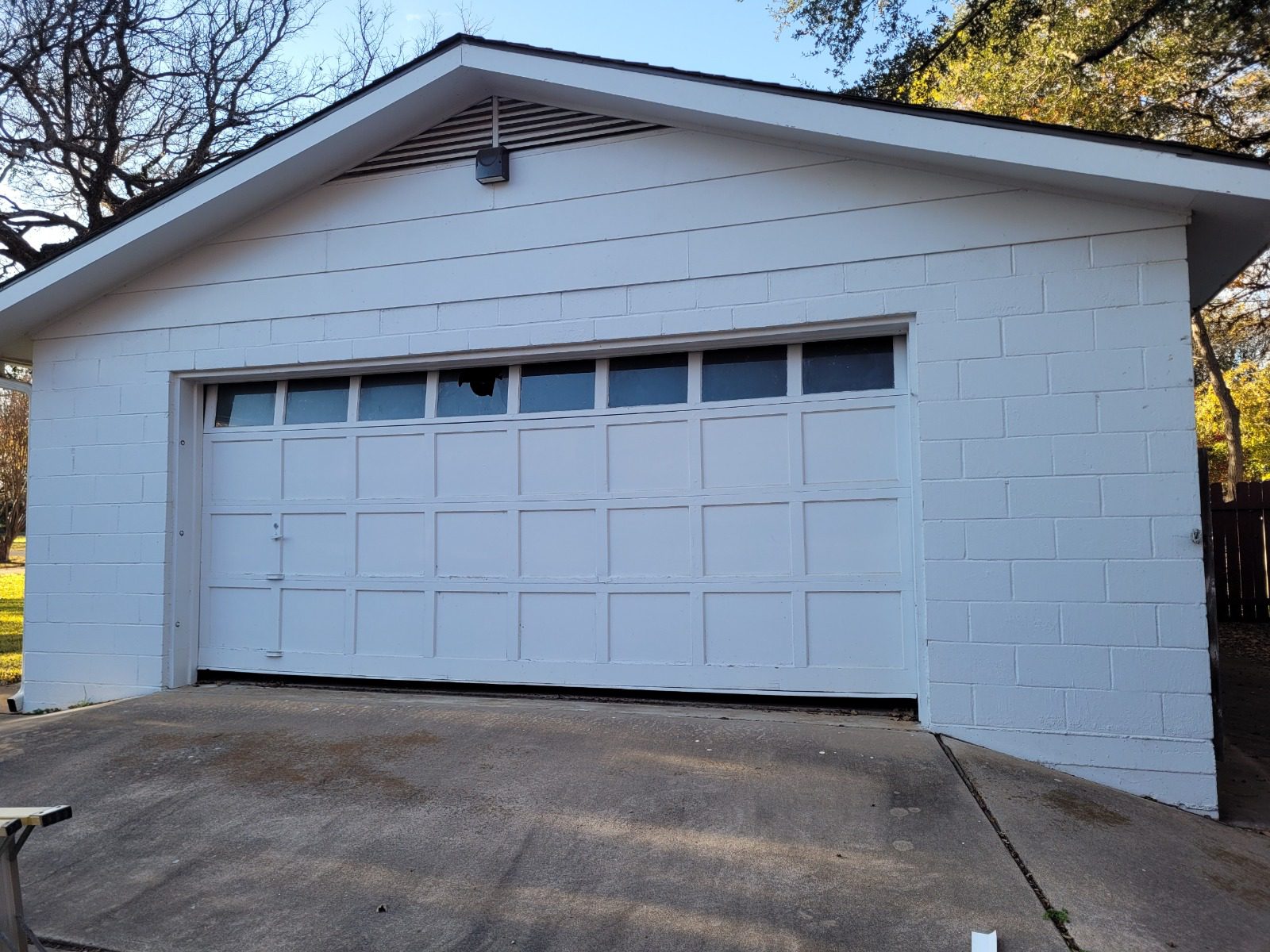
A garage door architectural design guide gives homeowners a clear framework for selecting a door that functions as a true exterior design element, not just a mechanical panel. Your garage door covers up to 40% of your home’s front facade, making it one of the most visible design decisions you will make. The right door creates visual harmony between your home’s roofline, windows, trim, and exterior materials. The wrong one looks like an afterthought bolted onto an otherwise well-designed house. This guide covers style matching, material selection, insulation performance, and curb appeal details so you can make a confident, informed choice.
What is a garage door architectural design guide?
An architectural garage door is any door selected and configured to integrate with the specific design language of a home’s exterior, rather than chosen purely for price or availability. The industry term for this approach is “architectural integration,” and it treats the garage door as a facade element on par with windows, siding, and entry doors. Matching garage door style to the home’s architectural style is the primary step for design cohesion. This matters because visual continuity between panel geometry, material texture, and home style is what makes a door look intentional rather than generic.
How do you identify your home’s architectural style?
Identifying roof shape, exterior materials, window designs, and trim details guides garage door style choice more reliably than any other method. Before you browse door catalogs, walk around the outside of your home and take notes on four things: roofline pitch, window shape, exterior cladding, and decorative trim. These four elements tell you almost everything you need to know about which door style will look like it belongs.
Here is how common architectural styles translate into design cues:
- Modern and contemporary homes feature flat or low-pitch roofs, large rectangular windows, and smooth stucco or fiber cement siding. Clean lines and minimal ornamentation define the look.
- Farmhouse and Craftsman homes use steep gabled roofs, natural wood or board-and-batten siding, and windows with divided light grilles. Warmth and handcrafted detail are the visual signature.
- Traditional and colonial homes rely on symmetry, brick or lap siding, and double-hung windows with shutters. Raised panel details and classic proportions dominate.
- Ranch-style homes sit low to the ground with horizontal emphasis, wide overhangs, and mixed materials. The garage door needs to reinforce that horizontal flow rather than interrupt it.
Pro Tip: Take a photo of your home’s front facade and upload it to Clopay’s EZDoor™ visualization tool. You can preview different door styles, colors, and window configurations directly on your home’s image before spending a dollar.
Once you know your style category, you have a filter. Every door you consider either fits that filter or it does not. This step alone eliminates 80% of the options and saves hours of indecision.
Which garage door styles and materials match each architectural type?
The five core garage door styles each serve a different architectural purpose, and carriage house doors pair best with farmhouse and Craftsman styles, offering a rustic aesthetic with crossbuck panels and decorative hardware that reinforces warmth and tradition. Full-view aluminum doors, by contrast, belong on modern and contemporary homes where glass panels and slim aluminum frames echo the home’s clean geometry. Raised panel sectional doors are the workhorse of traditional and colonial homes, while flush steel doors work across a wide range of styles when finished in the right color.
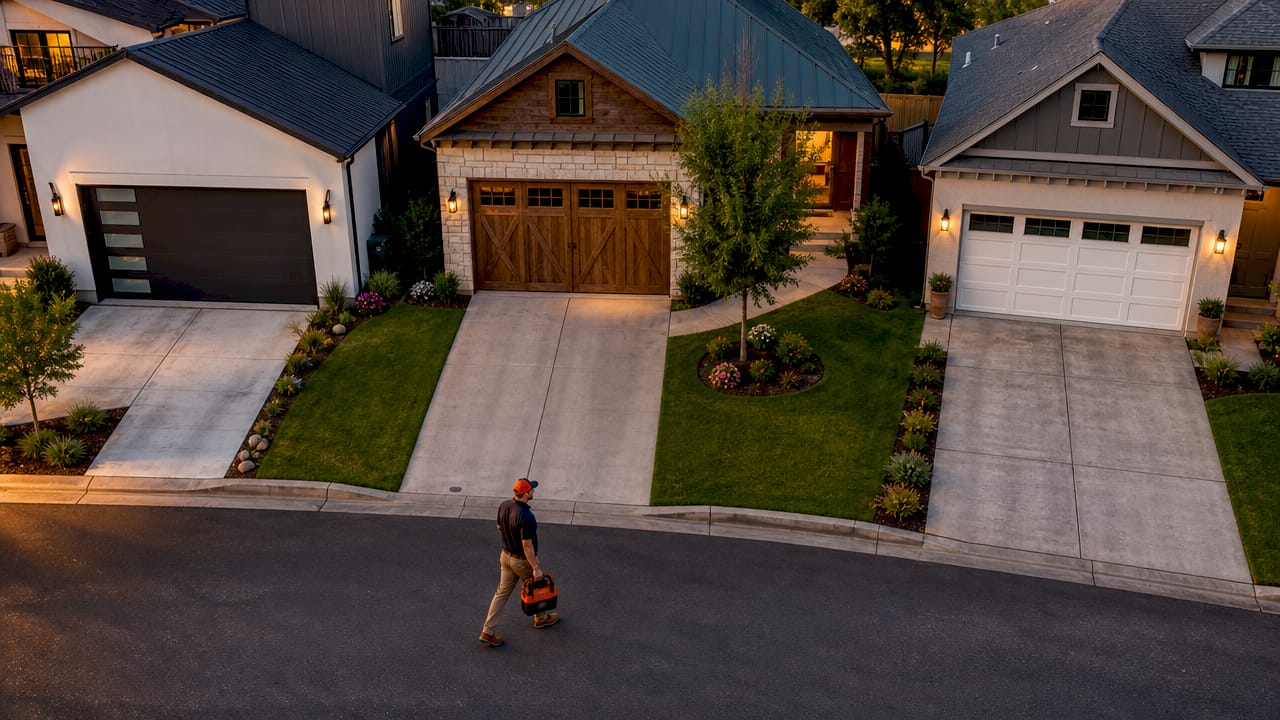
For materials, the choice comes down to four options, each with real trade-offs:
| Material | Best for | Durability | Maintenance | Cost range |
|---|---|---|---|---|
| Steel | Most architectural styles | High | Low | Moderate |
| Wood | Craftsman, farmhouse, traditional | Moderate | High | High |
| Composite (wood-look) | Craftsman, farmhouse | High | Low | Moderate to high |
| Aluminum | Modern, contemporary | Moderate | Low | Moderate to high |
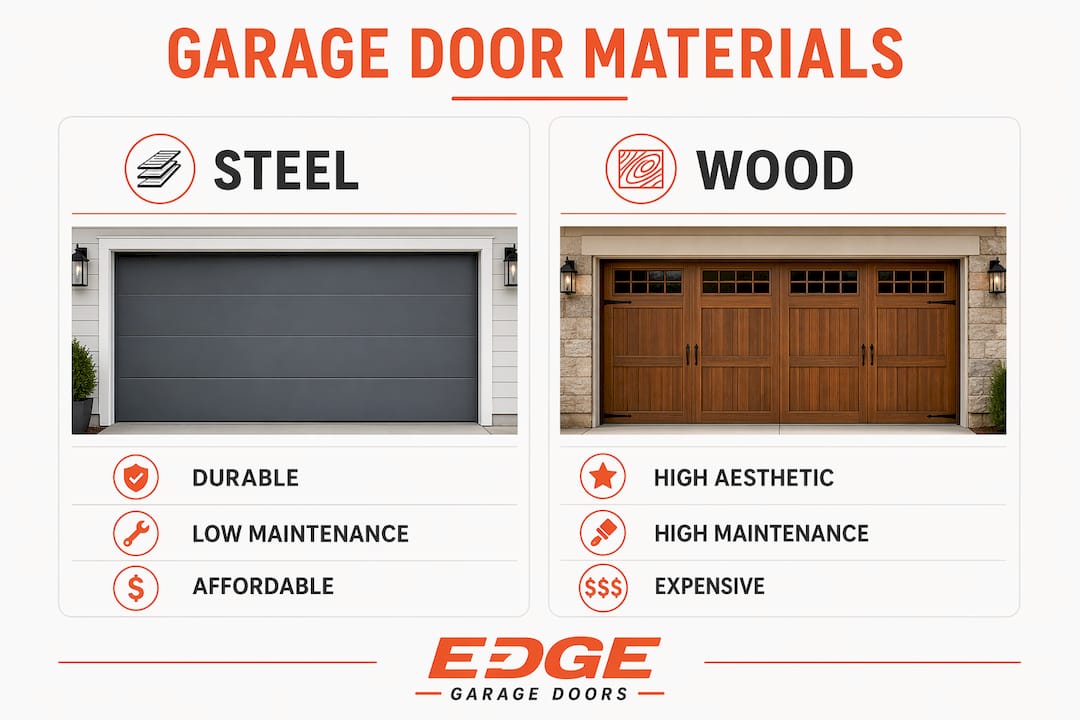
Steel is the most practical choice for most Texas homeowners. It holds paint well, resists denting better than aluminum, and accepts polyurethane insulation cores that wood cannot match. Wood is undeniably beautiful on a Craftsman bungalow, but in Central Texas heat and humidity, it requires repainting or re-staining every few years or it warps and cracks. Composite materials give you the wood grain look with far less upkeep, which is why they have grown in popularity for garage door facade upgrade examples across Austin neighborhoods.
Pro Tip: If you love the look of wood but dread the maintenance, choose a steel door with a woodgrain embossed finish. From the street, the difference is nearly invisible. From your driveway at 7 a.m. on a Saturday, the difference is enormous.
What do R-value and U-factor mean for garage door insulation?
R-value measures insulation core resistance, while U-factor measures overall door thermal performance including thermal bridges created by the door’s frame and hardware. This distinction matters more than most homeowners realize. A door advertised with a high R-value can still perform poorly in real conditions if the frame conducts heat around the insulation core. The U-factor gives you the whole picture, and homeowners should evaluate it with third-party verification for accurate thermal performance assessment.
There are three insulation tiers to understand:
- Non-insulated doors are single-layer steel with no thermal barrier. They are the cheapest option and the worst performer. Avoid them for any attached or conditioned garage.
- Polystyrene insulated doors use rigid foam boards sandwiched between steel layers. They improve thermal performance but can leave gaps at the edges where the board does not bond to the steel skin.
- Polyurethane insulated doors inject foam directly between the steel layers, bonding to both skins and creating a rigid composite structure. Polyurethane foam bonds to steel skins for superior strength and noise reduction compared to polystyrene.
The 2024 International Energy Conservation Code update raised the stakes significantly. Climate zones 6 and 7 effectively require sandwich polyurethane with R-18 to R-22 insulation for conditioned garage compliance. Even in Texas, where most homes fall in climate zones 2 and 3, conditioned garages used as workshops, gyms, or home offices need doors that perform well above the builder-grade standard.
| Insulation type | R-value range | Thermal bridging risk | Best use case |
|---|---|---|---|
| Non-insulated | None | High | Detached, unconditioned garages |
| Polystyrene | R-6 to R-10 | Moderate | Mild climates, budget installs |
| Polyurethane | R-12 to R-22 | Low | Conditioned garages, hot or cold climates |
Pro Tip: Ask your installer for the door’s certified U-factor, not just the R-value. If they cannot provide a third-party verified U-factor, that is a signal the door’s real-world thermal performance has not been independently tested.
How do colors, windows, and hardware affect curb appeal?
Color choices differ by architectural style: modern homes favor blacks and dark metallics, while farmhouse and Craftsman homes lean toward whites, warm grays, and wood tones. Color is the fastest and most affordable way to either unify or destroy your home’s exterior. A black door on a modern home with black window frames reads as intentional and sophisticated. That same black door on a red brick colonial looks like a mistake.
Windows and hardware are where the design gets personal. Window shapes can match home windows, and hardware style should align with the overall home aesthetic for authenticity. A Craftsman home with square-pane windows on the front door looks best with matching square-pane windows on the garage door. A farmhouse with arched window details benefits from arched garage door windows that echo that curve.
Here are the key curb appeal details to get right:
- Color coordination: Match the garage door color to your trim, shutters, or front door rather than the siding. This creates a cohesive color story across all the home’s accent elements.
- Window placement: Upper-row windows on a sectional door add light and visual interest without sacrificing privacy. Full-length windows work on modern doors where transparency is part of the design intent.
- Decorative hardware: Hinges, handles, and straps on carriage house doors should use the same finish as your exterior light fixtures and house numbers. Mixing oil-rubbed bronze hardware with brushed nickel fixtures is the kind of detail that bothers you every time you pull into the driveway.
- Driveway and landscaping integration: The garage door driveway visual flow matters as much as the door itself. A beautiful door framed by cracked concrete and overgrown shrubs still looks neglected.
How do you plan and execute a garage door design upgrade?
A well-executed garage door remodel follows a clear sequence, and skipping steps is where most homeowners waste money or end up with a door they regret.
- Assess your current situation. Measure your opening, note your home’s architectural style, and decide whether you need a full replacement or a panel upgrade. The replace vs. repair decision depends on the door’s age, condition, and how far the current style deviates from what you want.
- Use a visualization tool. Clopay’s EZDoor™ and similar tools let you preview styles and colors on your actual home before committing. This step alone prevents the most common mistake: choosing a door that looks great in a showroom and wrong on your house.
- Set your performance requirements. Decide whether your garage is conditioned or unconditioned, and choose your insulation tier accordingly. Factor in noise reduction if the garage is attached to a bedroom wall.
- Get a professional consultation. Experts help narrow choices and confirm compliance with local energy codes and building standards. In Austin, this matters more than homeowners expect because Central Texas summers push garage temperatures well above 100°F.
- Verify installation credentials. A door installed without proper spring tension calibration, track alignment, and weather seal fitting will underperform regardless of its quality. Check for manufacturer-certified installers.
Common mistakes to avoid:
- Choosing a door style that conflicts with the home’s roofline geometry
- Prioritizing R-value over U-factor when comparing insulation performance
- Selecting hardware finishes that clash with existing exterior fixtures
- Skipping the visualization step and relying on catalog photos alone
Key takeaways
Architectural garage door selection requires matching style, material, insulation performance, and design details to your home’s specific exterior language for lasting curb appeal and energy efficiency.
| Point | Details |
|---|---|
| Style matching is foundational | Identify roofline, cladding, and window shapes before selecting any door style. |
| Material choice affects long-term cost | Steel with polyurethane insulation outperforms wood on durability and thermal efficiency in Texas climates. |
| U-factor beats R-value alone | Whole-door U-factor with third-party verification gives a more accurate thermal performance picture. |
| Design details unify the facade | Match window shapes, hardware finishes, and door color to existing exterior accent elements. |
| Professional installation protects performance | Certified installers calibrate spring tension, track alignment, and weather sealing for full door performance. |
Why garage doors deserve more design attention than they get
I have seen hundreds of homes where the owner spent serious money on landscaping, a new front door, and fresh paint, then left a builder-grade white raised-panel door that was installed in 2003. The door is the first thing your eye goes to because it is the largest single surface on the front of the house. Ignoring it is like buying a tailored suit and wearing it with flip-flops.
What I find most interesting is how the energy code conversation has shifted. A few years ago, insulation was a comfort upgrade. Now, with the 2024 IECC pushing conditioned garage requirements toward R-18 and above, it is a compliance issue in many markets. Homeowners who are converting garages into usable living space need to treat the door the same way they treat a wall assembly, not as an afterthought.
The visualization tools available today, particularly Clopay’s EZDoor™, have genuinely changed how confident homeowners feel going into a purchase. The old process was: look at a catalog, guess how it would look, and hope for the best. Now you can upload a photo of your actual house and see the door on it before you spend a dollar. That removes most of the risk from what used to be a stressful decision.
My honest advice: spend 30 minutes identifying your home’s architectural style before you look at a single door. That one step will save you from 90% of the bad choices. Then get a professional to verify your insulation requirements and installation plan. The door is only as good as the system it sits in.
— Oded
Ready to upgrade your garage door in Austin?
Edge Garage Doors works with Austin and Central Texas homeowners to select, install, and configure garage doors that fit their home’s architecture and performance needs. Whether you are replacing a builder-grade door with a modern full-view aluminum panel or upgrading to a polyurethane-insulated carriage house door for a Craftsman bungalow, the team at Edge Garage Doors handles the full process from style consultation to certified installation.
Not sure whether your current door needs a full replacement or targeted repairs? Start with the replace or repair guide to clarify your options. If you are ready to move forward with a new installation, explore professional garage door installation services in Austin, Cedar Park, and surrounding Central Texas communities. Edge Garage Doors brings the kind of honest, detailed guidance that makes a real difference in the final result.
FAQ
What is an architectural garage door?
An architectural garage door is one selected and configured to integrate with a home’s specific exterior design language, treating the door as a facade element rather than a purely functional component. The goal is visual continuity between the door’s panel geometry, material, and the home’s roofline, windows, and trim.
How do I match my garage door to my home’s style?
Identify your home’s roofline pitch, exterior cladding, window shapes, and trim details first, then select a door style that mirrors those design cues. Carriage house doors suit farmhouse and Craftsman homes, full-view aluminum fits modern homes, and raised panel sectional doors work best on traditional and colonial styles.
What is the difference between R-value and U-factor for garage doors?
R-value measures the thermal resistance of the insulation core only, while U-factor measures the thermal performance of the entire door assembly including the frame and hardware. U-factor with third-party verification gives a more accurate picture of real-world energy performance.
Do I need a highly insulated garage door in Texas?
For attached or conditioned garages in Central Texas, a polyurethane-insulated door with a verified U-factor is the right choice given summer temperatures that regularly exceed 100°F. Unconditioned detached garages have more flexibility, but insulation still improves comfort and reduces noise.
How much does a garage door design upgrade affect curb appeal?
The garage door covers up to 40% of a home’s front facade, making it one of the highest-impact exterior upgrades available. Matching the door style, color, and hardware to the home’s architectural details creates immediate visual cohesion that improves both curb appeal and perceived home value.