
Common garage door weather damage is defined as the degradation of door panels, hardware, seals, and mechanical components caused by moisture, heat, wind, and cold. Central Texas homeowners face all four of these forces in a single calendar year, sometimes in a single week. Rust, panel warping, seal failure, and track misalignment are the most frequent results. Catching these problems early keeps a repair bill from turning into a full replacement.
1. How moisture and rain cause garage door damage
Moisture is the most consistent threat to garage doors in Central Texas. Humidity spikes after spring storms, and standing water near the base of the door accelerates rust on metal components like hinges, springs, and tracks. Wood and composite panels absorb moisture, swell, and eventually rot if the problem goes unaddressed.
The damage is not always visible right away. Water that seeps past a worn bottom seal can reach the opener’s wiring and photo-eye sensors, causing erratic behavior or false reversals. The bottom seal is the primary defense against water intrusion and wears fastest due to constant compression and ground contact. Replacing it every 3–5 years in wet climates is the standard recommendation.
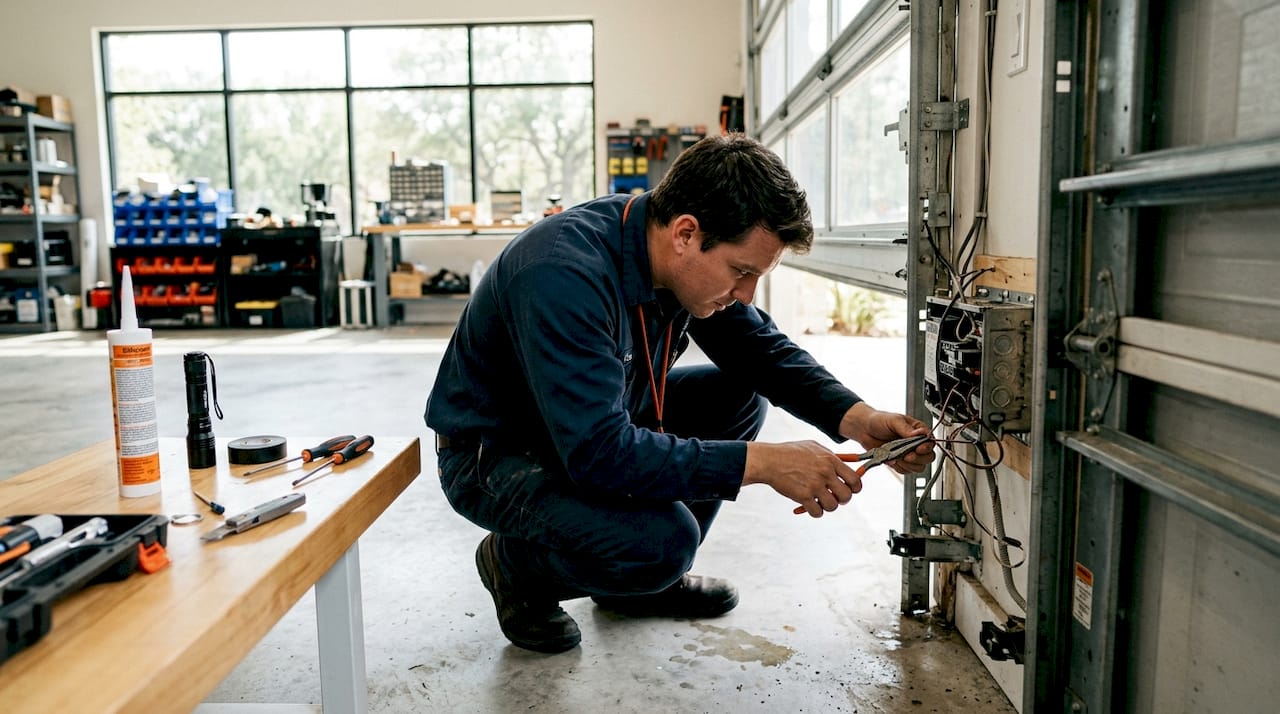
Side and top seals also crack or compress over time, creating gaps that let moisture infiltrate the panel edges. Once water gets behind a steel panel, rust forms on the interior face where you cannot see it. By the time surface rust appears, the damage is already significant.
Key signs of moisture damage to check after heavy rain:
- Orange or brown streaking on panel faces or along track edges
- Soft spots, bubbling paint, or visible rot on wood panels
- Gaps visible between the bottom seal and the floor
- Opener reversing without contact or photo-eye light blinking
Pro Tip: Run your hand along the bottom seal after a rainstorm. If the concrete inside the garage is wet within six inches of the door, the seal needs replacement now, not next season.
2. Heat and sun exposure damage in Central Texas
Central Texas summers are brutal on garage doors. Heat expands metal parts causing track misalignment and increased strain on the opener motor, which shortens its lifespan. A door that runs smoothly in march may feel jerky and loud by july because the tracks have shifted slightly from thermal expansion.
UV exposure compounds the problem. Paint on steel and wood doors fades, cracks, and peels after repeated sun exposure. Composite and wood panels warp when surface temperatures climb above what the material was rated for. Rubber seals become brittle and lose their compression fit, which defeats the purpose of weatherproofing garage doors entirely.
The opener motor itself suffers in extreme heat. Units mounted in uninsulated garages can run at temperatures well above their rated operating range during a Texas summer. This shortens motor life and increases the chance of mid-cycle failures.
Maintenance practices that reduce heat damage:
- Apply a UV-resistant paint or sealant to wood and composite panels each spring
- Check rubber seals for brittleness and cracking before summer begins
- Schedule a seasonal tune-up in Austin each spring to catch heat-related alignment issues early
- Consider an insulated door if your garage faces west or south, where afternoon sun is most intense
Insulated steel doors with a polyurethane core handle thermal expansion far better than single-layer steel. The insulation layer buffers temperature swings, which means less metal movement and less stress on tracks and springs over time.
3. Wind, storms, and debris impact on garage doors
High winds are a direct physical threat to garage door panels and hardware. Flying debris dents and creases panels, and repeated wind pressure loosens the mounting bolts that hold tracks to the wall. Storm damage can be hidden in the form of bowed panels, subtle track shifts, and loosened hardware that only becomes a problem weeks later.
Post-storm inspection steps every Central Texas homeowner should follow:
- Walk the full perimeter of the door and look for dents, creases, or bowing in any panel.
- Check both vertical tracks for gaps between the track and the wall bracket.
- Manually lift the door halfway and release it. It should stay in place without drifting up or down.
- Run the opener through a full cycle and listen for grinding, popping, or hesitation.
- Inspect the weather stripping on all four sides for tears or displacement.
Spring tension and cables also take stress during high-wind events. A door that flexes repeatedly under wind load puts uneven force on the cables, which can cause fraying at the drum. This is one of the most overlooked causes of cable failure in Central Texas.
Pro Tip: If your door moved or rattled significantly during a storm, do the manual balance test before running the opener again. A misaligned door running on a motor puts stress on every component in the system.
4. Cold weather effects on garage door function and seals
Central Texas does not get sustained winters, but temperature swings between november and february are sharp enough to cause real mechanical problems. Cold weather thickens lubricants and makes metal brittle, increasing friction, slowing door movement, and raising the risk of spring breakage. A spring that was already showing wear is far more likely to snap on a cold morning than on a mild one.
Temperature fluctuations cause compression set and freeze-thaw cracks in seals, which worsens gaps and accelerates water intrusion and rust over time. The bottom seal is especially vulnerable. If it freezes to the concrete floor overnight, pulling the door open tears the seal and leaves a gap that stays open until you replace it.
| Component | Cold weather effect | Recommended action |
|---|---|---|
| Torsion springs | Brittleness increases breakage risk | Lubricate in fall; inspect for wear |
| Bottom seal | Freezes to floor, tears on opening | Apply silicone spray to seal before freezing temps |
| Opener motor | Battery and sensor performance drops | Test auto-reverse monthly |
| Rollers | Grease thickens, movement slows | Switch to low-temperature lubricant |
| Photo-eye sensors | Misalignment from metal contraction | Realign and clean lenses each fall |
The monthly auto-reverse safety test is especially important in cold months. Place a 2×4 flat on the floor in the door’s path. The door must reverse within two seconds of contact. Failure means the opener’s force setting has drifted, which cold temperatures can cause, and the system needs immediate inspection.
Lubrication timing matters more than most homeowners realize. Fall lubrication with silicone spray or white lithium grease prepares the system before temperatures drop. Avoid WD-40 as a long-term lubricant. It displaces moisture short-term but leaves components dry and attracts dirt, which accelerates wear on rollers and tracks.
Key takeaways
Weatherproofing garage doors in Central Texas requires addressing moisture, heat, wind, and cold as separate but connected threats to panels, seals, and mechanical components.
| Point | Details |
|---|---|
| Moisture causes hidden damage | Inspect bottom and perimeter seals after every major rainstorm to catch water intrusion early. |
| Heat stresses metal and seals | Schedule a spring tune-up to catch track misalignment and seal brittleness before summer peaks. |
| Storm damage is often invisible | Run a full manual and mechanical inspection after any high-wind event before using the opener. |
| Cold snaps break springs and seals | Lubricate all moving parts in fall and test the auto-reverse function monthly through winter. |
| Wrong lubricant worsens wear | Use silicone spray or white lithium grease only. WD-40 attracts dirt and dries out components. |
What I’ve learned after years of Central Texas garage doors
The most expensive repairs I see are not from one catastrophic storm. They come from six months of ignored moisture damage or a homeowner who used WD-40 every time the door squeaked. The damage compounds quietly.
The routine inspection and maintenance schedule that actually works for Central Texas is simple: a quick visual check monthly, lubrication in spring and fall, and a professional tune-up once a year. Most homeowners skip the monthly check entirely. That is where the problems start.
One thing I tell every homeowner: your opener is a diagnostic tool. If it starts reversing unexpectedly, slowing down, or straining audibly, the door is telling you something changed. Weather is almost always the cause. A door that ran fine in october and struggles in january has a cold-weather issue, not a mechanical failure. Catching that distinction saves you from replacing parts that do not need replacing.
The other mistake I see constantly is treating weatherstripping as a one-time installation. Perimeter seals and bottom seals are wear items. They need to be checked every season and replaced on a schedule, not just when you can see daylight under the door. By the time you see daylight, water has already been getting in for months.
— Oded
Weather damage repair and replacement services in Central Texas
Central Texas weather does not give garage doors a break, and some damage goes well beyond what a tube of lubricant and a new seal can fix. Bowed panels, broken springs, and track misalignment from storm or heat damage all need a trained eye to assess correctly.
Edge garage doors serves Austin, Cedar Park, Leander, Round Rock, Georgetown, and the surrounding Central Texas area with honest diagnostics and no-pressure recommendations. If you are not sure whether your door needs a repair or a full replacement, the repair vs. replace guide walks you through the decision clearly. For urgent issues after a storm or a cold snap, the warning signs checklist tells you exactly when to call. A professional inspection from Edge garage doors catches the damage you cannot see before it becomes the repair you cannot afford.
FAQ
What is the most common weather damage on garage doors in Central Texas?
Rust and corrosion on metal components, panel warping from UV and heat, and bottom seal failure from moisture are the most frequent issues. Central Texas homeowners face all three due to the region’s combination of humidity, intense sun, and sharp temperature swings.
How often should I replace my garage door weather stripping?
The bottom seal should be replaced every 3–5 years in wet climates, and perimeter seals should be inspected each season for cracking or compression loss. Replacing them on schedule prevents water intrusion that causes rust and wood rot.
Can cold weather break a garage door spring?
Yes. Cold temperatures make metal brittle and thicken lubricants, which increases friction and raises the risk of spring breakage. Lubricating springs and cables each fall significantly reduces cold-weather failures.
What lubricant should I use on my garage door?
Silicone spray or white lithium grease are the correct choices for rollers, hinges, and springs. WD-40 is not a long-term lubricant. It attracts dirt and leaves components dry, which accelerates wear on tracks and rollers.
How do I know if a storm damaged my garage door?
Check for dented or bowed panels, gaps between the track and wall brackets, and any change in how the door moves or sounds during a full cycle. Run the manual balance test by lifting the door halfway and releasing it. It should hold position without drifting.
Recommended
- Garage Door Won’t Open in Cold Weather in Austin TX: Complete Troubleshooting Guide – Edge Garage Doors
- Why Is My Garage Door Not Opening in Austin TX: Complete Troubleshooting Guide – Edge Garage Doors
- Why Garage Door Repair in Austin, TX Is Essential for Home Safety and Security
- How Much Does Garage Door Repair Cost in Austin TX: Complete 2026 Pricing Guide – Edge Garage Doors