
Garage door section replacement is the process of swapping out one or more individual damaged panels on your existing door to restore its appearance, security, and operation without replacing the entire unit. This targeted repair, which professionals call garage door panel repair, saves money when the damage is isolated and the door is relatively new. Brands like Amarr and Clopay manufacture modular panel systems specifically designed for this purpose. Knowing when panel replacement makes sense versus a full door swap is the decision that separates a smart repair from an expensive mistake.
What is garage door section replacement?
A garage door is not one solid piece. It is a series of horizontal sections, typically four to five panels stacked vertically, connected by hinges and guided along a track system with rollers. Each section carries its own weight in the door’s overall balance, insulation performance, and structural integrity.
When one panel takes a hit from a car bumper, a hailstorm, or a falling ladder, the rest of the door can remain fully functional. That is the core logic behind section replacement. You remove the damaged panel, source an exact match from the original manufacturer, and reinstall it with the existing hardware. The door operates as if nothing happened.
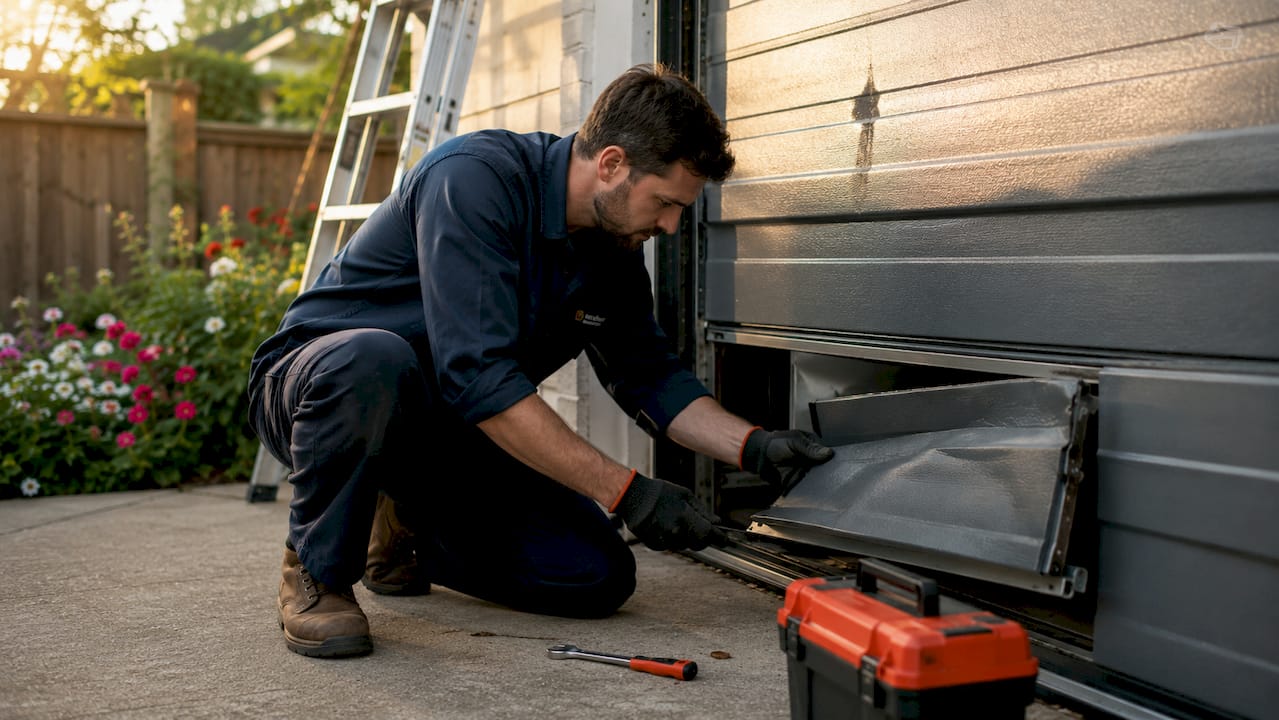
Panel materials and styles vary significantly. Here is a quick comparison to help you understand your options:
| Material | Durability | Insulation | Best For |
|---|---|---|---|
| Steel | High | Moderate to high | Most residential homes |
| Aluminum | Moderate | Low | Modern, contemporary styles |
| Wood | Moderate | Low | Traditional curb appeal |
| Composite | High | Moderate | Wood look with less maintenance |
Panel materials each carry different durability, insulation, and aesthetic properties. Steel is the most common choice in Central Texas because it handles heat, humidity, and the occasional rogue basketball better than most alternatives.
When should you replace a panel vs. the whole door?
This is the question that determines whether you spend $400 or $4,000. The answer depends on four factors: door age, damage scope, panel availability, and the condition of the mechanical system underneath.
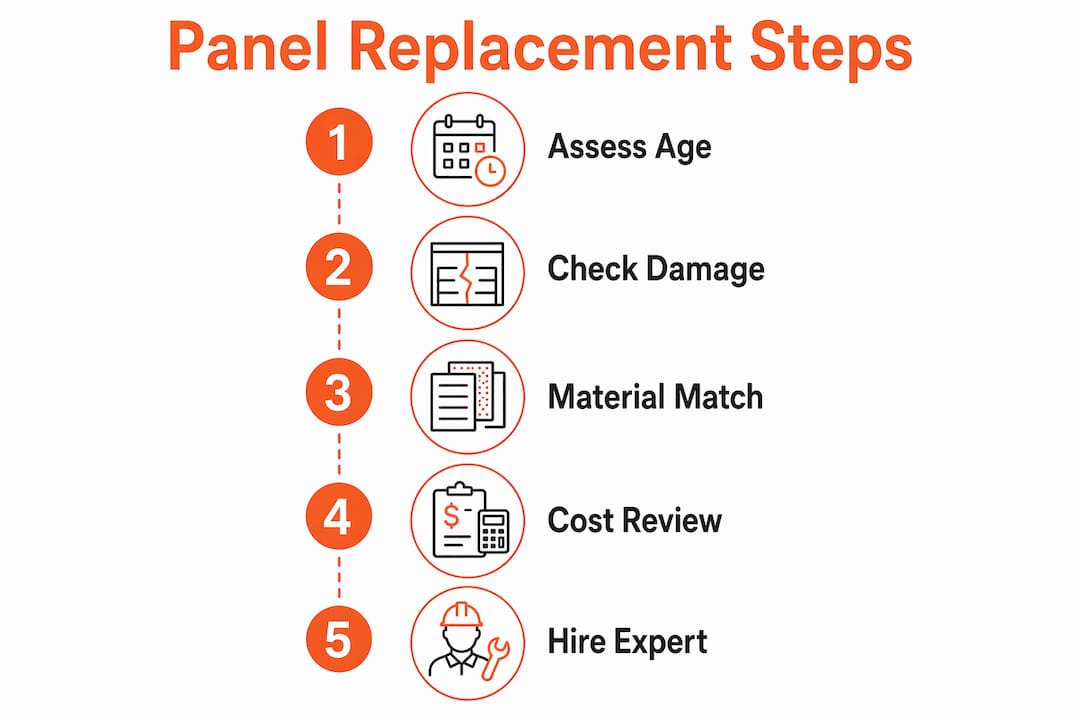
Panel replacement is recommended only when the door is less than 10–15 years old and the damage is isolated to a single, localized impact point. A newer Clopay or Amarr door with one dented section is a strong candidate. An aging builder-grade door with two bent panels, a worn torsion spring, and a noisy opener is not.
Doors over 15–20 years old are often better served by full replacement because panels may be discontinued or no longer align properly. Older sections also tend to lack modern insulation and safety features, which means you are patching an outdated system rather than fixing it.
Key factors that favor panel replacement:
- Damage is limited to one section with no warping of adjacent panels
- The door is under 15 years old and the manufacturer still produces matching panels
- The mechanical system, including springs, cables, and rollers, is in good condition
- The door’s color and style have not faded significantly from the original finish
Key factors that favor full door replacement:
- Multiple panels are damaged or structurally compromised
- The door shows binding, noisy operation, or worn components throughout
- Replacement panels are discontinued or require custom fabrication
- The door lacks insulation and you want modern energy performance
Experts recommend full door replacement when the door shows noisy operation, binding, or worn components rather than just replacing panels. A single panel fix on a door that is already struggling mechanically is a short-term solution to a long-term problem. You can also review the repair vs. replace decision in detail before committing to either path.
How does the replacement process actually work?
Professional garage door panel repair follows a clear sequence, but it carries real safety risks that make DIY attempts genuinely dangerous. Here is what the process looks like from start to finish:
- System inspection. A technician assesses the full door condition, not just the damaged panel. Panel damage often signals underlying mechanical issues like spring balance failure, meaning a panel swap without addressing root causes risks repeat damage.
- Torsion spring tension release. This is the most critical and dangerous step. Spring tension management requires specialized tools and professional training to avoid serious injury. Torsion springs store enormous energy, and an uncontrolled release can cause severe harm.
- Hardware disassembly. The technician unbolts hinges, removes rollers from the track, and carefully separates the damaged section from adjacent panels without disturbing the door’s alignment.
- Panel sourcing and matching. The replacement section must match the original in design, thickness, color, and manufacturer specifications. Technicians must confirm an exact match to prevent operational issues and aesthetic mismatches.
- Reinstallation and alignment. The new panel is fitted, hardware is reattached, and the door is tested through multiple cycles to confirm smooth, balanced operation.
- Final inspection. Springs are re-tensioned, the opener is tested, and the technician verifies that the door seals correctly at the bottom and sides.
The full replacement process typically takes 1–2 hours once the correct part has arrived. Lead time for sourcing the panel is often the longest variable, especially for older or less common door models.
Pro Tip: Never attempt torsion spring release without professional training. The stored energy in a standard residential torsion spring is equivalent to a serious mechanical hazard. This is the single step that turns a manageable repair into an emergency room visit.
How much does garage door section replacement cost?
The cost of garage door section replacement ranges from $350 to $900 for a single panel, depending on door style, panel size, material, and labor complexity. That range reflects real variation, not padding.
Here is what drives the price up or down:
- Panel availability. A current Clopay Gallery Series panel is easy to source. A discontinued model from a builder-grade door installed in 2005 may require custom fabrication, which costs significantly more.
- Material type. Wood and composite panels cost more than standard steel. Insulated steel panels with a polyurethane core sit in the middle of the range.
- Labor complexity. Doors with torsion spring systems require more careful handling than extension spring systems, which adds labor time.
- Door age. Older garage doors may need custom-fabricated panels if replacements are discontinued, often costing more than a modern full replacement with enhanced features.
For context, a full garage door replacement in the Austin area typically runs $1,200–$2,500 for a standard single-car door with installation. If your panel repair quote approaches $900 and the door is aging, the math often favors going new. A professional installation assessment will give you an honest comparison before you commit.
Always ask for a written quote that separates parts from labor. Hidden fees for spring handling or disposal of the old panel are common surprises that push final costs above initial estimates.
What material and style options exist for replacement panels?
Matching a replacement panel to your existing door is harder than it sounds. Manufacturers update their product lines regularly, and even panels from the same brand can have subtle design and thickness differences across production years.
A mismatched replacement panel can look worse than the original damage. That is not an exaggeration. A panel that is 2mm thicker than its neighbors will sit proud of the door surface, creating a visible ridge that catches light and draws the eye directly to the repair.
Style options for replacement sections include:
- Raised panel: The most common residential style. Rectangular raised sections give the door a traditional, structured look. Widely available from Amarr, Clopay, and Wayne Dalton.
- Recessed panel: A cleaner, more modern profile. The panel face sits below the frame edge, creating shadow lines that read as contemporary.
- Flat panel: Minimal and modern. Common in aluminum doors and contemporary architectural styles. Harder to match if the original finish has aged.
- Carriage house style: Decorative overlay panels that mimic swing-out barn doors. Matching these requires sourcing from the original manufacturer’s current catalog.
Color fading is the other major matching challenge. A steel panel that has been in the Texas sun for eight years will not match a brand-new panel straight from the factory. Professional sourcing capabilities matter here because experienced technicians know which manufacturers still carry close color matches and which ones require a full repaint after installation.
Pro Tip: If your door is more than seven years old and has significant sun exposure, ask your technician about repainting the full door after panel replacement. A uniform finish across all sections looks far better than a perfect panel surrounded by faded neighbors.
Key takeaways
Garage door panel repair is cost-effective only when the door is under 15 years old, the damage is isolated, and the mechanical system is sound.
| Point | Details |
|---|---|
| Age determines feasibility | Doors under 15 years old are the best candidates for single-panel replacement. |
| Mechanical condition matters | Inspect springs, cables, and rollers before replacing any panel to avoid repeat damage. |
| Matching is harder than it looks | Subtle manufacturing differences mean professional sourcing is required for a clean result. |
| Cost range is $350–$900 | Panel type, availability, and labor complexity drive the final price for most homeowners. |
| Full replacement often wins | Multiple damaged panels or an aging system make a new door the smarter long-term investment. |
What i have learned after seeing hundreds of panel repair decisions
Most homeowners who call about a dented panel are actually asking a bigger question: is this door worth saving? After working through this with countless Austin-area homeowners, my honest answer is that panel replacement is genuinely the right call about half the time.
The cases where it works beautifully are clear. A newer door, one clean impact, matching panels still in production, and a mechanical system that is running quietly and smoothly. In those situations, a panel swap is fast, affordable, and the door looks like nothing happened. That is a win.
The cases where it goes sideways are equally clear. Someone wants to save money on a 2008 builder-grade door that has been grinding and rattling for two years. The panel gets replaced, the door looks slightly better for six months, and then a spring fails or the opener burns out because the underlying system was already exhausted. Now they have spent $600 on a panel and still need a full replacement.
The uncomfortable truth is that panel damage is often a symptom, not the problem. Panel damage caused by mechanical failures like spring imbalance should be addressed as a complete system to avoid repeated damage after replacement. I have seen doors where a failing spring was pulling the door unevenly, and that uneven tension is what caused the panel to buckle in the first place. Replacing the panel without fixing the spring just sets up the next dent.
My advice: get a full system assessment before you approve any panel work. A good technician will tell you honestly whether the rest of the door justifies the repair. If they skip that conversation and go straight to quoting the panel, that is a red flag worth paying attention to.
— Oded
Get your garage door panels assessed by real experts
If you are weighing panel replacement against a full upgrade, the decision is easier with an honest assessment from someone who has seen both outcomes. Edge garage doors serves homeowners across Austin, Cedar Park, Leander, and surrounding Central Texas communities with straightforward diagnostics and no pressure to spend more than the situation requires.
Edge garage doors sources authentic replacement panels directly from manufacturers like Amarr, Clopay, and Wayne Dalton, which means color and style matching is as accurate as possible. Every panel job includes a full mechanical inspection so you know exactly what condition your springs, cables, and opener are in before any work begins. If a full replacement makes more financial sense, the team will tell you that directly. You can start with the replace vs. repair guide or book a panel replacement assessment to get a written quote with no surprises.
FAQ
How do i know if my garage door panel can be replaced?
Panel replacement is recommended when the door is under 15 years old and the damage is limited to one section. If multiple panels are damaged or the door shows mechanical problems, full replacement is usually the better option.
Is replacing a garage door panel a DIY job?
Garage door panel repair is not a safe DIY project for most homeowners. Releasing torsion spring tension requires specialized tools and training, and an uncontrolled spring release can cause serious injury.
Why does my replacement panel look different from the rest of the door?
Matching replacement panels from the same brand can have subtle design and thickness differences due to manufacturing changes over time. Color fading from sun exposure also creates visible contrast between old and new sections.
What is the typical cost of garage door section replacement?
The cost of panel replacement runs from $350 to $900 for a single section, depending on material, panel availability, and labor complexity. Custom-fabricated panels for discontinued models can push costs higher than a new door.
How long does a professional panel replacement take?
The actual installation takes 1–2 hours once the replacement panel has been sourced. Locating an exact match from the original manufacturer is often the longest part of the process.