
A 3/4 HP garage door opener is the best choice for most double garage doors, delivering reliable power for doors weighing 300–500 lbs without burning out the motor. Knowing what opener works for a double garage door comes down to three factors: motor horsepower, drive type, and whether you want smart technology built in. This guide covers all three, with specific numbers and real product categories so you can make a confident decision before you buy or call a pro.
What opener works for a double garage door?
The industry term for this decision is “opener sizing,” and getting it wrong is the most common mistake homeowners make. A 3/4 HP opener is the optimal power rating for most double doors because it operates below its maximum capacity, which reduces wear and extends the motor’s lifespan. A 1/2 HP unit running near its limit every day will fail years earlier than a 3/4 HP unit cruising at 70% effort.
Most standard 16-foot double doors weigh between 300–500 lbs, which puts them squarely in the 3/4 HP sweet spot. If your door is a lightweight aluminum or thin steel panel under 300 lbs, a 1/2 HP motor handles the job. If you have a thick wood door or a heavily insulated steel door over 500 lbs, step up to 1 HP or higher.
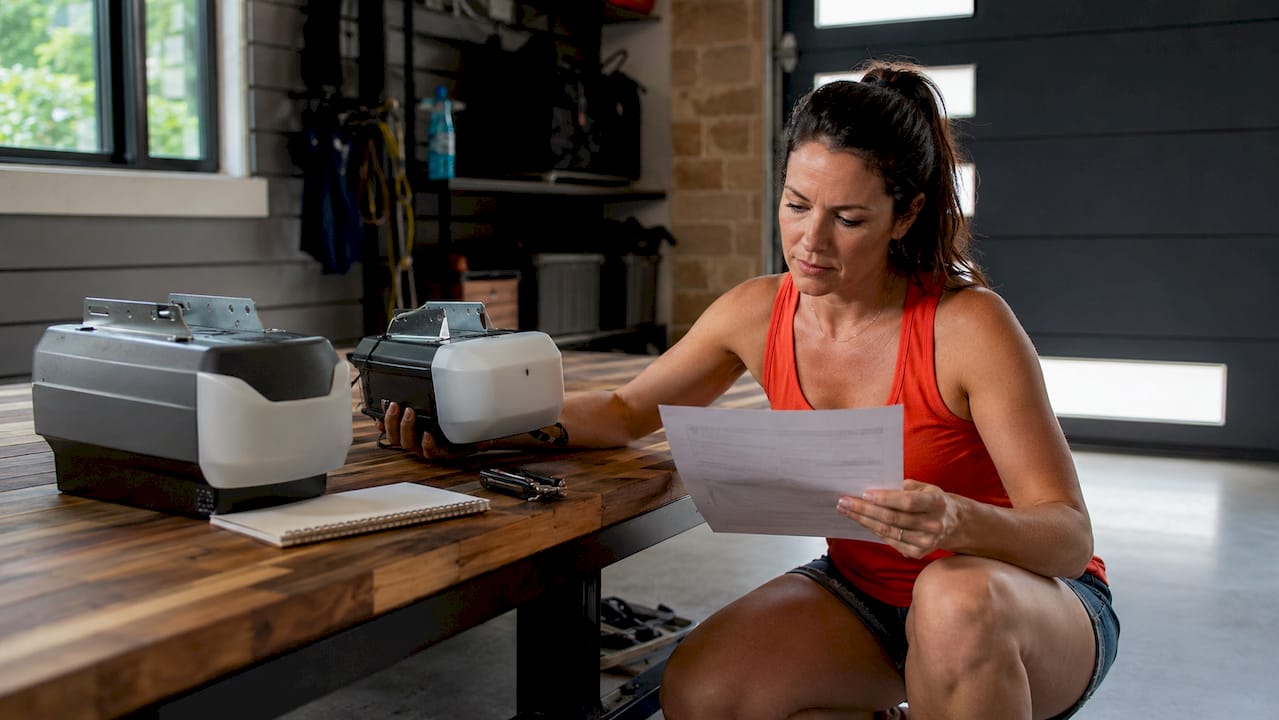
Here is a quick reference for matching motor power to door type:
| Door type | Approximate weight | Recommended HP |
|---|---|---|
| Lightweight aluminum or thin steel | Under 300 lbs | 1/2 HP |
| Standard insulated steel (16 ft) | 300–500 lbs | 3/4 HP |
| Heavy wood or thick insulated steel | 500+ lbs | 1 HP or higher |
Pro Tip: If you are unsure of your door’s weight, check the manufacturer label on the top panel or call the installer. Guessing down is always the more expensive mistake.
1/2 HP motors work fine for light doors but struggle with frequent use or heavier insulated panels. Motor strain shortens the opener’s life and can void the warranty. Spending an extra $50–$80 upfront on a 3/4 HP unit saves you a full replacement in three to five years.
Which drive type is best for a double garage door?
Drive type determines how the opener moves the door along the rail, and it affects noise, maintenance, and ceiling space. The four main double garage door opener types are chain drive, belt drive, screw drive, and wall-mount (also called jackshaft).
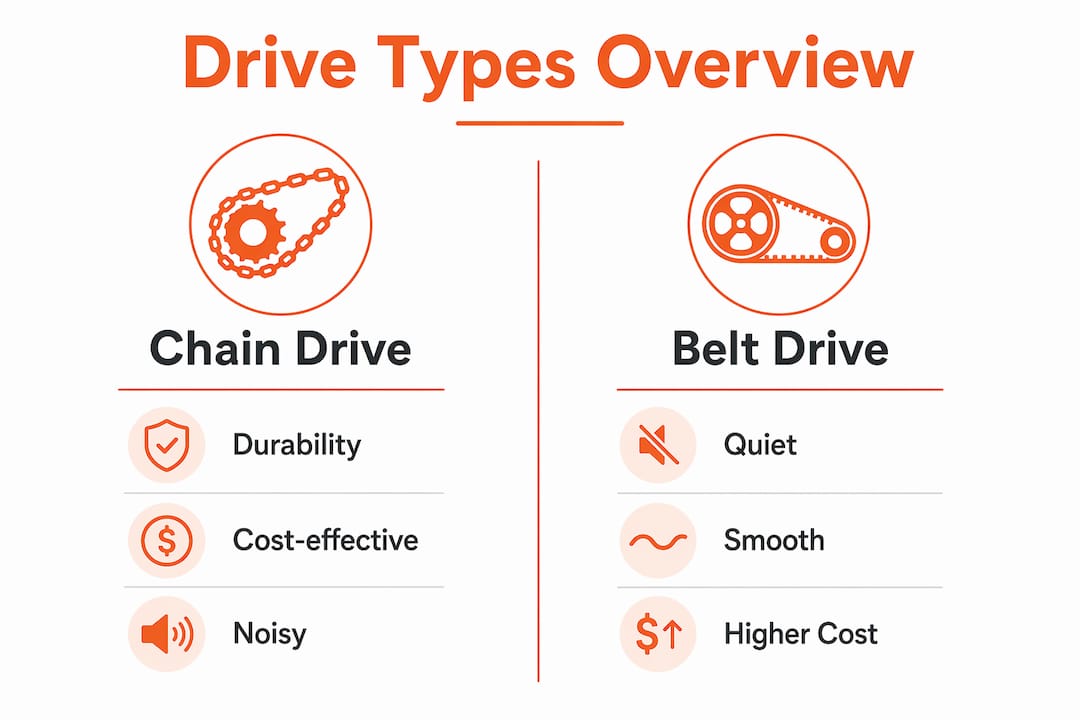
Chain drive
Chain drive openers are the most durable and the least expensive, typically running $150–$250 for the unit alone. The trade-off is noise. A chain drive sounds like a bicycle chain rattling at speed, which is noticeable if a bedroom or living room sits above the garage. For a detached garage or a space where noise is not a concern, chain drive is a solid, long-lasting choice.
Belt drive
Belt drive openers are quieter and smoother than chain drives, making them the top pick for attached garages with living spaces directly above. They cost $50–$100 more than chain drives but require less maintenance over time. LiftMaster’s 87504-267 and Chamberlain’s B6765 are two widely available belt drive models that handle double door weights comfortably at 3/4 HP.
Screw drive
Screw drive openers use a threaded steel rod to move the trolley. They sit between chain and belt drives in terms of noise and cost. They work well in climates with stable temperatures, but Texas heat can cause the rod to expand and create extra friction. For Central Texas homeowners, belt drive is generally the smarter long-term pick.
Wall-mount (jackshaft)
Wall-mount openers mount beside the door on the wall instead of overhead, which frees up ceiling space for storage, lifts, or taller vehicles. They are the best opener for double garage setups with low ceilings or overhead obstructions. The catch is clearance. Wall-mount openers require 4–6 inches of wall clearance beside the door and at least 12 inches of header clearance above the track. Without those measurements, installation is not possible without structural changes.
Key considerations when choosing a drive type:
- Noise sensitivity: Belt drive for attached garages; chain drive for detached
- Ceiling height: Wall-mount for low ceilings under 7 feet or cluttered overhead space
- Budget: Chain drive for cost-focused buyers; belt drive for long-term value
- Climate: Avoid screw drive in extreme heat or cold without lubrication upgrades
Are smart openers worth it for a double garage?
Smart garage door openers are worth the investment for most homeowners, and the technology has gotten significantly more affordable. A retrofit smart hub added to an existing opener costs $36–$220. A full smart opener replacement with built-in Wi-Fi and battery backup runs $350–$650. The gap between “add a hub” and “replace everything” is real, so your existing opener’s age and condition should drive that decision.
Smart openers connect to your phone via Wi-Fi, send open or close alerts, and integrate with platforms like Google Home, Amazon Alexa, and Apple HomeKit. GPS-based auto-close features close the door automatically when your car leaves a set radius. Battery backup keeps the door operational during power outages, which matters more than most people expect until the first Texas storm knocks out the grid.
One compatibility issue catches homeowners off guard. New smart openers use rolling-code security frequencies that can conflict with older car remotes. If your vehicle is pre-2010, check compatibility before buying. Some systems require brand-specific modules or repeaters to work with older vehicles.
Multi-door control is another factor worth checking. Some smart hubs only support one door, meaning a double garage with two separate openers may need two separate hubs. Systems like iSmartgate PRO support multiple doors from a single device, which is the cleaner solution. You can find a full breakdown of costs and features in this smart opener installation guide from Edge garage doors.
Pro Tip: Buy the smart opener with battery backup from day one. Adding it later almost always costs more than including it in the original purchase.
How to measure your double garage before installing an opener
Accurate measurement is the step most homeowners skip, and it causes the most installation delays. Never rely on builder specifications when choosing an opener or ordering parts. Measure your door manually, frame to frame, for both width and height.
Here is the measurement process to follow before installing a double garage opener:
- Measure door width from the inside of the left frame to the inside of the right frame at the widest point.
- Measure door height from the floor to the top of the door opening, not the top of the frame.
- Check headroom from the top of the door opening to the ceiling. Standard openers need at least 10 inches. Taller doors may need a rail extension kit.
- Check side room on both sides of the door. Most openers need 3.5 inches minimum on each side for the track hardware.
- Measure the depth of your garage from the door opening to the back wall. The door needs room to travel fully open without hitting your car or storage.
For taller doors over 8 feet, you will need a high-lift rail extension kit, which adds cost and installation time. Edge garage doors has a detailed door measurement guide that walks through every step with visuals if you want to double-check your numbers before calling a pro.
Key Takeaways
The best opener for a double garage door is a 3/4 HP unit matched to the door’s weight, drive type, and smart technology needs.
| Point | Details |
|---|---|
| Motor power matters most | Choose 3/4 HP for doors weighing 300–500 lbs to extend motor life and reduce wear. |
| Drive type affects daily life | Belt drive is quietest for attached garages; wall-mount saves ceiling space in tight setups. |
| Smart tech is affordable now | Retrofit hubs start at $36; full smart replacements run $350–$650 with Wi-Fi and battery backup. |
| Measure before you buy | Builder specs are often wrong. Measure frame to frame manually to avoid installation failures. |
| Check vehicle compatibility | Rolling-code smart openers may not work with pre-2010 car remotes without extra modules. |
Why most homeowners overthink the motor and underthink the drive
I have seen homeowners spend two hours comparing 3/4 HP vs. 1 HP specs on a standard steel door that weighs 350 lbs. The motor choice there is obvious. What they should be spending that time on is the drive type and the ceiling layout, because those decisions affect them every single day.
The biggest mistake I see is buying a chain drive opener for an attached garage because it was $60 cheaper. Six months later, the family is complaining about the noise every time someone leaves at 6 a.m. Belt drive is not a luxury upgrade. For an attached garage, it is the correct choice.
The second mistake is skipping smart technology to save money, then spending more on a retrofit hub a year later. If you are already replacing an opener, the incremental cost to go smart is small. The Wi-Fi opener benefits alone, including remote monitoring, auto-close, and power outage protection, are worth it for most families.
One more thing: if your garage has a non-standard ceiling height, unusual framing, or a very heavy wood door, get a professional assessment before ordering anything. The wrong opener on a 600-lb wood door is not just inefficient. It is a safety issue.
— Oded
Get the right opener installed the first time with Edge garage doors
Choosing the right opener is one thing. Getting it installed correctly on a heavy double door, with proper rail alignment, safety sensor calibration, and smart tech integration, is another. Edge garage doors serves Austin, Cedar Park, Leander, and surrounding Central Texas communities with expert opener installation services tailored to your specific door weight, ceiling layout, and smart home setup. Whether you need a belt drive upgrade, a LiftMaster smart opener, or a wall-mount jackshaft for a low-ceiling garage, the team handles it right the first time. Not sure if you need a full replacement or just a repair? Start with Edge garage doors’ repair vs. replace guide to make the call with confidence.
FAQ
What HP opener do I need for a 16-foot double garage door?
A 3/4 HP opener is the right choice for most 16-foot double doors, which typically weigh 300–500 lbs. Running below maximum capacity extends the motor’s lifespan significantly.
Can one smart hub control both doors in a double garage?
Some hubs only support one door, so a double garage may need two units. Multi-door systems like iSmartgate PRO handle both doors from a single device.
Is a belt drive opener worth the extra cost?
Yes, for any garage attached to living space. Belt drives are quieter and smoother than chain drives, and the price difference is typically $50–$100.
Do I need a special opener for a taller double garage door?
Yes. Doors over 8 feet require a high-lift rail extension kit in addition to a compatible opener. Always measure headroom before purchasing.
Will a new smart opener work with my older car remote?
Not always. New smart openers use rolling-code frequencies that may conflict with pre-2010 vehicle remotes, sometimes requiring brand-specific compatibility modules.