
The garage door is the single largest visual element on most home fronts, and choosing the wrong color or style makes the whole facade look unfinished. Garage doors occupy roughly 30% of a home’s front facade. That means your door is not a detail. It is a dominant design statement. To match your garage door to your home exterior effectively, you need to align color, style, and hardware with your trim, siding, and architectural character. This guide covers every decision point, from color strategy to regional climate factors, so you can make a choice you will be proud of for years.
How to match garage door color to your home exterior
Color is the first thing a neighbor or buyer notices, and the wrong choice reads immediately. The good news is that the rules here are straightforward once you understand the three main approaches.
Match to trim for a cohesive frame
Matching the trim is the best garage door color choice in 99% of homes. The logic is simple. Trim acts as a visual frame around every element on your facade, including windows, doors, and corners. When your garage door matches that frame, it reads as intentional and unified rather than tacked on. This works especially well with white, cream, or soft gray trim, which are the most common trim colors in American residential neighborhoods.
Match to siding to blend the door in
Matching your garage door to the siding color makes the door recede visually. This approach works well when the garage is a large portion of the facade and you want to minimize its presence. A gray board-and-batten home with a matching gray garage door looks clean and modern. The trade-off is that the door can look flat or featureless without added texture or window details.
Use a coordinating contrast intentionally
A coordinating contrast means choosing a color that is neither your siding nor your trim but sits in the same tonal family. Think a warm charcoal door on a beige and white craftsman home. Matching the door to an unrelated third color typically looks awkward. The contrast approach only works when the colors share warmth or coolness and the value difference is controlled.
The table below compares each strategy at a glance.
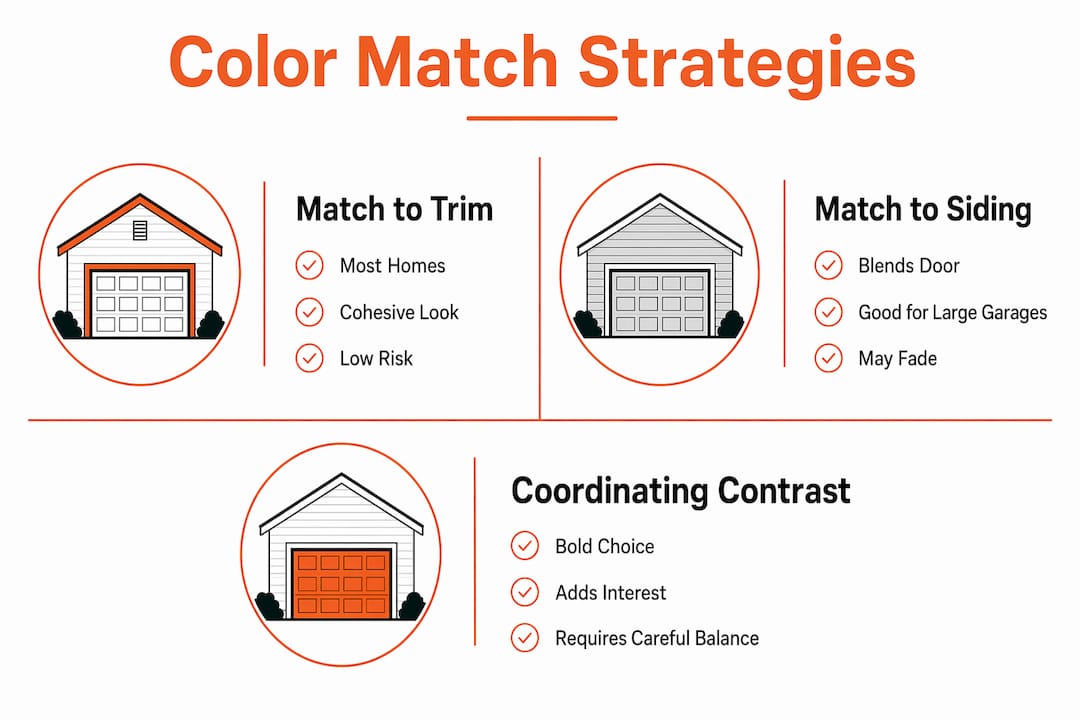
| Strategy | Best For | Visual Effect | Risk |
|---|---|---|---|
| Match to trim | Most home styles | Cohesive, framed look | Low |
| Match to siding | Large garage facades | Door recedes, blends in | Can look flat |
| Coordinating contrast | Modern or craftsman homes | Focal point, intentional | Clashes if tones mismatch |
Pro Tip: Think of your garage door color as a “middle note” in value and temperature. It should sit between your siding and your roof tone to create visual balance across the whole facade.
How does architectural style shape your garage door choice?
Color is only half the equation. The style of the door, its panel layout, window placement, and hardware finish, must align with your home’s architecture. A carriage-house door on a mid-century modern home looks as wrong as a flat steel panel on a Victorian cottage.
Here is how common architectural styles translate to garage door decisions:
- Traditional and Colonial homes call for raised-panel steel or wood doors with rectangular window grilles that echo the home’s divided-light windows. White or cream finishes are standard.
- Craftsman bungalows pair well with carriage-style doors featuring horizontal planks, wrought-iron hardware, and earthy stained wood tones or deep greens.
- Modern and contemporary homes suit flush-panel aluminum or glass doors with clean lines and no decorative hardware. Matte black, charcoal, or natural wood grain finishes work here.
- Mediterranean and Spanish Revival homes benefit from arched or raised-panel doors in warm terracotta, sand, or deep brown tones that echo the stucco and tile palette.
Garage door windows that mirror the style and grille pattern of your home’s primary windows are the single most effective detail for visual integration. A home with divided-light casement windows looks disconnected when paired with a plain solid panel door. Adding matching grille patterns to the garage door windows ties the whole facade together without a full redesign.
Hardware finish coordination with other exterior metal fixtures is equally important. Your door handles, hinges, and decorative straps should match the finish of your exterior light fixtures, house numbers, and door hardware. Mixing brushed nickel handles with oil-rubbed bronze porch lights signals design inconsistency and reduces perceived quality.
Pro Tip: Before ordering hardware, photograph every metal finish on your exterior and compare them side by side. Mismatched finishes are the most common and most avoidable design mistake on garage doors.
You can explore current garage door style trends to see which architectural pairings are gaining traction with homeowners right now.
What regional factors should influence your color choice?
Where you live shapes which colors perform best, both aesthetically and physically. Climate and regional character are real constraints, not just preferences.
Light colors reflect heat better and are the preferred choice in warm, sunny climates. In Central Texas, for example, a dark charcoal door absorbs significantly more solar heat than a white or warm neutral door. That heat transfers into the garage, raises cooling costs, and accelerates paint or finish degradation. White and warm neutral shades like Swiss Coffee and Natural Linen remain the top garage door colors in warmer climates heading into 2026. These tones also photograph well and read as clean and well-maintained from the street.
Regional character matters beyond just temperature. Consider these location-based guidelines:
- Desert Southwest and Texas Hill Country: Earthy tones like sand, warm taupe, and terracotta brown harmonize with the natural surroundings and complement limestone or stucco exteriors.
- Pacific Northwest: Muted greens, slate blues, and warm grays echo the forested, overcast environment and feel native to the region.
- New England and Mid-Atlantic: Classic white, navy, and deep red align with the colonial and federal architectural traditions dominant in those markets.
- Mountain regions: Natural wood tones and deep forest greens connect the home to its landscape and avoid the visual jarring of bright or high-contrast colors.
Neighborhood character and HOA restrictions are practical constraints you cannot ignore. Many communities in Austin, Cedar Park, and Georgetown have deed restrictions or HOA guidelines that limit exterior color choices. Check those requirements before you fall in love with a color. A door that violates HOA rules will need to be repainted or replaced at your expense. The architectural design guide for homeowners covers how to work within these constraints while still achieving a strong design outcome.
What mistakes should you avoid when matching garage doors?
Most garage door color and style mistakes are predictable. Knowing them in advance saves you money and frustration.
- Using dark accent colors on the garage door. Dark, high-contrast doors often appear unbalanced and can look like a gaping hole in the facade from the street. The garage door is too large to carry a bold accent color without overwhelming everything around it.
- Matching the garage door and front door with the same bold color. The front door is typically the accent color while the garage door stays neutral. When both doors share the same saturated tone, they compete for attention and neither wins.
- Choosing a color unrelated to your siding or trim palette. A random third color that shares no tonal relationship with your exterior always looks like an afterthought.
- Ignoring hardware finish mismatches. Decorative hinges and handles in the wrong finish undercut an otherwise well-chosen door. Incorrect hardware finish choices signal design inconsistency and reduce perceived home value.
- Forgetting landscaping and exterior lighting. A beautifully matched door can still look off if the surrounding plantings are overgrown or the exterior lighting fixtures clash in style or finish.
Pro Tip: If you are unsure whether a color works, order a sample panel or use a digital visualizer tool before committing. Painting a full door and hating it costs far more than a sample.
If you are already dealing with a door that looks wrong, the fix is usually simpler than a full replacement. Review the common garage door repair mistakes homeowners make to understand whether a repaint, hardware swap, or full upgrade is the right call for your situation.
Key takeaways
Matching your garage door to your home exterior requires aligning color, style, hardware, and regional context as a unified design system rather than treating each element separately.
| Point | Details |
|---|---|
| Match to trim first | Trim-matching is the safest, most cohesive color strategy for nearly every home style. |
| Windows drive integration | Garage door windows that mirror your home’s window grille pattern create the strongest visual connection. |
| Climate shapes color choice | Light, warm neutrals perform best in hot climates like Central Texas for both aesthetics and durability. |
| Hardware finishes must coordinate | Hinges, handles, and straps should match every other metal finish on your exterior. |
| Avoid bold accent doors | Dark or saturated garage door colors overwhelm the facade due to the door’s large surface area. |
Why windows are the detail most homeowners miss
Most homeowners spend all their energy on color and almost none on the garage door’s structural details. That is the wrong priority. In my experience, the fastest way to make a garage door look like it belongs to the house is to add windows that match the grille pattern of the home’s primary windows. A plain raised-panel door in the perfect color still reads as disconnected when the house has beautiful divided-light windows everywhere else. The windows are the visual handshake between the door and the rest of the facade.
The second thing I see homeowners consistently underestimate is hardware finish. It seems minor until you stand in front of a house with oil-rubbed bronze porch lights, brushed nickel door handles, and chrome garage door hardware all on the same facade. That combination signals that nobody was paying attention. Coordinating exterior lighting and hardware to a single finish family costs almost nothing extra and makes the whole exterior look considered.
My honest advice: stop chasing color trends and start with your trim color. Get the trim match right, add windows that echo your home’s architecture, coordinate your hardware finish, and then consider whether a subtle contrast or a regional tone shift makes sense for your specific house. That sequence produces better results than any mood board.
— Oded
Let edge garage doors help you get it right
Choosing the right door is one thing. Installing it correctly so it performs and looks great for the next 20 years is another.
Edge garage doors works with homeowners across Austin, Cedar Park, Leander, and Georgetown to select, install, and upgrade garage doors that genuinely complement their homes. The team brings both technical expertise and real design awareness to every project, so you are not just getting a door that opens. You are getting one that belongs. If your current door is aging or simply wrong for your home, the replace vs. repair guide is the best place to start. For a full installation or upgrade, explore professional garage door installation options and request a free estimate today.
FAQ
What is the safest garage door color for most homes?
Matching your garage door to your home’s trim color is the safest and most cohesive choice for the vast majority of homes. White, cream, and soft gray trim tones are the most common and the easiest to match.
Should the garage door match the front door?
No. The front door is typically the accent color while the garage door stays neutral. Matching both with the same bold color creates visual competition and overwhelms the facade.
Do garage door windows really make a difference?
Yes, significantly. Garage door windows that mirror the grille pattern and style of your home’s primary windows are the most effective single detail for integrating the door with the overall architecture.
How does climate affect garage door color choice?
In hot climates like Central Texas, light and warm neutral colors reflect heat better than dark tones. Dark doors absorb more solar heat, which raises garage temperatures and accelerates finish wear over time.
What hardware finish should i choose for my garage door?
Choose a hardware finish that matches the other metal fixtures on your exterior, including porch lights, house numbers, and entry door hardware. Mixing finishes across the facade reduces perceived design quality.