Torsion vs Extension Garage Door Springs in Austin TX
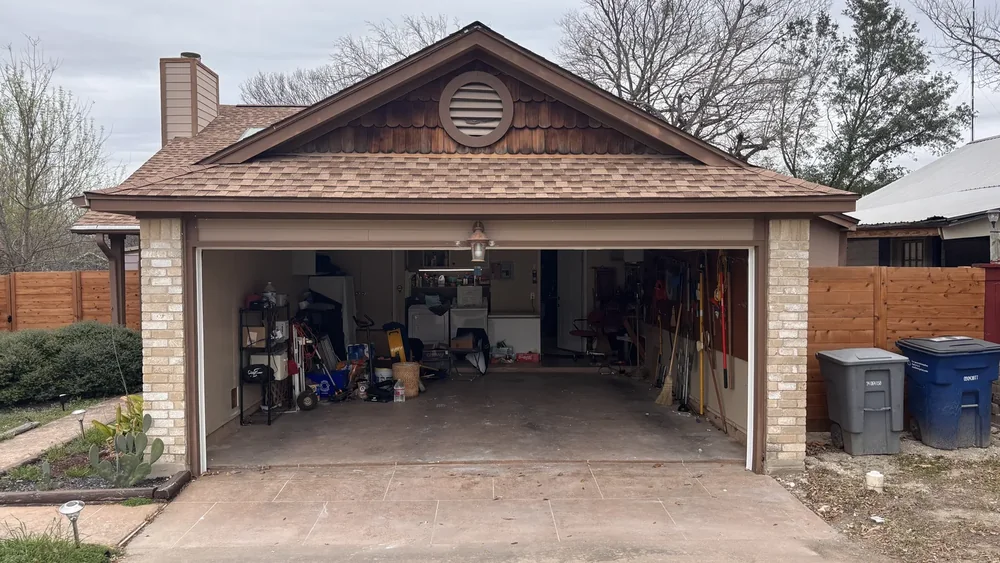
Look above your garage door. If you see one or two thick coiled springs mounted on a metal shaft directly over the door opening, you have torsion springs. If you see long stretched springs running along the upper tracks on each side of the door, you have extension springs. It matters because torsion springs last longer, are safer, and cost less to maintain over time — extension springs are the older, cheaper-to-install-but-riskier design. Both do the same job: counterbalance the weight of the door so it opens and closes smoothly. The difference is in how they store that energy, how long they hold up in Texas heat, and what happens when one breaks.
What we typically see: around Austin, homeowners with garages built before the early 2000s usually still have extension springs, while anything newer or previously upgraded tends to have torsion springs. On service calls, extension spring failures are more common in older Cedar Park and Round Rock neighborhoods — and most homeowners didn't know which type they had until we pointed it out.
What Is the Difference Between Torsion and Extension Springs?
Torsion springs sit on a shaft centered above the garage door opening and twist to store energy. Extension springs stretch along the horizontal tracks above the door and release tension as the door closes. Torsion springs are generally considered the more modern, controlled system — when one breaks, the door stays put instead of slamming. Extension springs, especially older ones without safety cables, can let the door drop suddenly or send a spring flying if it snaps.
| Feature | Torsion Springs | Extension Springs |
|---|---|---|
| Location | Above the door, on a center shaft | Along the side tracks |
| Typical Lifespan | Longer, higher cycle-rated | Shorter, more wear from stretching |
| Safety | Controlled break, door stays in place | Needs safety cables to prevent whiplash |
| Replacement Cost | From $179 per spring (replaced in pairs) | Generally similar per spring, but often needs safety cable upgrades too |
Which Lasts Longer?
Torsion springs are usually rated by cycle count and hold up better over years of daily use, including the heat swings we get in Austin summers. Extension springs do the same job but tend to wear and sag faster, especially without proper lubrication or safety cables. We're not going to tell you exact years, because usage, weather exposure, and door weight all change the math — what we can tell you is torsion is the more durable system in the vast majority of cases we see on the truck.
Can I Upgrade Extension to Torsion?
Yes. Upgrading to torsion springs from extension springs is a common request, and it's a straightforward job for a licensed technician — not a DIY project, since springs are under heavy tension and can cause serious injury if mishandled. We never give DIY spring instructions for this reason. If you're ready to upgrade, we'll inspect your current setup, confirm it's a good candidate, and give you one exact written price before any work starts.
What It Costs
Torsion springs start from $179 per spring, and we always replace them in pairs so wear stays even on both sides. Our $69 diagnostic visit is credited back to the job if you book the repair or upgrade with us. If your garage is also due for a bigger upgrade — like combining two single doors into one — a two-to-one garage door conversion starts from $5,690, and a new double door installed starts from $1,650. Structural work is always quoted on site, never guessed over the phone.
How to Tell Which Spring Type You Have Right Now
- Look directly above the closed door — a thick coiled spring on a metal rod means torsion.
- Look along the upper side tracks — long stretched springs mean extension.
- Check for safety cables running through extension springs — if you don't see any, that's a safety upgrade worth doing regardless of spring type.
- Not sure? Send us a photo or book our spring replacement service and we'll confirm on site.
Whichever spring type you have, don't wait until it snaps. A broken spring puts strain on your opener and can make the door unsafe to operate. Get a straight answer and an exact written price with our free quote.
Frequently asked questions
What is the difference between torsion and extension springs?
Torsion springs mount on a shaft above the door and twist to store energy, giving the door a controlled, even lift. Extension springs stretch along the side tracks and release tension as the door moves. Torsion is the more modern, generally safer system; extension is the older, lower-upfront-cost design.
Which lasts longer?
Torsion springs are typically rated for more cycles and tend to hold up better over years of regular use, including hot Texas summers. Extension springs usually wear and sag faster, especially if they're older or missing safety cables. Exact lifespan depends on usage and door weight, which is why we inspect before giving a number.
Can I upgrade extension to torsion?
Yes. Upgrading from extension to torsion springs is a common and worthwhile job, but it should always be done by a licensed technician since springs are under high tension. We'll inspect your setup and give you one exact written price before starting any work.
How do I know which spring type my garage door has?
Check above your closed garage door. A thick coiled spring on a center shaft means torsion springs. Long springs stretched along the upper side tracks mean extension springs. If you're unsure, we can confirm it during a service visit.
A conversion does not have to be paid all at once. Edge is one of the few local garage door companies offering 0% APR financing for qualified buyers through Hearth. See payment options →
Want one wide door instead of two cramped single openings? Call (737) 347-1246, request a quote, or review our two-to-one conversion service.