
Can You Convert Two Garage Doors Into One on a Slab Foundation in Austin TX
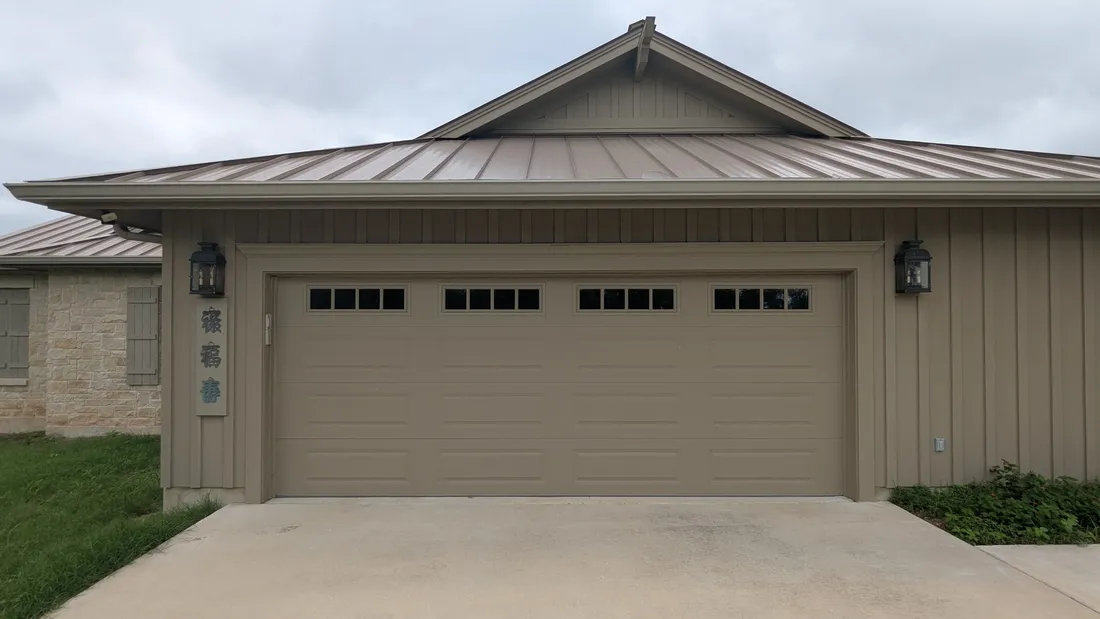
Yes — and a slab foundation is the normal, easy case, not the hard one. Nearly every garage in the Austin area is slab-on-grade, and the sides of a garage door opening already sit on the thickened edge of that slab, which is the strongest part of the foundation. When we remove the center post, the load moves outward onto those edges through a new header beam, not into the middle of your floor. In most conversions that means no new pour and no foundation work — just a properly sized header, and one written price before anything starts.
From a recent Edge job: In a Round Rock subdivision, a homeowner asked us straight out whether the slab could take it before they'd even talk price. Two singles became one 16-ft door on a new header — the jack studs landed on the existing thickened slab edge, so no new footing was poured, and the old post pad was patched flush (2026).
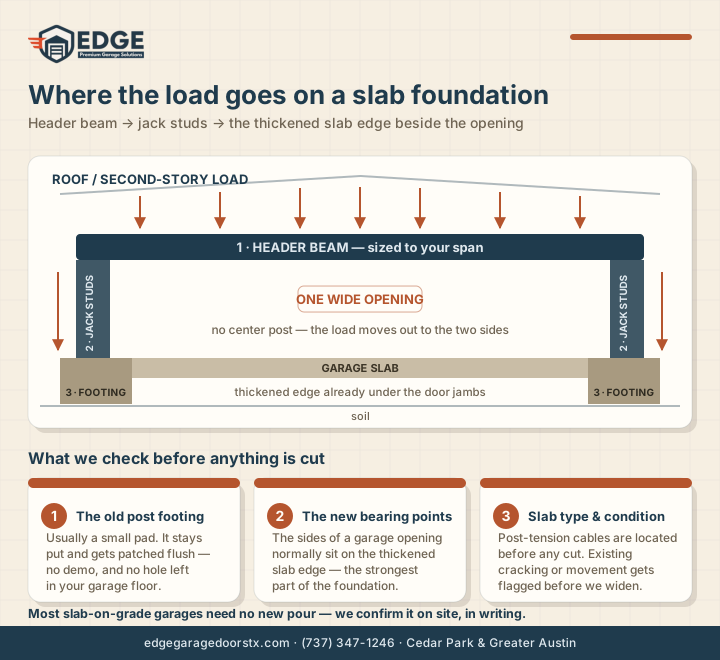
Where the load actually goes once the post is out
This is the part that settles most people down. The center post between two single doors is usually load-bearing, so the weight it carried has to go somewhere — and it goes sideways, not straight down into the middle of your garage floor. A header beam spans the new wider opening, and each end of that beam sits on a stack of jack studs built into the wall on either side. Those walls already sit on the perimeter of the slab, which was poured thicker there as a footing or grade beam. In other words, the new bearing points land on ground the foundation was already built to carry a wall on. That's why a two-to-one conversion on a slab-on-grade garage is routine structural work rather than a foundation project.
Does the new header need a footing?
Almost always, the footing is already there. A residential slab isn't a flat pancake — the perimeter is turned down into a thickened edge, and interior bearing lines often have a grade beam under them too. Since the conversion moves load out to the sides of the opening, the new supports come down on that thickened edge. We check it before quoting rather than assuming: we look at the span, what sits above the garage (single story versus a room over it makes a real difference), and where each end of the beam will land. If your particular bearing point needs more than what's there, you'll hear that from us before you book — not after the wall is open.
What happens to the old post footing?
Nothing dramatic. That post typically bears on a small pad inside the slab, and once the post is gone, the pad simply has no more work to do. There's no benefit to digging it out and plenty of reasons not to. We patch the floor flush where the post stood, so what you're left with is one continuous, level slab across the full width of the new opening — which also means nothing for the new door's bottom seal to fight with.
When the slab actually does matter
We'd rather tell you the exceptions than pretend there aren't any. Three things get looked at on every slab in Central Texas:
- Post-tension slabs. They're common around Austin, and the steel cables inside are under heavy tension. If any cutting or coring is needed, those cables get located first. Nobody should ever put a saw into a PT slab on a guess.
- Existing foundation movement. Our clay soils move with the wet-dry cycle. If we see stair-step cracking, a door frame that's out of square, or a slab edge that's clearly dropped, we'll say so — and we'll tell you to get a foundation company's opinion before you widen the opening. Widening a wall on a foundation that's still moving is spending money in the wrong order.
- Bearing points with nothing under them. Rare on a garage front wall, but if a beam end has to land somewhere the slab isn't thickened, that means a small cut and a pad pour. It's a known, quotable piece of work — not a surprise — as long as someone looked first.
None of these are reasons not to convert. They're reasons to have someone actually inspect the slab and the wall before a number is put on paper.
What it costs when the slab is normal
Pricing splits in two. The new wide door starts at $1,650 installed. The structural side — removing the post, shoring, and setting a header sized to your span — gets quoted after we see your actual wall, because every span and every load above it is different. If the slab needs nothing (the usual outcome), there's no foundation line on the quote at all. You get one combined written price up front, and most conversions are done in a single day. The full picture is on our two-to-one garage door conversion page.
Converting on a slab foundation — FAQs
Can you convert two garage doors into one on a slab foundation?
Yes. Nearly every garage in the Austin area sits on a slab-on-grade foundation, and that's the normal case for a two-to-one conversion. The header load runs down through jack studs on each side and lands on the thickened slab edge that already carries the garage wall. We inspect the slab before quoting.
Does the new header need a footing?
Almost always it's already there. The sides of a garage opening sit on the thickened perimeter of the slab — a footing or grade beam. A conversion moves load outward onto that edge, so a new pour is rarely needed. If yours is an exception, you hear it before you book.
What happens to the old post footing?
It stays in the ground. The pad under the old post just has no more work to do once the post is gone, so there's no reason to dig it out. We patch the floor flush where the post stood so you get one clean, level slab.
Do you have to cut the garage slab for a conversion?
Usually not — most conversions need nothing beyond patching where the post stood. If a bearing point needs extra support, that's a small cut and pour, and on a post-tension slab (common in Central Texas) the cables get located first. We check slab type up front so it's priced in writing, not discovered mid-job.
A conversion doesn't have to be paid all at once. Edge is one of the few local garage door companies offering 0% APR financing for qualified buyers (660+ credit) through Hearth — checking your rate won't affect your credit. See payment options →
Want to know what your slab and your wall will actually take? Call Edge Garage Doors at (737) 347-1246 or request a quote and we'll come look before quoting a dollar. We're local, insured, and back our work with a 3-year parts and 90-day labor warranty — serving Cedar Park, Round Rock, and the wider Austin area.