How Long Do Garage Door Springs Last in Austin TX: Complete Lifespan Guide
Quick Answer
Garage door springs in Austin, TX typically last 7-12 years or approximately 10,000 open-close cycles, with torsion springs generally outlasting extension springs. Austin’s extreme heat, high humidity, and frequent temperature fluctuations can reduce this lifespan by 10-30% without proper maintenance and lubrication.
Did you know that a typical garage door opens and closes more than 1,500 times per year? For Austin homeowners, that number can be even higher thanks to daily commutes, work-from-home setups, and the convenience of attached garages. This constant use puts enormous strain on your garage door springs, the critical components that counterbalance hundreds of pounds to make opening and closing effortless.
Understanding how long garage door springs last in Austin TX is essential for every homeowner. Unlike other parts of your home, spring failure isn’t gradual—it’s sudden, often leaving your car trapped inside or compromising your home’s security. Austin’s unique climate challenges, from scorching summer temperatures exceeding 100°F to unexpected humidity spikes, create the perfect storm for accelerated spring wear.
This comprehensive guide draws on industry data, expert insights from Austin garage door professionals, and real-world experience to help you predict, maintain, and ultimately extend the life of your garage door springs.
What Is the Average Lifespan of Garage Door Springs?
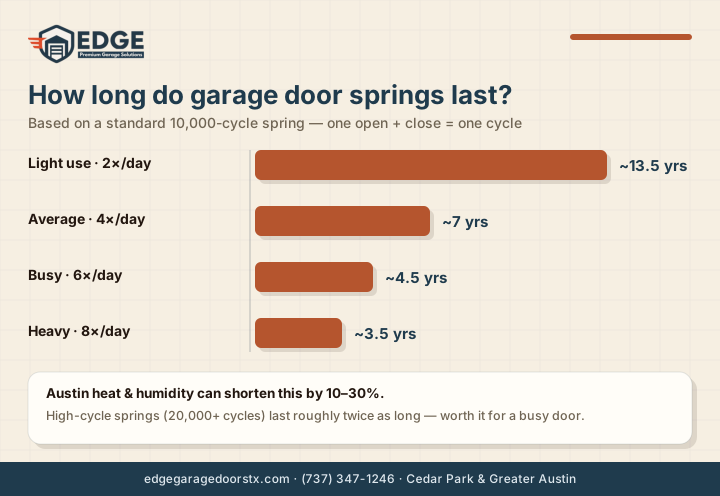
The standard lifespan for garage door springs falls between 7-12 years under normal operating conditions, though this can vary significantly based on quality, usage patterns, and environmental factors. Industry data shows that most residential springs are rated for approximately 10,000 open-close cycles, which translates differently depending on how frequently you use your garage door.
For Austin homeowners, understanding this cycle-based measurement is crucial. If your household uses the garage door three times daily, you’re looking at roughly 1,095 cycles per year, potentially giving you 9+ years of service. However, families with multiple drivers, home-based businesses, or frequent deliveries might cycle their doors 10+ times daily, reducing the practical lifespan to closer to 3-5 years.
| Spring Type | Average Lifespan | Cycle Rating |
|---|---|---|
| Torsion Springs | 7-12 years | 10,000-20,000+ cycles |
| Extension Springs | 5-7 years | 10,000 cycles |
| High-Cycle Springs | 12-15 years | 25,000-30,000 cycles |
According to industry experts at Raynor, the actual lifespan depends heavily on spring quality and installation precision. Premium springs manufactured with higher-grade steel and proper tempering can exceed standard expectations, while budget options may fail prematurely.
How Does Austin’s Climate Affect Garage Door Spring Longevity?
Austin’s climate presents unique challenges for garage door springs. The combination of extreme heat (with temperatures regularly exceeding 95°F from May through September), high humidity levels that can reach 80-90% during summer mornings, and dramatic temperature swings creates an environment that accelerates metal fatigue and corrosion.
Heat causes spring steel to expand and contract repeatedly, weakening the molecular structure over time. When temperatures in uninsulated garages soar above 110°F during peak summer days, this thermal stress compounds with every cycle. Humidity introduces moisture that promotes rust formation, particularly on uncoated springs, reducing their effective lifespan by an estimated 20-30% according to garage door specialists.
“Austin’s weather is particularly hard on garage door components. We see springs fail earlier here than in more temperate climates. Homes in areas like Cedar Park, Round Rock, and South Austin without climate-controlled garages experience the most rapid deterioration. Regular maintenance becomes essential, not optional.”
The Austin metropolitan area’s specific microclimates also play a role. Properties near Lake Travis or Lady Bird Lake may experience higher humidity exposure, while homes in newer developments with uninsulated two-door garage configurations face greater temperature extremes. Understanding these local factors helps homeowners set realistic maintenance schedules.


What Are the Differences Between Torsion and Extension Springs?
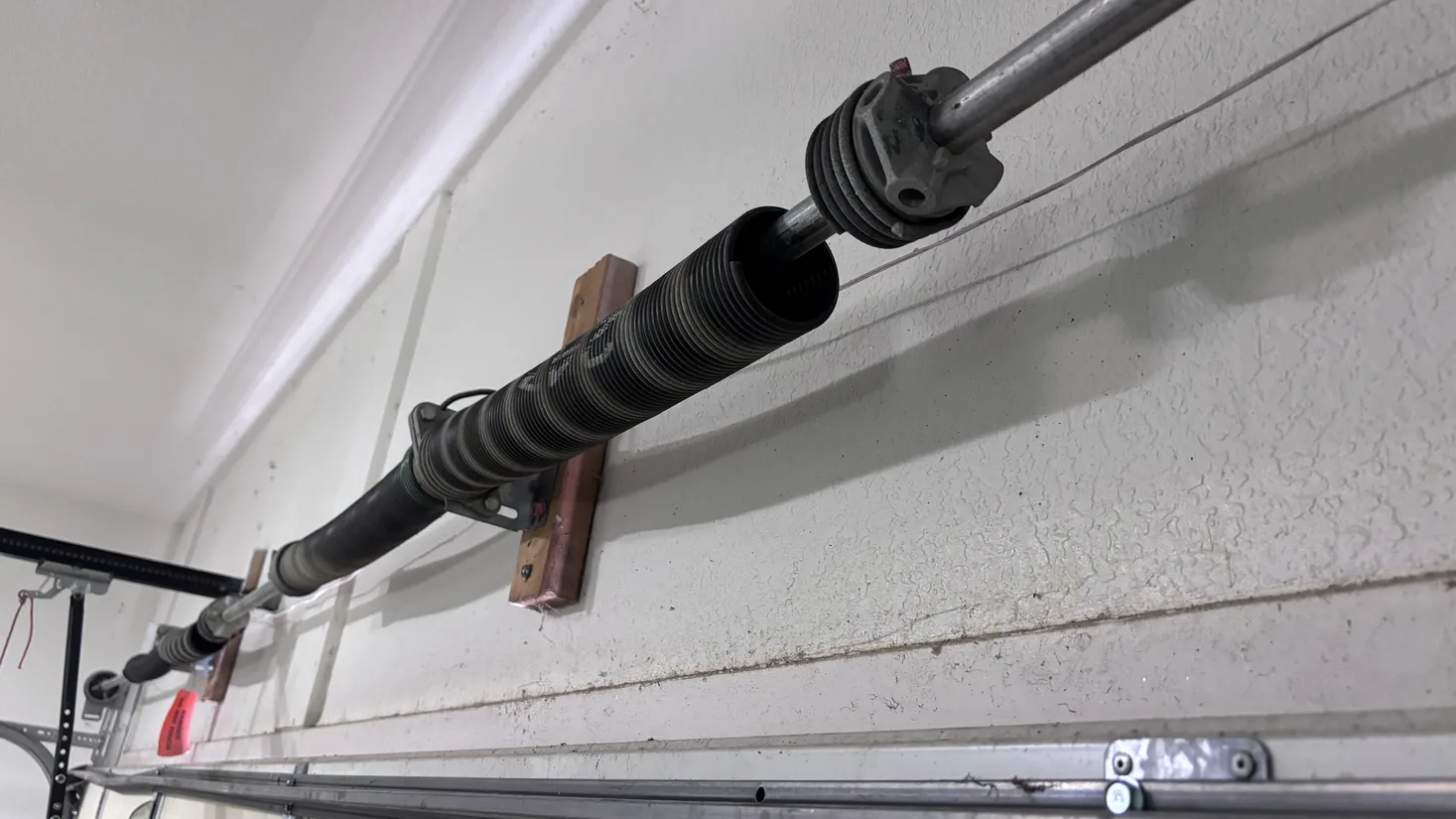
Torsion springs are mounted horizontally above the garage door opening and work by twisting to generate lifting force. These springs are the industry standard for most modern garage doors, especially heavier models weighing 400+ pounds. They typically last longer than extension springs because they distribute stress more evenly and operate in a more protected position.
Extension springs run parallel to the door tracks on either side and stretch to provide lifting assistance. Common on older garage doors and lighter single-car doors, extension springs experience more direct stress with each cycle. They’re also more exposed to environmental factors, making them particularly vulnerable in Austin’s climate.
Position: Above door
Mechanism: Twisting force
Cost Range: $200-$400+ per pair
Best For: Heavy, modern doors
Position: Along tracks
Mechanism: Stretching force
Cost Range: $150-$300+ per pair
Best For: Lighter, older doors
Position: Inside tube
Mechanism: Enclosed torsion
Cost Range: $250-$500+
Best For: Wayne Dalton systems
Position: Above door
Mechanism: Premium torsion
Cost Range: $300-$600+ per pair
Best For: Frequent-use applications
For Austin homeowners considering garage door installation or replacement, torsion springs represent the superior long-term investment despite higher initial costs. Their enclosed design offers better protection against Austin’s humidity and dust, and they fail more predictably, giving homeowners advance warning through gradual performance degradation.
How Do Cycle Ratings Determine Spring Lifespan?
Cycle ratings provide the most accurate predictor of spring lifespan, as they account for actual usage rather than calendar time. A cycle consists of one complete opening and closing sequence. Standard residential springs carry a 10,000-cycle rating, while premium options range from 20,000 to 30,000+ cycles.
To calculate your expected lifespan, divide the cycle rating by your annual usage. For example, a family using their garage door 5 times daily accumulates 1,825 cycles yearly. A 10,000-cycle spring would last approximately 5.5 years, while a 25,000-cycle spring would extend that to nearly 14 years.
According to data from Ben’s Garage Door Supply, many Austin-area suppliers now offer lifetime warranties on high-cycle springs, reflecting growing confidence in premium manufacturing. These warranties typically cover spring replacement labor and parts, providing significant long-term value despite higher upfront investment.
Usage patterns vary significantly across Austin neighborhoods. Downtown condo residents with single-car garages might cycle their doors 2-3 times daily, while suburban families in areas like Pflugerville or Georgetown with multiple drivers could easily exceed 8-10 daily cycles. Understanding your specific usage helps inform replacement timing and spring selection.
What Are the Warning Signs Your Springs Need Replacement?
Recognizing the warning signs of failing springs can prevent inconvenient breakdowns and potential safety hazards. Most springs provide several indicators before complete failure, giving attentive homeowners time to schedule professional garage door services.
Visual indicators include visible gaps in the spring coils, rust accumulation along the spring surface, or separation between coils even when the door is closed. These gaps typically appear near the end of the spring’s life as the steel loses its tension-holding capability.
Performance symptoms manifest as difficulty opening, the door opening only partially before stopping, uneven movement with one side lifting faster than the other, or the door slamming down when closing. These issues indicate that springs have lost their counterbalance effectiveness, forcing the garage door opener motor to work harder.
- Loud popping or snapping sounds: Often the first sign of spring failure, caused by a spring breaking under tension
- Visible rust or corrosion: Especially common in Austin’s humid climate, indicating compromised spring integrity
- Garage door won’t stay open: Springs can’t hold the weight, causing the door to fall
- Crooked or uneven door operation: One spring has failed or weakened significantly
- Excessive noise during operation: Metal fatigue creates squeaking or grinding sounds
- Door feels heavier when manually lifted: Loss of spring tension increases apparent weight
- Opener struggles or gives up: Motor strain indicates inadequate spring support
If you notice any of these symptoms, it’s critical to avoid using the garage door until a professional inspection occurs. Operating a door with damaged springs risks complete failure, which can cause property damage or injury. For troubleshooting other common issues, consult our guide on why garage doors won’t open.
How Can You Extend Your Garage Door Spring Lifespan in Austin?
Proactive maintenance can significantly extend spring life in Austin’s challenging climate. Regular care combats the accelerated wear caused by heat and humidity, potentially adding 2-4 years to your springs’ service life.
Lubrication stands as the most critical maintenance task. Apply lithium-based garage door lubricant to springs, rollers, and hinges every three months. Austin’s heat causes lubricant to break down faster than in cooler climates, making quarterly application essential rather than optional. Focus on coating the entire spring surface to create a protective barrier against moisture.
Balance testing helps identify spring weakness before complete failure. Disconnect the opener and manually lift the door halfway, then release it. A properly balanced door should remain in place or move slowly. If it falls rapidly or rises on its own, spring tension has degraded and adjustment or replacement is needed.
| Maintenance Task | Frequency | Impact on Lifespan |
|---|---|---|
| Visual inspection for rust/wear | Monthly | Identifies issues early |
| Spring lubrication | Quarterly | +1-2 years extension |
| Balance testing | Twice yearly | Prevents uneven wear |
| Professional tune-up | Annually | +2-3 years extension |
Environmental protection makes a substantial difference in Austin. If possible, maintain garage temperatures through insulation or climate control. Even partial temperature moderation reduces thermal cycling stress. Keep moisture out by ensuring proper weatherstripping and addressing any roof leaks that could introduce water into the garage space.
Professional inspections should occur annually, allowing experienced technicians to identify subtle wear patterns, adjust spring tension, and address minor issues before they escalate. Many garage door experts recommend scheduling these tune-ups in early spring, before Austin’s brutal summer heat arrives.
What Does Garage Door Spring Replacement Cost in Austin TX?
Spring replacement costs in Austin vary considerably based on spring type, quality level, door size, and service provider. Pricing typically ranges from $150 to $600+ for complete replacement, though your specific project cost depends on numerous factors including accessibility, emergency service needs, and whether additional repairs are required.
Standard torsion spring replacement for a typical two-car garage door generally falls in the $200-$400 range for quality parts and professional installation. Extension springs typically cost less, ranging from $150-$300, though many professionals recommend upgrading to torsion systems for superior longevity.
Premium high-cycle springs command higher prices, from $300-$600+, but provide superior value over time. When factoring in the extended lifespan (potentially 12-15 years versus 7-10 years for standard springs), the additional upfront investment often pays for itself through reduced replacement frequency.
Several factors influence final pricing. Emergency or after-hours service typically adds $100-$200 to standard rates. Oversized or custom doors require specialized springs that cost more. If your door has sustained damage from spring failure, such as bent tracks or damaged panels, repair costs increase accordingly. For comprehensive pricing information, review our detailed guide on garage door repair costs in Austin.
Pricing varies based on your specific project requirements, material quality preferences, and installation complexity. We recommend obtaining a custom quote that accounts for your door’s exact specifications and your long-term usage expectations. Professional installation ensures proper spring selection, correct tension adjustment, and safe operation, making it worth the investment over DIY attempts.
When comparing quotes, verify what’s included. Comprehensive service should cover spring removal and disposal, installation of new springs properly matched to your door weight, tension adjustment and balance testing, safety cable installation (for extension springs), and a service warranty. Some Austin providers offer lifetime warranties on springs, providing exceptional long-term value.
Key Takeaways
- Garage door springs in Austin TX last 7-12 years or 10,000 cycles on average, with torsion springs outlasting extension springs
- Austin’s extreme heat and humidity can reduce spring lifespan by 10-30% without proper maintenance and protection
- Cycle ratings provide more accurate lifespan predictions than years, with usage patterns varying from 1,000 to 3,600+ cycles annually
- Warning signs include visible gaps in coils, uneven door operation, loud popping sounds, and difficulty opening or closing
- Regular maintenance, especially quarterly lubrication and annual professional inspections, can extend spring life by 2-4 years
- Spring replacement costs range from $150 to $600+ depending on type, quality, and service requirements
- High-cycle springs (20,000-30,000 cycles) offer superior long-term value despite higher upfront costs
People Also Ask
How often should I replace garage door springs in Austin?
Most Austin homeowners should expect to replace garage door springs every 7-12 years, though high-use households may need replacement every 5-7 years. Track your usage patterns and watch for warning signs rather than relying solely on time-based schedules.
Can I replace garage door springs myself in Austin?
DIY spring replacement is strongly discouraged due to extreme safety risks. Garage door springs hold 200-400+ pounds of tension and can cause serious injury if improperly handled. Professional installation ensures correct spring selection, proper tension adjustment, and safe operation.
Do I need to replace both garage door springs at once?
Yes, professionals recommend replacing both springs simultaneously even if only one has failed. Springs installed at the same time wear at similar rates, so the second spring will likely fail soon after the first. Replacing both ensures balanced operation and prevents another service call within weeks.
What causes garage door springs to break prematurely in Austin?
Premature spring failure in Austin typically results from excessive heat exposure, high humidity causing rust, lack of regular lubrication, improper spring sizing for door weight, or exceptionally high usage frequency. Annual professional maintenance significantly reduces premature failure risk.
Are high-cycle garage door springs worth the extra cost?
High-cycle springs (20,000-30,000 cycles) provide excellent value for households with multiple daily uses or those seeking minimal maintenance. The extended lifespan often offsets the 30-50% higher initial cost, and many come with superior warranties that protect your long-term investment.
How do I know what size springs my garage door needs?
Spring sizing depends on door weight, height, and track radius. Professional technicians use specialized measurements including wire size, inside diameter, and length to ensure proper matching. Incorrect spring selection causes premature failure and potential safety hazards, making professional assessment essential.
Frequently Asked Questions
How long do torsion springs last on garage doors in Austin?+
Torsion springs typically last 7-12 years in Austin, or approximately 10,000-20,000 cycles depending on quality. Austin’s heat and humidity can reduce this by 10-20% without proper maintenance. High-cycle torsion springs can extend lifespan to 12-15 years with regular care.
What happens if garage door springs break while the door is open?+
If springs break while the door is open, the door will likely slam shut with significant force due to loss of counterbalance. This can cause injury, damage vehicles or property, and bend door sections or tracks. Never stand under an open garage door with suspect springs, and keep the area clear of children and pets.
Can extreme Texas heat cause garage door springs to fail faster?+
Yes, extreme heat accelerates spring failure through thermal expansion and contraction cycles that weaken steel over time. Uninsulated Austin garages reaching 110°F+ during summer create additional stress. This heat exposure can reduce spring lifespan by 15-25% compared to climate-controlled environments.
Should I lubricate garage door springs in Austin’s climate?+
Absolutely. Quarterly lubrication is essential in Austin to combat heat and humidity effects. Use lithium-based garage door lubricant, applying a light coating to the entire spring surface. This creates a protective barrier against moisture, reduces friction, and can extend spring life by 1-2 years.
How much does it cost to replace garage door springs in Austin TX?+
Spring replacement costs in Austin range from $150 to $600+ depending on spring type, quality, and door configuration. Standard torsion springs typically cost $200-$400, while premium high-cycle options run $300-$600+. Pricing varies based on your specific door requirements, material preferences, and whether additional repairs are needed. Contact us for a custom quote.
Will garage door opener damage occur if springs fail?+
Yes, operating a garage door with broken or weakened springs forces the opener motor to lift the door’s full weight (typically 400+ pounds), causing motor burnout, gear stripping, and electronic component failure. If you suspect spring issues, disconnect the opener immediately and call for professional service to prevent costly opener replacement.
Do garage door springs come with warranties in Austin?+
Spring warranties vary by manufacturer and installer. Standard springs typically include 1-3 year warranties, while premium high-cycle springs may offer 5-10 year coverage. Some Austin providers offer lifetime warranties on specific spring models, covering both parts and labor for replacement during the warranty period.