
What Size Garage Door Should I Get When Converting Two Doors Into One in Austin TX
Most two-to-one conversions in the Austin area land on a 16-foot door — that is the standard double, and it is what the wall on a typical two-single garage will carry. Eighteen feet is the upgrade, and it is worth it when you park two full-size vehicles or a truck plus mowers and gear. The right way to choose is backwards from what is actually in your garage: measure your widest vehicle across the mirrors, add the walking room you want, then check that the wall on each side of the opening can support that width. If the wall can't, the number comes down — and you want to know that before anything is ordered, not after.
From a recent Edge job: A homeowner in a Pflugerville neighborhood wanted 18 feet because bigger sounded better. We measured: a full-size pickup and a compact sedan, and only about 10 inches of wall on the left side of the opening. We built it at 16 feet, which the wall supported without reframing the corner, and the truck now parks with the mirrors out. Wider would have cost more and bought them nothing (2026).
Start with what you park, not with the door
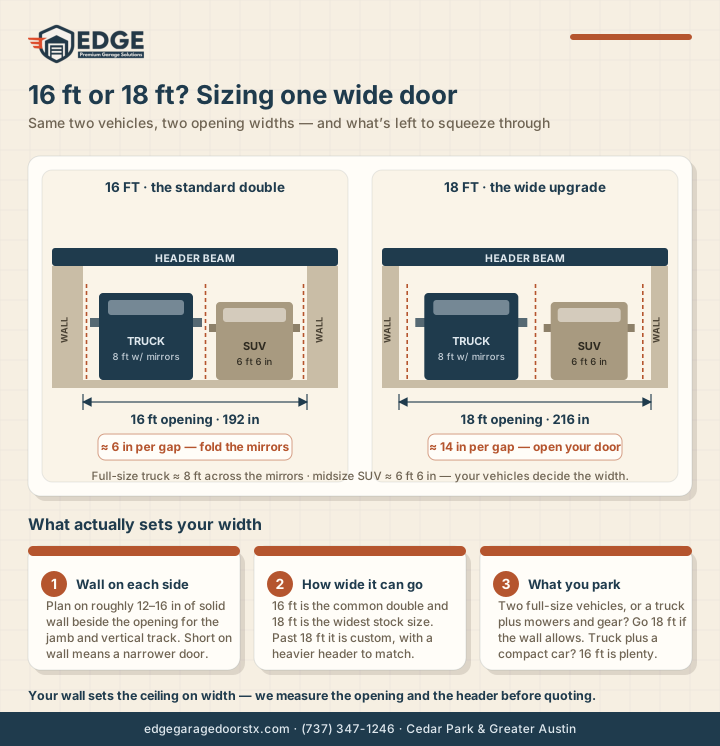
People usually ask us for a width before they have measured anything, and that is backwards. Take a tape out to the driveway and measure your widest vehicle across the mirrors, not across the body — mirrors are what people clip. A full-size pickup is commonly around 6 ft 8 in of body and close to 8 ft with the mirrors out. A midsize SUV runs about 6 ft 6 in across the mirrors. A compact car is closer to 6 ft.
Now add them up and subtract from the opening. Two vehicles at 8 ft and 6 ft 6 in come to 14 ft 6 in. In a 16-foot opening that leaves 18 inches of slack, which splits into about six inches on each side and in the middle — enough to park, tight enough that you will still fold a mirror on a bad day. Widen to 18 feet and the same two vehicles have about 14 inches per gap, which is the difference between squeezing past a parked truck and opening your own door inside the garage.
That arithmetic is the whole decision. If you park a truck and a compact, 16 feet is genuinely plenty. If you park two wide vehicles, or you keep mowers, bikes, and trash bins down one side, the extra two feet gets used every single day.
16 ft or 18 ft — what the extra two feet actually buys
Here is the honest trade-off, because both directions have a real cost.
- 16 feet is the standard double. It is the most available size, the widest opening most existing two-single garage walls will take without extra framing, and it needs a shorter header beam. It is what most of our conversions end up being.
- 18 feet is the widest stock residential width. It buys roughly a foot more clearance per gap, it makes backing in noticeably less stressful, and it reads wider from the street. It also needs a longer, heavier header, more wall on each side, and it costs more — both for the door and for the structural work.
- Past 18 feet is a custom order. Longer lead time, a bigger beam, more money, and on a normal two-car garage there is almost never enough wall to support it. We will tell you when it is off the table rather than quote something the wall can't hold.
One thing that is not a reason to go wider: resale. A wider door reads modern and helps curb appeal, but a well-fitted 16-foot door does that job. Buy the extra width because you will use it, not because it sounds better on paper.
How much wall you need on each side
This is the constraint that decides more conversions than budget does. Beside the opening, on each side, the door needs room for the vertical track, the jamb it mounts to, and the jack studs that carry the end of the new header beam. Plan on roughly 12 to 16 inches of solid wall on each side. Corners, a side entry door, a window, or a return wall can eat into that fast.
So the real ceiling on your width is not the door catalog — it is the wall you already have. On a two-single garage the total rough opening you can reclaim is the two existing openings plus the post between them, minus what has to stay on the outside edges. We measure the wall, the existing openings, the span, and what sits above the garage before putting any width on paper. A single-story garage and one with a room built over it are not the same header, and the width you can get away with can differ because of it.
Do not forget height — 7 ft or 8 ft
Width gets all the attention and height quietly causes the problems. Most residential doors are 7 feet tall, which handles ordinary cars, SUVs, and most stock pickups. Go to 8 feet if you have a lifted truck, a work van, a roof rack or rooftop tent, or if a car lift is anywhere in your plans. Raising the height also means the header sits higher, so it is a decision that has to be made before the framing, not after the door is ordered.
Headroom above the opening matters too. A standard track wants roughly 12 to 15 inches between the top of the opening and the ceiling. If yours is tighter, low-headroom track exists; if you want the door to ride higher for a lift, that is a high-lift conversion instead. Either way, it is measured on site.
What it costs at each width
Pricing splits into two pieces, and we would rather you see both. The new door itself starts at $1,650 installed for a double, and an 18-foot door costs more than a 16 because it is more material and a heavier section. The structural side — removing the center post, shoring the wall, and setting a header sized to your span — is quoted after we see your actual wall, because the span and the load above it are different in every house. A wider opening means a longer beam, so width moves that number too.
You get one combined written price before anything starts, and our service call is $69, credited to the job if you book it. Most conversions are done in a single day. The full breakdown lives on our two-to-one garage door conversion page.
Choosing your door width — FAQs
What size garage door should I get when converting two doors into one?
Most conversions land at 16 ft — the standard double, and what the wall on a typical two-single garage will carry. Go 18 ft if you park two full-size vehicles, or a truck plus mowers and gear, and the wall allows it. Start from what you park, then confirm the wall will take that width before anything is ordered.
Is a 16-foot or 18-foot garage door better?
Neither is better on its own. A 16-ft opening fits a full-size truck plus a car with roughly six inches of gap per side once mirrors are counted. An 18-ft opening buys about another foot per gap — which you feel when both vehicles are wide and somebody has to open a door inside the garage. It also costs more, needs a longer header, and needs the wall to support it.
How much wall do you need on each side of the opening?
Plan on roughly 12–16 in of solid wall on each side. That space carries the vertical track, the jamb, and the jack studs that hold up the new header. If your wall gives less than that, the door width comes down to match — which is why we measure the wall before quoting a width, not after.
How wide can a single garage door be?
Stock residential doors run up to 18 ft wide, with 16 ft the most common double. Past 18 ft is a custom order with a heavier header and a longer lead time, and it is rarely what a home actually needs. Height is normally 7 ft, with 8 ft available for a taller truck or a future car lift.
Do not let the width decision come down to what you can pay this month. Edge is one of the few local garage door companies offering 0% APR financing for qualified buyers (660+ credit) through Hearth — checking your rate won't affect your credit. See payment options →
Not sure whether your wall will take 16 or 18 feet? Call Edge Garage Doors at (737) 347-1246 or request a quote and we'll measure the opening, the wall, and the header before we put a width on paper. We're local, insured, and back our work with a 3-year parts and 90-day labor warranty — serving Cedar Park, Pflugerville, and the wider Austin area.