
What Size Header Beam Do You Need for a Garage Door Conversion in Austin TX
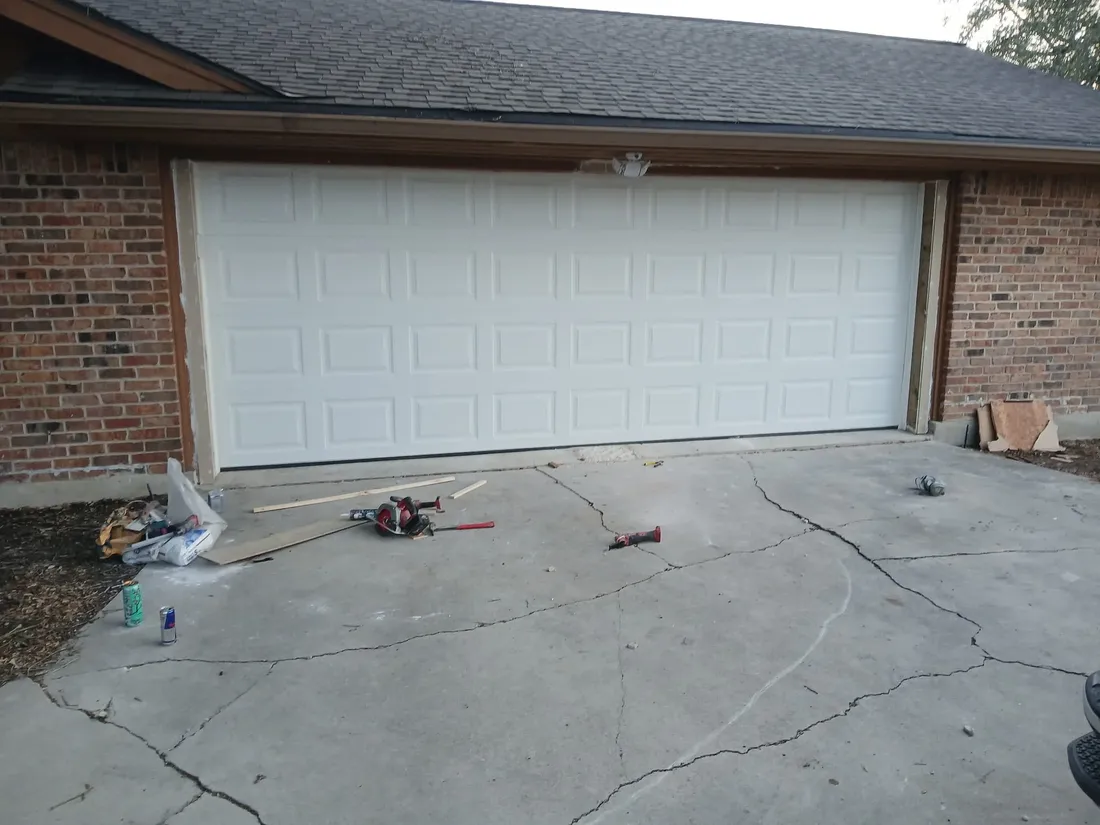
There is no single beam size — and anyone who quotes you one before measuring your opening is guessing. The header beam that replaces the load-bearing post between two garage doors is sized from two things: the clear span of the new opening, and what the wall above it is actually carrying. Two 16-ft openings on the same street can need very different beams if one has a room over the garage. Edge measures it, gets the beam specified, pulls the permit, and gives you one written price before anything is cut.
From a recent Edge job: This is the pattern we see across the Round Rock and Cedar Park area — two homes, the same 16-ft opening, two different beams. The single-story roof-only wall takes an engineered wood header; the one with a bedroom over the garage needs steel. Same door, same span, different load above it (2026).
What size header beam do you need for a 16-foot garage door?
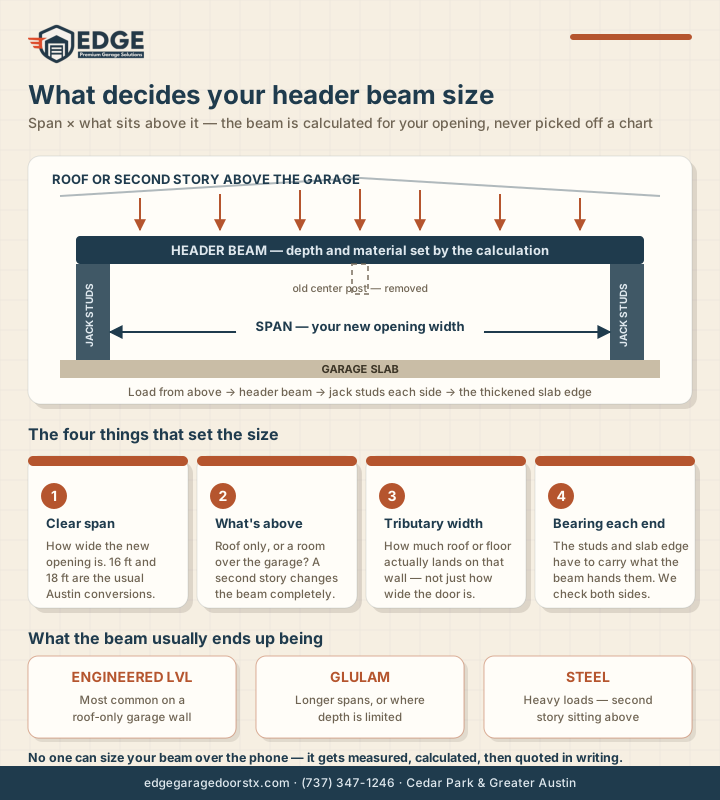
A 16-ft clear span is only half the question. The beam has to carry whatever lands on that stretch of wall, and that varies a lot house to house. Four things set the size:
- Clear span. The width of the new opening. Most Austin two-to-one conversions land at 16 ft, some at 18 ft.
- What sits above. Roof only, or a room over the garage? A second story changes the beam completely — it is the single biggest swing factor.
- Tributary width. How much roof or floor area actually transfers to that wall. Two houses with identical door widths can load the header very differently depending on how the framing above runs.
- Bearing at each end. Whatever the beam carries, it hands to the studs and the slab edge beside the opening. Those have to take it, so they get checked too.
That is why we will not put a number in a blog post. A wrong beam does not fail on day one — it sags slowly, and you find out when the door stops sealing or a crack shows over the opening. The honest version is: the span is measured, the load is calculated, and the size comes out of that.
LVL, glulam, or steel — which beam actually goes in?
Most conversions land on one of three. None of them is the "best" one; the load picks it.
| Beam | Usually used when | Trade-off |
|---|---|---|
| Engineered LVL | Single-story, roof-only garage wall — the most common Austin case | Cost-effective and easy to fasten to; needs more depth than steel for the same load |
| Glulam | Longer spans, or where you want a wood beam but LVL is at its limit | Handles more span; ordered to size, so lead time matters |
| Steel | Heavy loads — typically living space above the garage — or tight headroom | Carries the most in the least depth; heavier, costs more, and needs proper bearing plates |
Headroom matters as much as strength here. A deeper wood beam eats into the space above the opening, which is also where the door's track and opener need to live. If the numbers get tight, steel buys back inches. That trade-off is worth knowing before you pick a door height — see what size door to get when converting two into one.
Who decides the header beam size — the installer or an engineer?
Depends on your house, and we will tell you which before you commit. On a straightforward roof-only opening, the beam is sized from published span tables for the load, and the permit review confirms it. When there is living space above the garage, an unusual roof, or a span beyond what the tables cover, it goes to a Texas-licensed structural engineer for a stamped design. That is a normal, budgeted line item — not a red flag, and not a reason to stall. We cover when it applies in does a garage door conversion need a structural engineer.
Either way the work gets inspected. A conversion changes the structure, so it typically needs a permit and a framing inspection — the inspector looks at the beam, the bearing, and the connections before the wall is closed. That inspection is the thing standing between you and a beam somebody eyeballed. More on that in permits for a garage door conversion in Austin.
How much does the header beam add to a conversion?
Your price has two parts. The new wide door starts at $1,650 installed — that number is firm. The structural side — shoring, removing the post, the beam itself, the bearing, the permit, and an engineer's stamp if your house needs one — is quoted after we see your wall, because the beam is the part that genuinely differs house to house. A steel beam under a second story costs more than an LVL under a roof-only wall, and we would rather show you the real number than a range you cannot use.
You get one combined written price before we start, with no add-ons discovered halfway through. Most conversions are finished in a single day. Full picture on our two-to-one conversion service, and the cost breakdown in what a 2-to-1 conversion costs in Austin.
When a bigger beam is not the answer
We would rather say this than sell you something. If your only problem is that the doors look dated, you do not need a structural project — two new single doors will fix the curb appeal for far less. If you are only a few inches short on width for a vehicle, check the real clearance first; sometimes the fix is the door jamb trim or the track, not the wall. And if the garage is detached with an open truss roof and the post turns out to be non-structural — uncommon, but it happens — the job gets a lot simpler and cheaper, and we will tell you that on site instead of quoting a beam you do not need.
Where a beam is the answer is the case most people actually have: a truck that barely fits, a center post you keep clipping, and a roof that needs somewhere else to put its weight.
Header beams for a garage conversion — FAQs
What size header beam do you need for a 16-foot garage door?
There is no single answer — the size comes out of a calculation, not a chart. A 16-ft clear span is only half the input; the other half is what the wall above it is carrying. A single-story, roof-only garage wall usually takes a much smaller beam than the same 16-ft opening under a room over the garage. Edge measures the span, checks what sits above, and has the beam specified before anything is cut.
Is an LVL or a steel beam better for a garage door conversion?
Neither is automatically better — it depends on the load and the headroom you have. Engineered LVL is the most common choice on a roof-only garage wall. Glulam handles longer spans. Steel is used where the load is heavy, typically a second story sitting above the garage, or where there is not enough depth for a wood beam. The calculation picks it, not preference.
Who decides the header beam size for a garage conversion?
On straightforward, roof-only openings the beam is sized from published span tables for the load, and the permit review confirms it. When there is living space above the garage, an unusual roof, or a span past what the tables cover, a Texas-licensed structural engineer stamps the design. Edge tells you up front which one your house needs — before you are asked to commit.
Does the header beam have to be inspected?
Yes. A two-to-one conversion changes the structure, so it typically needs a building permit and a framing inspection in the Austin area — the inspector looks at the beam, the bearing points, and the connections before the wall is closed up. Edge pulls the permit and builds to code, and it is accounted for in your written price.
A conversion doesn't have to be paid all at once. Edge is one of the few local garage door companies offering 0% APR financing for qualified buyers (660+ credit) through Hearth — checking your rate won't affect your credit. See payment options →
Want to know what your opening actually needs? Call Edge Garage Doors at (737) 347-1246 or request a quote and we'll measure the span, check what's above it, and put the whole thing in writing. We're local, insured, and back our work with a 3-year parts and 90-day labor warranty — serving Cedar Park, Round Rock, and the wider Austin area.